
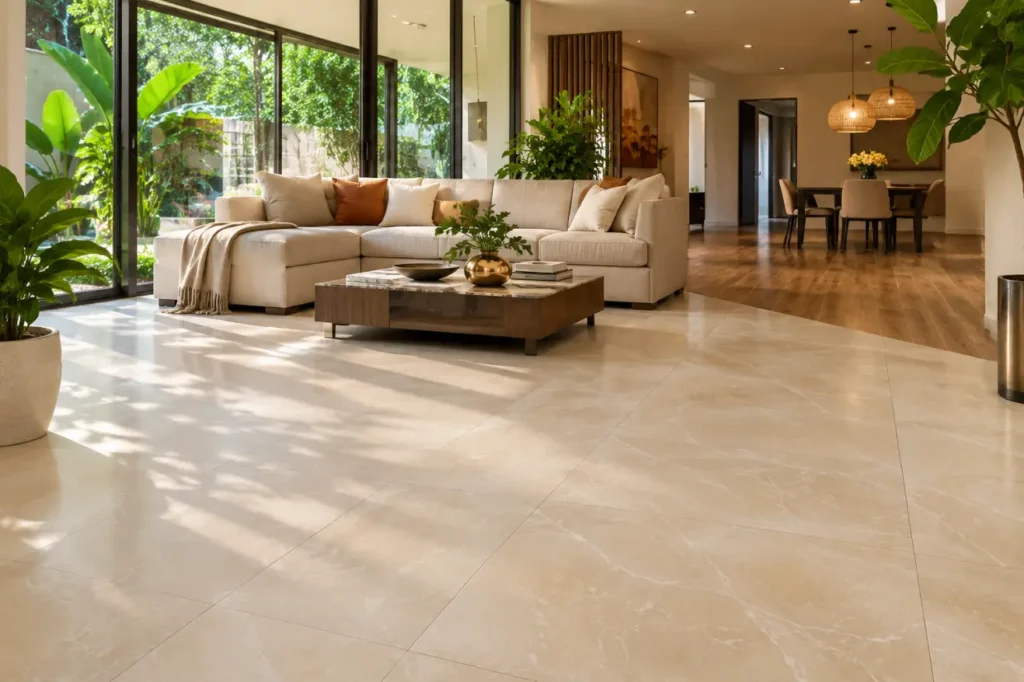
Quick Answer: There is no single winner for every house, but there is a clear pattern.
- Best all-around floor: porcelain tile. It is hard, dense, and very low in water absorption.
- Best for a warm look: wood-look porcelain or engineered wood in dry rooms.
- Best for a budget: ceramic tiles.
- Best for a luxury look: marble or granite, or marble-look tiles if you want less upkeep.
If you want one floor that works in most rooms of the house, start with tile. It is easy to clean, it is long-lasting, and it comes in almost any color, texture, and size.
Your floor is the one part of your home that you use every single day. You walk on it, cook on it, play on it, and spill things on it. That is why picking the right flooring matters more than most people think. If you are asking which is the best flooring, the honest answer is that it depends on the room, your family, and your budget. For most homes, though, premium porcelain tiles are the safest all-around choice because they handle water, foot traffic, and daily cleaning very well.
This guide keeps things simple. You will see the most popular flooring options side by side, learn what each one does well, and find the best pick for every room. We also look at homes in India and other warm, humid places, where the wrong floor can fail fast.
What to Check Before Your Flooring Choice
A smart decision starts with how you live, not with how a tile looks in a store. Ask yourself these five questions first.
1. How much foot traffic will the floor get?
Entryways, kitchens, and living areas take the most steps. These spaces need a hard, durable floor that will not wear down.
2. How much water will touch the floor?
Bathrooms, kitchens, and balconies get wet often. Wet rooms need a floor with very low water absorption and a finish that is not slippery.
3. How much maintenance can you handle?
Some floors need sealing, polishing, or special cleaners. Others need only a mop and mild soap. Be honest about how much time you want to spend.
4. What is your budget?
Count the cost of the material, the installation, and the future care. A cheap floor that needs replacing in a few years is not really cheap.
5. What is the climate like where you live?
Humidity, heat, and sunlight change how a floor behaves. Wood can swell in damp air, and some floors fade in strong sun.
Also think about the aesthetic and interior style of your home, because the floor sets the tone for every room. Once you know your answers, comparing materials becomes much easier.
Popular Flooring Options Compared
Here are the most common flooring options for homes, with the good and the not-so-good for each.
Porcelain Tile
Porcelain tile is made from dense clay and fired at very high heat. The result is a tough surface with water absorption under 0.5%. It stands up to stains, handles heavy foot traffic, and does not mind messy days. You can find porcelain in matte and glossy finishes, and in looks that copy stone, cement, and wood. The main downsides are that it feels cool underfoot and needs a skilled installer for a flat, clean result.
Ceramic Tiles
Ceramic tiles are lighter and a bit softer than porcelain. They are an affordable choice for walls and for floors in low-traffic rooms such as a guest bedroom. They absorb more water than porcelain, so they are a weaker pick for wet or outdoor areas.
Marble and Granite
Marble gives a rich, timeless look and a feeling of luxury. But it is a porous natural stone, so it can stain and etch, and it can scratch over time. It also needs regular sealing and an occasional polish. Granite flooring is very hard and holds up well, but it also needs regular care and can feel heavy and cold. Compared with softer stone, granite stands up better to daily wear. If you love the marble look but not the upkeep, marble-look porcelain gives you the same style with far less care.
Engineered Wood and Real Wood
Engineered wood has a real wood top layer over a layered core. It adds warmth and a natural feel, and it handles small changes in temperature better than solid wood. Real wood looks beautiful but reacts strongly to moisture. Both are best in dry rooms, such as a bedroom, and are a poor match for bathrooms or kitchens with leaks and splashes.
Quick Comparison Table
| Flooring | Durability | Water Resistance | Maintenance | Cost Level |
|---|---|---|---|---|
| Porcelain tile | Very high | Very high | Low | Mid to high |
| Ceramic tile | Medium | Medium | Low | Low to mid |
| Marble | Medium | Low (needs care) | High | High |
| Granite | High | Medium (needs care) | Medium | Mid to high |
| Engineered wood | Medium | Low | Medium | Mid to high |
Best Flooring for the Living Room and Hallway
The living room and entry are the busiest parts of most homes. Guests walk through them, kids run across them, and furniture slides over them. You need a floor that stays smooth and keeps its look.
Large tiles work very well here. Fewer grout lines make the space look bigger and cleaner, and they are easier to wipe. Porcelain living room tiles in stone or wood looks give you an elegant style with solid durability. In a hallway, choose a non-slip finish so shoes and wet feet do not slip. Light colors can also help a small hallway feel open and bright, especially with good lighting.
Best Flooring for the Kitchen
A kitchen floor faces grease, water, dropped pans, and constant standing. The best flooring for a kitchen is hard, stain-resistant, and easy to clean. Porcelain fits all three needs.
Pick durable kitchen floor tiles with a lightly textured finish, especially near the sink and stove, where splashes are common. Avoid real wood here. A small leak under a sink can warp it quickly. Keep the grout lines narrow and wipe up oil right away, and the floor will look new for a long time.
Best Flooring for the Bathroom
Safety comes first in a bathroom. A wet, smooth floor is a real slip risk, so look for anti-slip bathroom tiles with a matte or textured finish. Porcelain is a strong choice because it barely absorbs water, which helps the floor stay in good shape around showers and tubs.
Many designers use a matte tile on the floor and a glossy tile on the walls. The glossy wall tile reflects light, adds shine, and wipes clean easily, while the floor stays safe underfoot. Skip carpet, wood, and basic laminate in this room.
Best Flooring for the Bedroom
A bedroom should feel calm and warm. Because you often walk barefoot here, comfort underfoot matters more than in other rooms.
Engineered wood is a popular pick if your room stays dry. If you want the warmth of wood without worrying about moisture or scratches, try wood-look porcelain tiles. They give you the grain and color of timber with the strength of porcelain. Tile can feel cool in winter, so a soft rug beside the bed adds comfort and warmth where you need it most.
Best Flooring for the Balcony and Outdoor Spaces
A balcony, terrace, or patio faces rain, sun, and temperature swings. Indoor floors rarely survive this for long. These areas need a floor that grips when wet, stays stable in strong sun, and does not crack in changing weather.
Outdoor porcelain tiles are made for this job, with anti-slip surfaces and UV-stable colors. Rustic and textured finishes add grip and give the space a natural, earthy look. Always check that the tile is rated for outdoor use before you buy.
Best Flooring for Homes in India and Other Humid Climates
Indian homes put floors through a lot. Daily mopping, monsoon humidity, strong summer heat, and heavy family use are all normal. In India and other warm climates, moisture is the biggest enemy of a floor.
That is why dense tile is so popular across the country. Porcelain tiles do not swell or warp in damp air, and they cope well with frequent cleaning. Wood and basic laminate can lift or swell when humidity stays high, so keep them to air-conditioned, dry rooms. Rocagres Surfaces supplies tiles across the USA, UAE, and India, so these conditions are part of how we think about every space.
Easy-to-Clean Flooring and Maintenance Tips
Even the toughest floor lasts longer with simple care. Water is the root of most floor problems, and the Environmental Protection Agency in the USA explains that moisture control is the key to stopping mold. Its guide advises that you dry wet areas within 24 to 48 hours after a spill or leak. That habit alone protects almost any floor.
Keep these easy habits in mind:
- Sweep or vacuum often, because dust and grit can dull a surface over time.
- Mop with mild soap and water, and skip harsh acids on stone.
- Wipe up messes quickly to prevent a stain.
- Use mats at doors and felt pads under furniture.
Tile is one of the easy-to-clean floors because its surface does not trap dirt like carpet or open-grain wood. Low-sheen finishes also hide dust and footprints better than shiny ones.
Common Mistakes When Choosing Flooring
- Choosing only by looks. A pretty floor that stains or slips will frustrate you every day.
- Using glossy tiles in wet areas. Glossy tiles look great on walls but can be slippery on a wet floor.
- Ignoring the room’s size. Very small tiles add many grout lines, while large formats can suit big, open rooms better.
- Forgetting installation. Even the best tile needs a flat base and careful work to last.
- Skipping the cost of care. Natural stone and wood can cost more over time in sealing, polishing, and repairs.
Frequently Asked Questions
Which is the best flooring for a house?
For most homes, porcelain tile is the best all-around choice. It is strong, easy to clean, and works in kitchens, living rooms, bathrooms, and patios.
Which flooring is the easiest to maintain?
Tile is one of the easiest. A regular sweep and a damp mop are usually enough.
Is wood flooring good for a bathroom?
No. Wood reacts to moisture and humidity, so it is not suitable for bathrooms. Textured porcelain is a much safer choice.
Does tile feel too cold?
Tile can feel cool in winter, but a rug or wood-look porcelain makes a space feel warmer.
Conclusion
The best floor is the one that fits your rooms, your family, and your daily life. Whether you are a first-time homeowner or planning a remodel or a bigger project, and you want help matching the right tile, finish, and size to each space, contact the Rocagres Surfaces team. Share your project details, and we will help you move forward with a floor that looks great and lasts.