
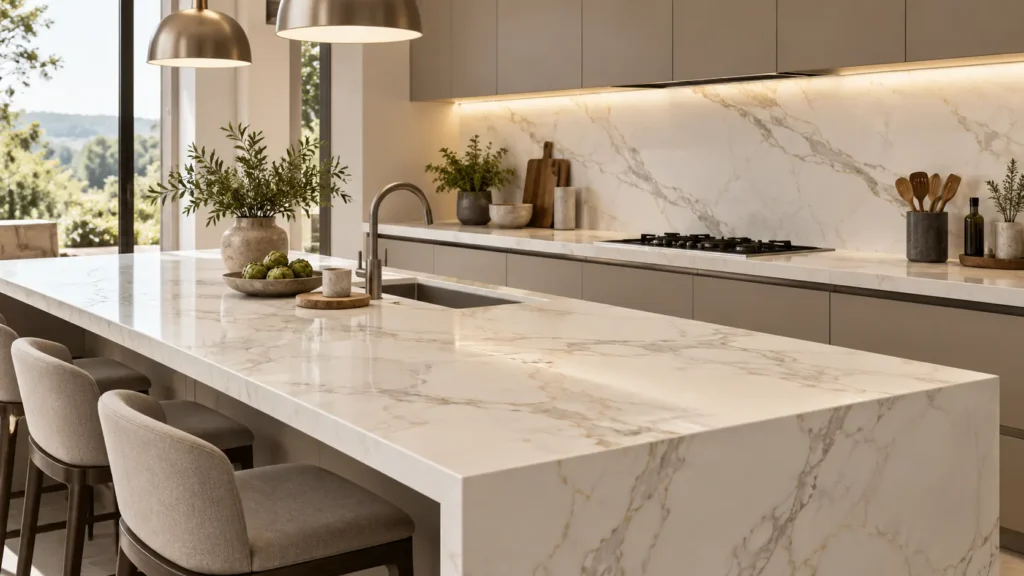
Kitchen countertops need to handle daily food preparation, regular cleaning, and exposure to spills while complementing the overall kitchen design. Choosing the right surface involves considering its material, finish, maintenance requirements, and suitability for everyday use. Exploring different premium kitchen tiles and porcelain tile collections can help you find suitable designs for your countertop and surrounding surfaces. From marble-look finishes to large-format designs, this guide covers eight tile kitchen counter ideas, along with practical advice on material selection, installation, and maintenance.
Tile countertops offer flexibility in color, pattern, size, and finish. However, the choice of tile, grout, edge detail, and installation method all affect the final result. Porcelain, ceramic, and natural stone each have different properties, so it is important to select a material that suits countertop use rather than choosing only by appearance.
From marble-look surfaces to large-format designs, there are several ways to create a well-planned kitchen counter. In this guide, we explore eight tile kitchen counter ideas, explain the materials worth considering, and cover the practical details that help you make the right choice.
Are Tile Kitchen Countertops a Good Choice?
Tile countertops can be a practical design option when the right material and installation method are used. They offer more freedom in layout and appearance than many standard countertop designs. However, grout joints and surface maintenance need careful consideration.
Here are the main advantages and limitations.
Advantages of tile countertops
- Design flexibility: Tiles are available in different colors, patterns, textures, and sizes, making it easier to match different kitchen styles.
- Individual tile replacement: If a tile gets damaged, it may be possible to replace that section without removing the entire countertop.
- Material choices: You can choose between porcelain, ceramic, and natural stone based on your design and performance requirements.
- Coordination: Countertop tiles can be matched with the kitchen floor and backsplash for a consistent appearance.
Limitations to consider
- Grout maintenance: Grout joints can collect food particles, grease, and stains. They need regular cleaning and suitable protection.
- Uneven joints: Smaller tiles create more grout lines, which can make wiping and food preparation less convenient.
- Edge damage: Exposed tile edges and corners can chip if they receive repeated impact.
- Installation requirements: The countertop needs a suitable, stable base and careful installation around sinks, appliances, and corners.
Tile countertops work best when the design considers daily use as well as appearance.
Which Tile Material Is Best for Kitchen Countertops?
The material you select affects the countertop’s appearance, maintenance, and suitability for regular kitchen activities. Not every floor or wall tile is designed for use on a countertop. Always confirm the product’s technical specifications and recommended applications before making a selection.
1. Porcelain Tiles
Porcelain is a popular choice for modern interiors because it has a dense body and low water absorption. Its surface is available in several designs, including marble, stone, concrete, and solid colors.
For kitchen projects, premium porcelain tiles offer a wide range of visual options. However, the specific tile must be approved for countertop installation. Thickness, dimensions, edge treatment, and structural support also matter.
2. Ceramic Tiles
Ceramic tiles are available in a wide range of colors, patterns, and finishes. They are commonly used for kitchen backsplashes and wall applications.
Some ceramic products may be suitable for countertop use, but this depends on their specifications and intended application. Check their resistance to impact, surface suitability, and installation requirements before choosing them for a working counter.
3. Large Porcelain Slabs
Large-format porcelain surfaces can create a countertop with fewer visible joints. This makes them worth considering for kitchen islands and contemporary layouts.
However, a large-format tile is not automatically suitable for a countertop. Confirm the thickness, structural support, fabrication requirements, and approved application with the manufacturer and installer before ordering.
8 Tile Kitchen Counter Ideas for Different Kitchen Styles
The right countertop design should complement the kitchen rather than compete with every other surface. Consider the cabinet color, room size, lighting, and amount of daily use before selecting a pattern.
Here are eight ideas worth considering.
1. Marble-Look Tiles for a Classic Kitchen
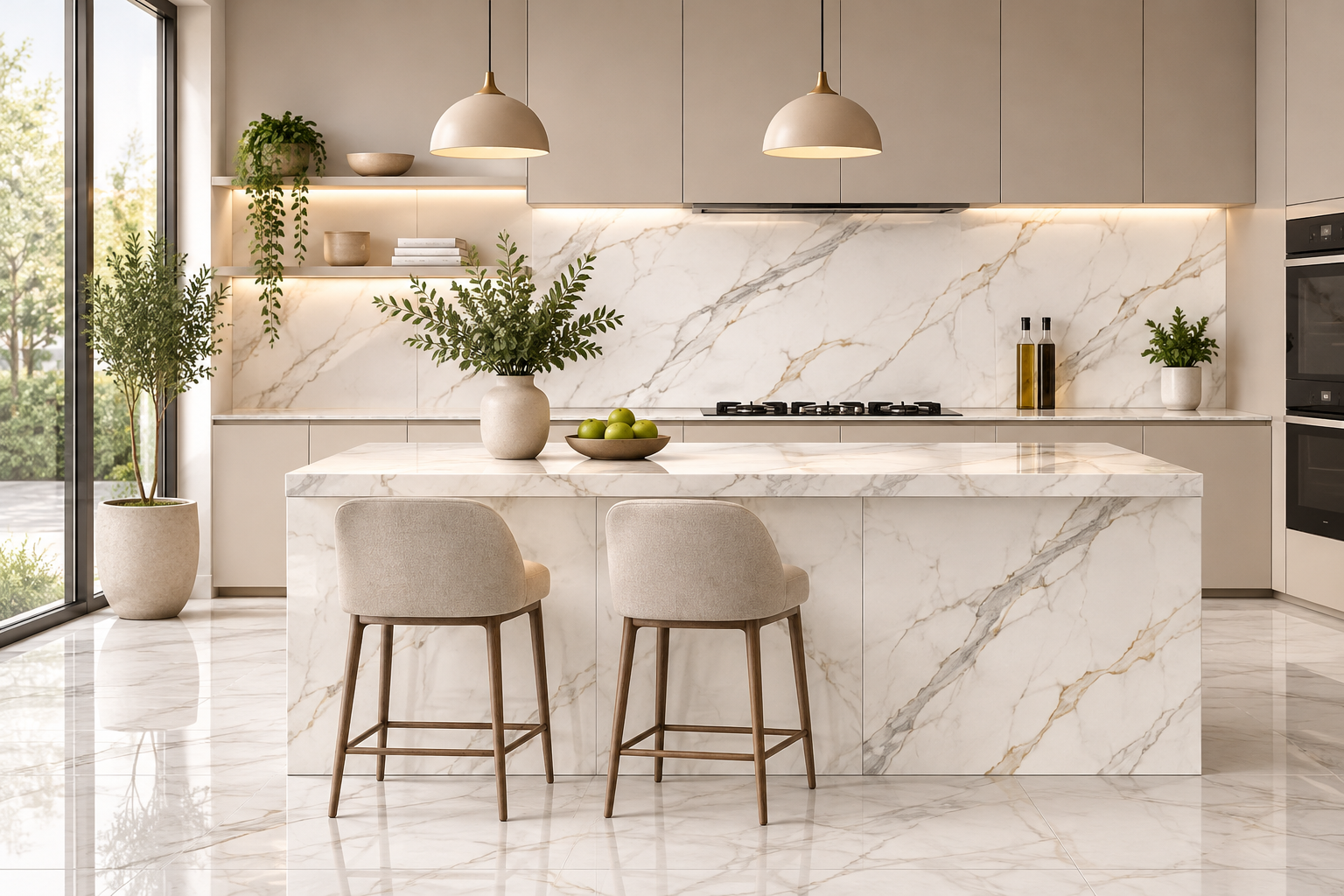
Marble-look tiles bring the appearance of natural marble into a kitchen without using a real marble surface. White backgrounds with grey or soft gold veining work particularly well with neutral cabinets and understated hardware.
For a coordinated design, explore Statuario and Calacatta porcelain tiles. Their marble-inspired patterns can complement white, beige, and grey kitchen interiors.
Design tip: Use a marble-look surface as the main visual feature. Pair it with plain cabinet fronts and a simple backsplash to keep the overall design balanced.
2. Large-Format Tiles for a Clean Appearance
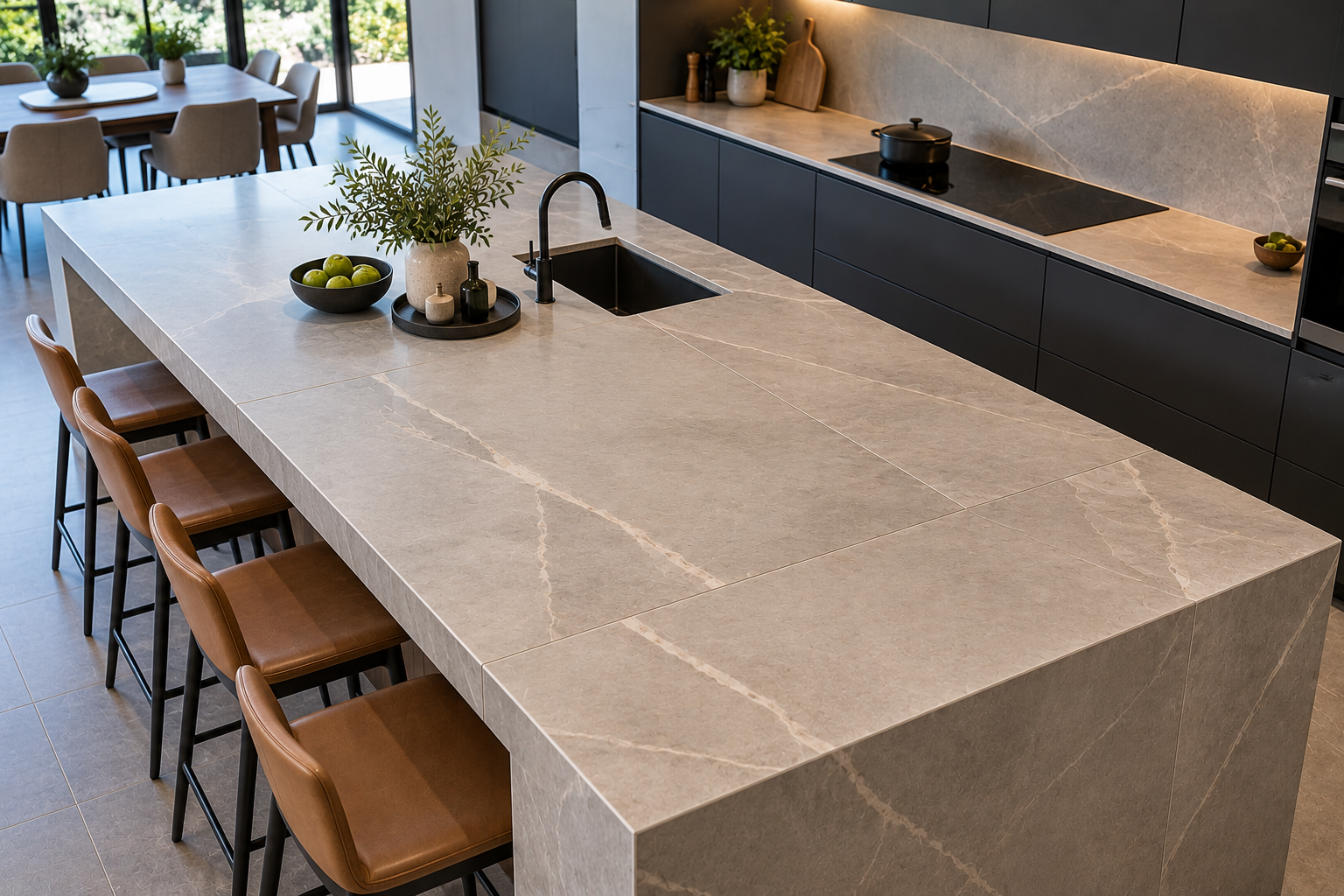
Large-format tiles create fewer grout joints than smaller formats when the layout is planned correctly. This can make a countertop look more continuous and reduce the number of joints that need cleaning.
They are particularly useful for larger kitchen islands and open-plan interiors where a consistent surface helps maintain visual balance.
Before choosing a large tile, check whether it is approved for countertop use. Also consider how the installer will handle cutting, edge finishing, and support.
Design tip: Choose a restrained stone or marble pattern if you want the countertop to remain visually calm.
3. White Tiles for a Bright Kitchen
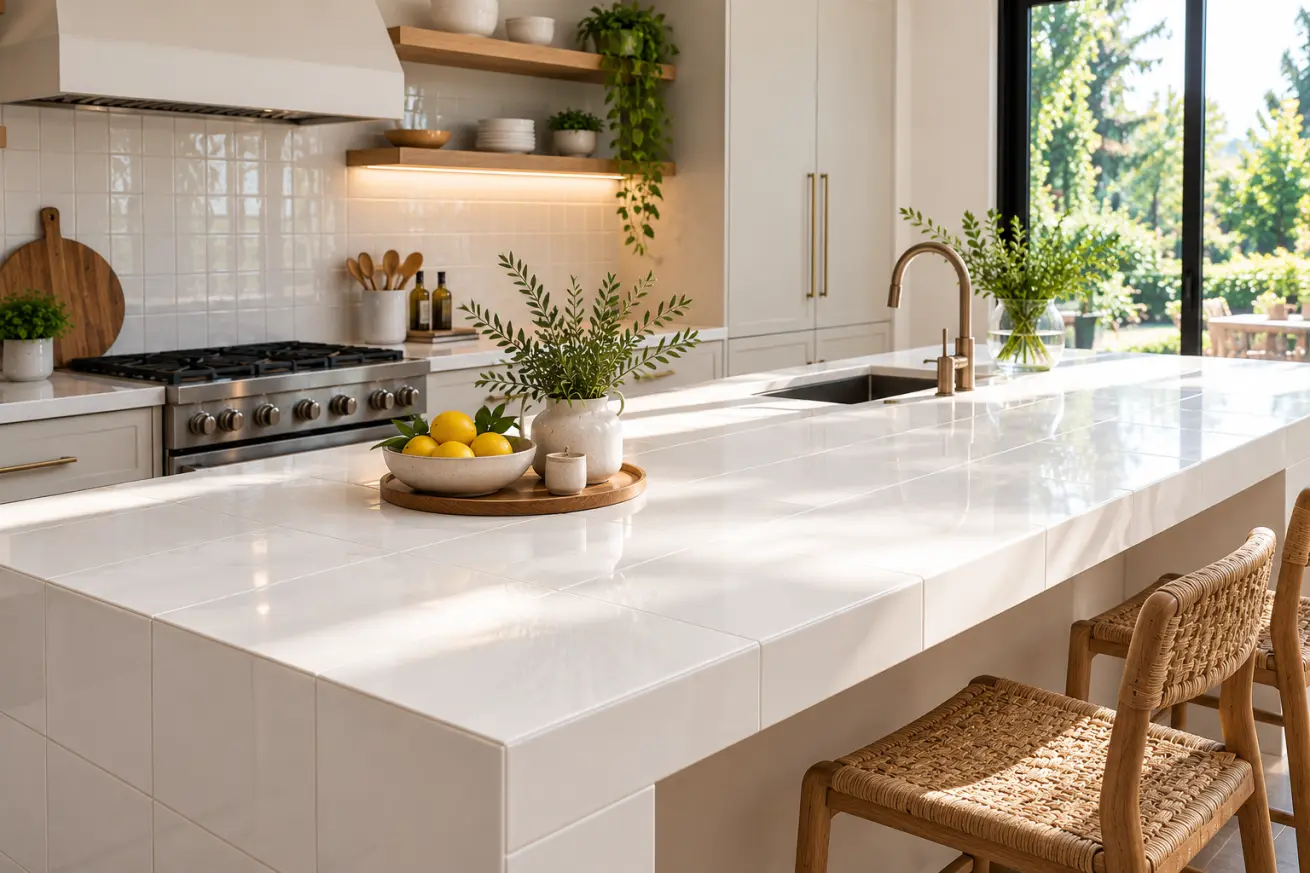
White countertops work well with both light and dark cabinetry. They can also help smaller kitchens feel more open, especially when paired with good lighting and a simple backsplash.
You can choose plain white tiles for a minimal appearance or select a subtle marble pattern for more visual detail.
Grout color plays an important role in this design. Matching grout creates a more uniform appearance, while darker grout makes the tile layout more noticeable.
Design tip: Choose a surface that is easy to clean and pay attention to grout maintenance. Food stains and spills are easier to notice on a white countertop.
4. Matt Neutral Tiles for a Subtle Look

Beige, warm grey, sand, and taupe create a softer alternative to bright white countertops. These shades work well with natural wood cabinets, darker kitchen fittings, and neutral flooring.
A matt finish can reduce reflections and create a more understated appearance. However, its cleaning requirements depend on the surface texture and product specifications.
Design tip: Combine warm neutral tiles with wooden cabinets and simple metallic hardware for a balanced contemporary kitchen.
5. Mosaic Tiles for Decorative Countertop Details
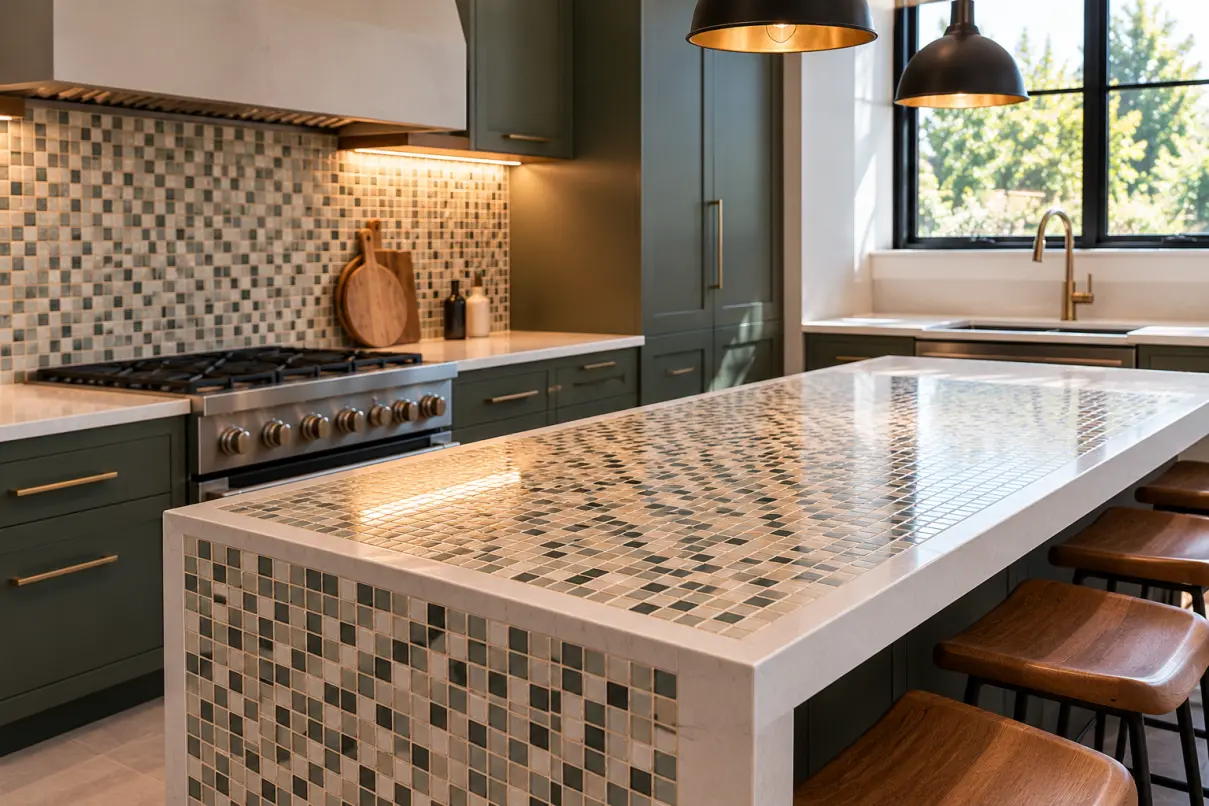
Mosaic tiles use smaller pieces arranged in repeating or decorative patterns. They can introduce color, texture, and visual interest into a kitchen design.
However, the number of grout joints makes mosaics less convenient for food preparation surfaces. They are generally better suited to decorative areas, backsplashes, and selected island features unless the specific product and installation system are approved for countertop use.
Design tip: Use mosaic patterns in a limited area and keep the main countertop simple. This prevents the kitchen from looking visually crowded.
6. Bold-Colored Tiles for a Statement Kitchen Island
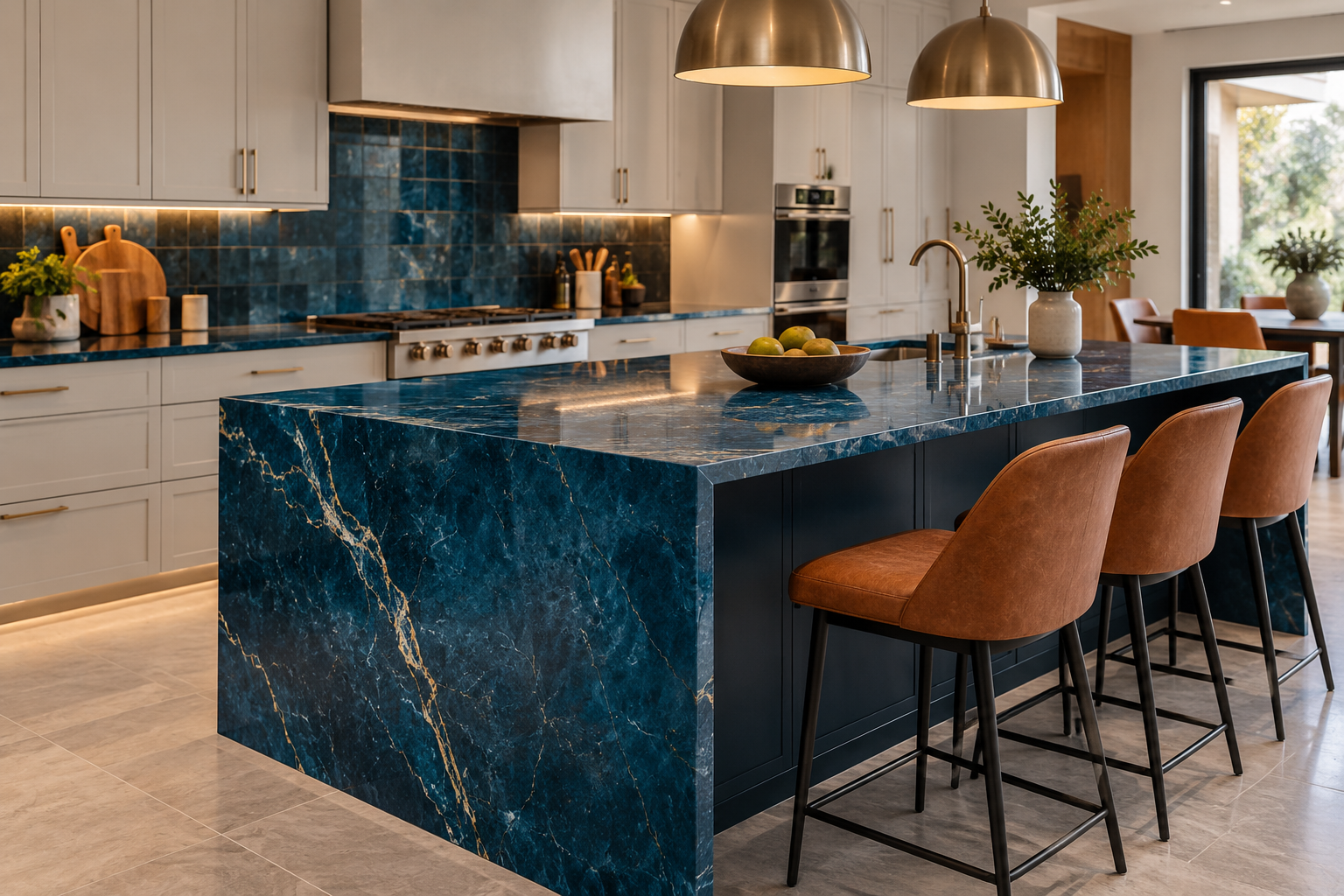
A kitchen island provides an opportunity to introduce a stronger color without changing the entire kitchen.
Deep blue, forest green, charcoal, and terracotta-inspired shades can create contrast against neutral cabinets. The final look depends on the surrounding materials and lighting.
If you choose a bold countertop, keep the main kitchen surfaces relatively simple. This allows the island to become the main design feature.
Design tip: Repeat a small amount of the island color in the backsplash, bar stools, or kitchen accessories to create a coordinated appearance.
7. Concrete-Look Tiles for a Contemporary Kitchen
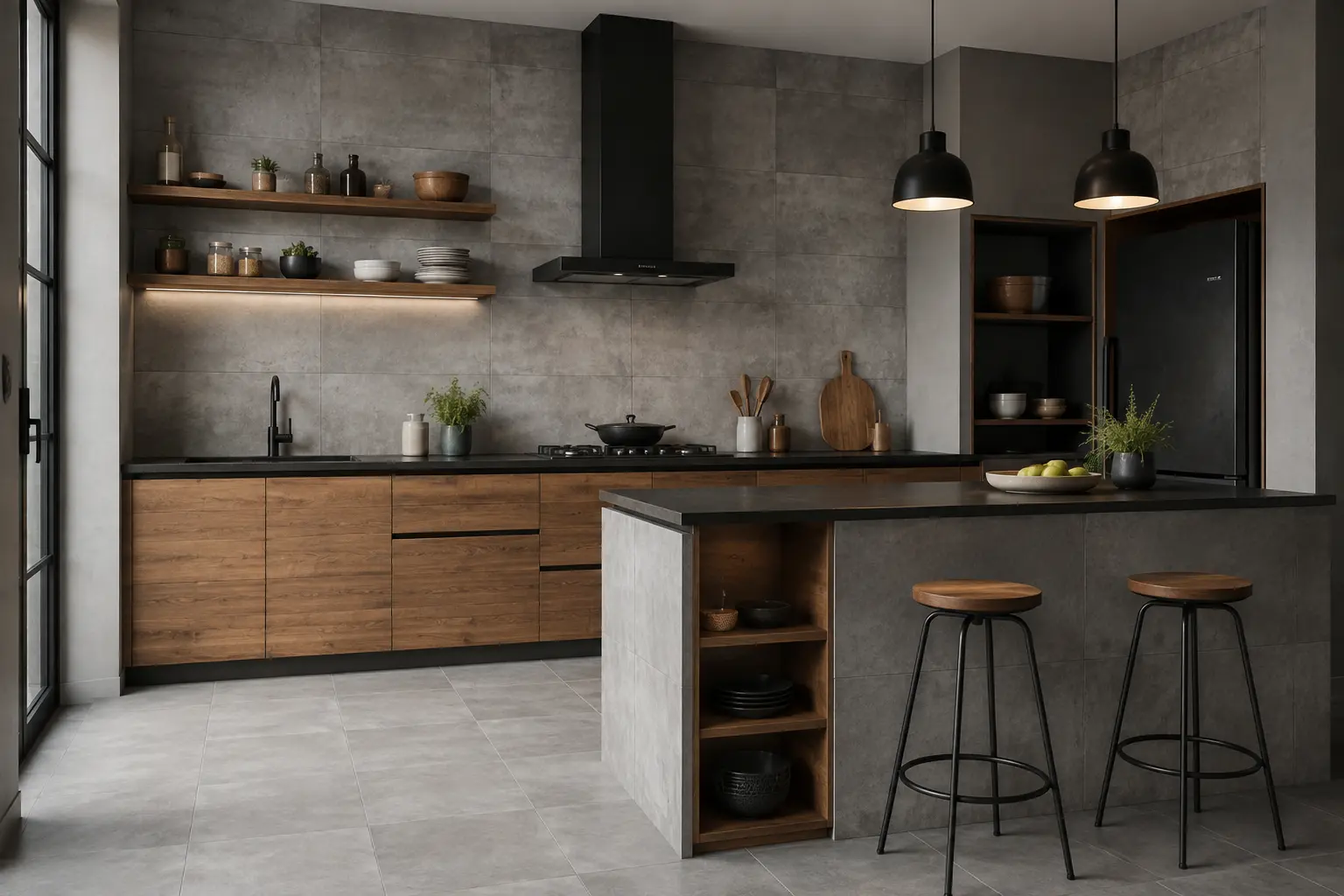
Concrete-look tiles offer an industrial-inspired appearance with grey tones and subtle surface variation. They work well in kitchens with open shelving, black hardware, metal details, and simple cabinetry.
This design can suit both compact and spacious kitchens, depending on the tile format and color.
Design tip: Pair a concrete-look surface with warm wood cabinets or natural textures. This helps balance the cooler appearance of grey.
8. Wood-Look Tiles for a Warm Kitchen Design
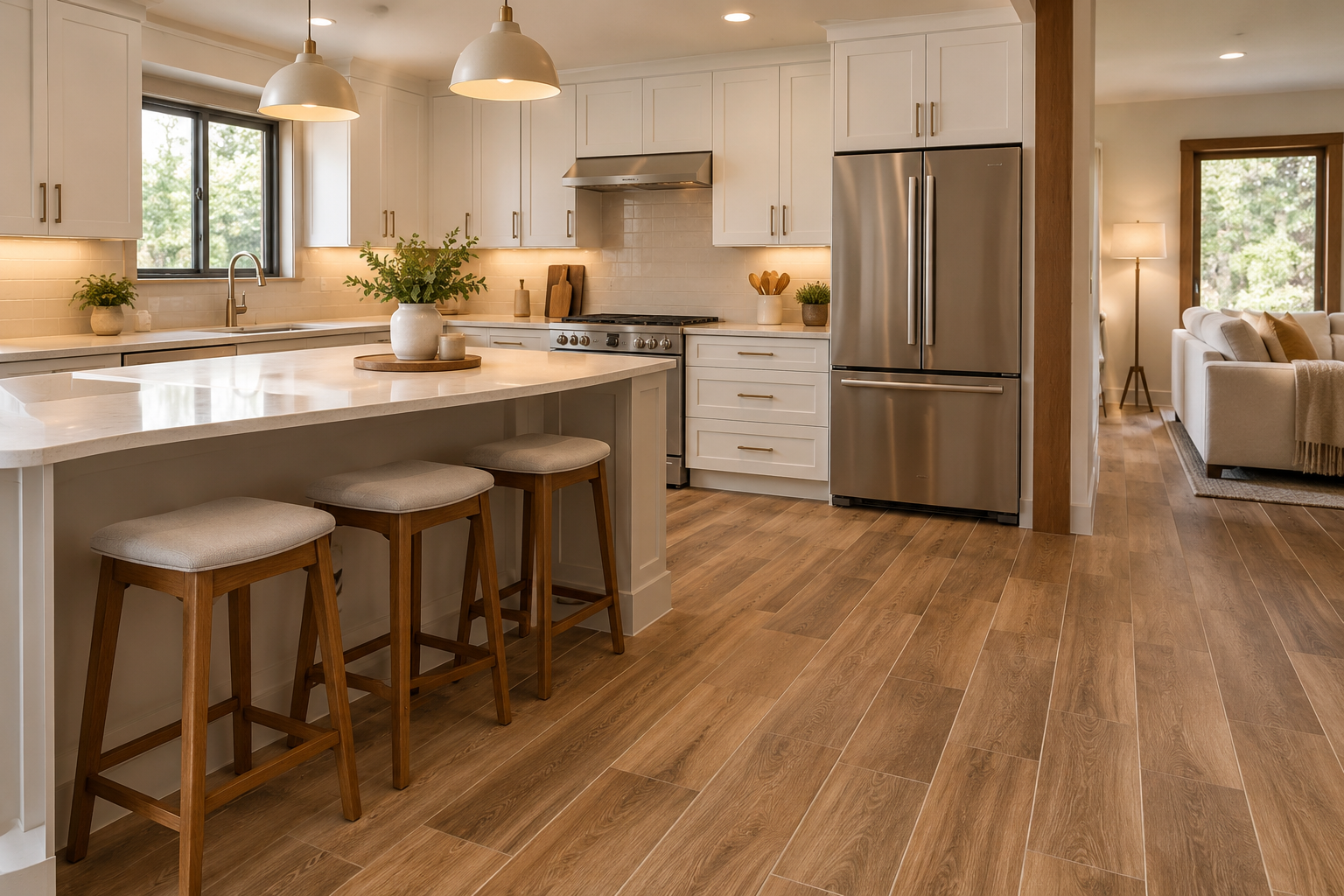
Wood-look tiles bring the visual character of timber into a kitchen. Their grain patterns and natural shades work well with neutral countertops, white cabinets, and warm lighting.
They can also be used to create a visual connection between the kitchen and nearby living spaces.
Design tip: Use wood-look designs as an accent rather than combining too many competing patterns. A simple countertop helps the wood texture stand out.
How to Choose the Right Tile for Your Kitchen Counter
A countertop should suit the way the kitchen is used. Before selecting a design, consider the following factors.
Consider Your Cooking Habits
A kitchen used for frequent cooking needs a surface that is easy to clean and suitable for regular food preparation. Pay attention to stain resistance, surface texture, edge strength, and grout requirements.
If the kitchen is used mainly for light preparation, you may have more flexibility with decorative patterns and finishes.
Check the Tile’s Technical Specifications
Do not assume that a tile is suitable for countertops because it is marketed for kitchen floors or walls.
Ask the supplier about:
- Recommended application.
- Tile thickness and dimensions.
- Water absorption.
- Surface and stain resistance.
- Impact and edge considerations.
- Suitable installation and support requirements.
These details help you compare products based on their actual use rather than appearance alone.
Match the Tile With Your Kitchen Layout
A small kitchen may benefit from light colors and a simple pattern. Larger kitchens can accommodate stronger contrasts, decorative details, and more prominent island designs.
Also consider the position of the sink, cooktop, and preparation areas. These affect tile cuts, joints, and edge detailing.
Set a Realistic Maintenance Requirement
Different materials and finishes need different levels of care. Natural stone may require sealing, while grout needs attention regardless of the tile material.
Choose a surface and grout system that you can maintain with the recommended cleaning products and routine.
Choosing the Right Tile Size and Countertop Edge
Tile size affects the overall appearance of the countertop as well as the number of joints. Smaller formats provide more layout flexibility but create additional grout lines. Larger formats can reduce joints, although they require careful handling and cutting.
Rocagres Surfaces offers different tile formats, including 1200 × 1800 mm tiles. These large-format surfaces can be considered for suitable architectural applications. For countertop projects, confirm the specific product’s approved use and technical requirements first.
The edge detail is another important part of the design.
Common countertop edge options include:
- Bullnose edge: A rounded profile that creates a softer finished corner.
- Mitered edge: Two pieces are cut at an angle and joined to create the appearance of a thicker edge.
- Metal trim: A separate trim profile protects and finishes exposed tile edges.
- Contrasting edge: A different material or color creates a visible border around the countertop.
The best option depends on the tile thickness, available edge pieces, countertop design, and installer capabilities.
How to Match Countertop Tiles With Cabinets, Backsplash, and Flooring
A kitchen looks more balanced when its major surfaces work together. The countertop does not need to match every other element, but the colors and patterns should complement one another.
Use these simple design principles:
Start with one main feature: If you choose a heavily veined marble-look countertop, keep the backsplash and cabinets relatively simple.
Create color balance: Combine two main colors with one accent shade. For example, white cabinets, a beige countertop, and dark hardware can create a balanced combination.
Consider the flooring: If the floor has a strong pattern, choose a simpler countertop. If the floor is plain, the countertop can introduce more visual detail.
Coordinate the backsplash: A simple subway layout or plain wall tile can work well with a patterned countertop. Matching materials can also create a consistent appearance across the kitchen.
You can explore Rocagres kitchen tile collections for ideas that connect different kitchen surfaces.
Grout Selection and Maintenance for Tile Countertops
Grout is an important part of a tiled countertop because it fills the joints between individual tiles. Its color, type, and installation quality affect both appearance and maintenance.
Consider these points before installation:
- Choose a suitable grout color: Matching grout creates a uniform look, while contrasting grout highlights the tile layout.
- Consider epoxy grout: Epoxy grout generally offers better resistance to stains and moisture than conventional cement-based grout. Confirm that it is suitable for the selected tile and installation system.
- Check sealing requirements: Cement-based grout may require a suitable sealer. Epoxy grout usually has different maintenance requirements, so follow the manufacturer’s instructions.
- Use appropriate joint widths: Joint width depends on tile dimensions, calibration, and installation recommendations. Do not reduce joints beyond the manufacturer’s guidelines simply to create a seamless appearance.
Regular cleaning also helps prevent grease and food particles from building up in the joints.
Kitchen Countertop Tile Installation Guide
Even a suitable tile can perform poorly if the countertop is not installed correctly. The base, adhesive, joints, and edge details all need to work together.
Here are the main installation considerations.
Prepare a Stable Countertop Base
The supporting structure must be strong, stable, and level. It should be able to carry the weight of the tile and withstand regular use without excessive movement.
Plan the Tile Layout Before Installation
A dry layout helps the installer identify awkward cuts, narrow pieces, and visible joints before applying adhesive. It also helps align the tile pattern with the kitchen cabinets and backsplash.
Measure Sink and Cooktop Openings Carefully
Sink and cooktop cutouts need accurate measurements. The installer must also consider the remaining material around openings and the support required near exposed edges.
Select the Correct Adhesive and Grout
Use an adhesive and grout system recommended for the chosen tile, substrate, and countertop application. Follow the manufacturer’s instructions for preparation, application, curing, and joint treatment.
Finish the Edges and Wet Areas Properly
Exposed corners need suitable edge protection. Areas around sinks and other water sources also require appropriate joint and waterproofing details to reduce the risk of moisture entering the supporting structure.
For large-format surfaces, use an installer with experience in handling and fabricating the selected material.
Common Mistakes to Avoid When Choosing Kitchen Counter Tiles
A few planning mistakes can affect the appearance, maintenance, and long-term performance of a countertop.
Avoid these common issues:
- Choosing by appearance alone: A beautiful tile may not be approved for countertop use.
- Ignoring grout maintenance: Grout selection should be part of the original design plan.
- Overlooking edge details: Exposed corners need proper finishing and protection.
- Using unsuitable tile formats: Large tiles require careful handling, cutting, and adequate support.
- Skipping layout planning: Poorly positioned joints and narrow cuts can affect the finished appearance.
- Using the wrong cleaning products: Harsh chemicals or abrasive tools may damage certain finishes and grout systems.
Planning these details before installation can help prevent unnecessary repairs and changes later.
How to Maintain Tile Kitchen Countertops
Regular cleaning helps maintain the appearance of tiled countertops. The right method depends on the material, finish, grout, and manufacturer’s care instructions.
Follow these basic practices:
- Wipe food spills and cooking oil with a soft cloth and a suitable mild cleaner.
- Avoid leaving acidic substances on natural stone surfaces.
- Clean grout joints regularly with a suitable brush and cleaning solution.
- Use a cleaner recommended for the tile and grout type.
- Avoid abrasive pads and harsh chemicals unless the manufacturer confirms they are safe.
- Use cutting boards instead of cutting food directly on the countertop.
- Place hot cookware on suitable trivets rather than directly on the surface.
- Check joints around sinks periodically and repair damaged sealant when needed.
For natural stone, follow the recommended sealing schedule. For porcelain and ceramic tiles, follow the specific product’s cleaning and maintenance instructions.
Frequently Asked Questions
Can you use tiles for kitchen countertops?
Yes, some tiles can be used for kitchen countertops. However, not every floor or wall tile is suitable. Check the manufacturer’s recommendations for countertop applications, thickness, strength, and installation requirements before purchasing.
Which tile is best for kitchen countertops?
Porcelain is a popular option because of its dense body, low water absorption, and range of available designs. However, the selected product must be suitable for countertop use. Installation quality and edge treatment are also important.
Are tile countertops cheaper than granite?
Tile countertops can cost less than some natural stone slab installations. However, the final cost depends on the tile, supporting structure, adhesive, grout, edge fabrication, and labor. Compare complete installation costs rather than material prices alone.
Do tile kitchen countertops need sealing?
Porcelain and many ceramic tiles do not usually require surface sealing, but grout may need protection depending on its type. Natural stone can also require periodic sealing. Always follow the manufacturer’s recommendations.
Can hot cookware be placed directly on tile countertops?
It is better to use a trivet or heat-resistant mat. Although many ceramic and porcelain tiles tolerate heat, sudden temperature changes and impact can still cause damage. Grout and the supporting installation system also need consideration.
Are large-format tiles suitable for kitchen countertops?
Some large-format products may be suitable, but their dimensions alone do not determine countertop suitability. Thickness, structural support, fabrication, and manufacturer approval must all be checked.
How do you clean grout between kitchen countertop tiles?
Use a suitable grout cleaner and a soft brush to remove grease and food residue. Avoid harsh cleaning products that may damage the grout or tile finish. Follow the grout manufacturer’s maintenance instructions.
Conclusion
Choosing kitchen countertop tiles involves more than selecting a color or pattern. The material must suit the intended application, while the grout, edge treatment, supporting base, and installation method all contribute to the finished surface.
Marble-look porcelain, neutral matt designs, large-format surfaces, and decorative accents offer different ways to plan a kitchen countertop. The right choice depends on your kitchen layout, cooking habits, maintenance expectations, and overall interior design.
Explore the Rocagres Surfaces kitchen tile collection to compare available designs, finishes, and formats for your project. Always confirm the technical suitability of a product before specifying it for countertop installation.