
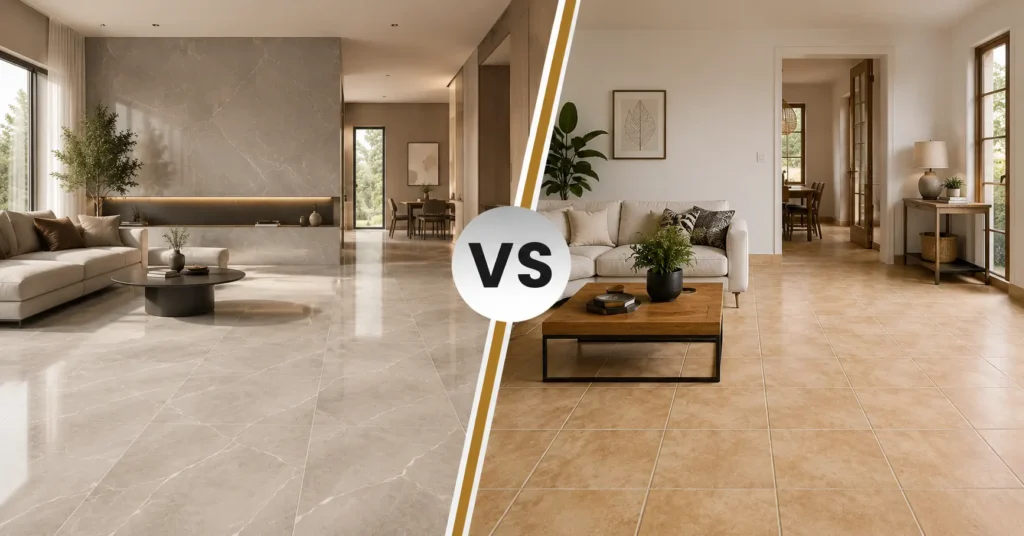
When planning a high-end commercial or luxury residential build, choosing the right flooring is critical. Many contractors will tell you these materials look identical once installed, but believing that oversimplification can lead to costly structural mistakes. Hidden performance differences dictate exactly how these surfaces handle heavy foot traffic and wear over time. Understanding the exact difference between porcelain and ceramic tile is the secret to protecting your architectural investment, which is why research queries like “porcelain vs ceramic tile” and “ceramic vs porcelain floor tile” dominate the industry.
These two popular surfaces handle moisture, weight, and impact completely differently. While one serves as an affordable, highly versatile wall tile, the other is an ultra-dense, heavy-duty choice for floors of porcelain tiles.
In this guide, we will explore the advantages and disadvantages of each tile option by examining what happens at the manufacturing stage. By understanding these core differences, you can confidently choose the best tile type for your upcoming project, ensuring lasting beauty and commercial-grade functionality.
Ceramic and Porcelain: Discover the Differences in Tile Type
At first glance, ceramic and porcelain tiles look similar in color and size, making them incredibly easy to confuse on the showroom floor. Both products are made from natural materials, formed from clay, and fired in a kiln to achieve their final hardened state. However, the exact clay mixture creates a massive difference between porcelain and standard ceramic.
Choosing between porcelain and ceramic requires an understanding of their base composition. High-performance porcelain tile uses highly refined white clay mixed with dense feldspar minerals. This highly specialized mixture creates a significantly denser and structurally stronger foundation.
Conversely, standard ceramic tile is crafted from coarser red or white clay. This formulation results in a final product that is less dense than porcelain. This base composition directly dictates how each tile type handles heavy foot traffic and structural weight across expansive commercial floor plans.
Why it works
- Refined clay in porcelain creates an incredibly dense, heavy-duty architectural surface.
- Coarser clay in ceramics provides a lightweight, flexible option for vertical applications.
- The raw material composition dictates the installation’s fundamental porosity and lifespan.
Best suited for
- Premium commercial projects specifying heavy-duty porcelain slabs for maximum durability.
- Budget-friendly multi-family spaces prioritizing upfront affordability on walls.
- Architects require a versatile tile option for continuous indoor and outdoor spaces.
Difference Between Porcelain and Ceramic Manufacturing
The real magic of tile manufacturing happens inside the factory kiln, where extreme heat determines the surface’s final strength and durability. Porcelain is pressed under immense pressure and fired at temperatures that often exceed 2,200°F. This extreme heat creates an incredibly solid, glass-like structure through a process called vitrification.
Traditional ceramic is softer because it is fired at lower temperatures. Because it is subjected to less heat and pressure, it remains more porous beneath its protective liquid glaze. If that top glaze chips on a busy commercial floor, the exposed clay will quickly absorb water and dirt.
This manufacturing variance explains why porcelain is the better choice for floors exposed to high moisture levels. The vitrification process makes porcelain almost entirely impervious to liquid penetration. Understanding this kiln secret helps specifiers avoid inappropriate material placements in high-moisture commercial environments.
Why it works
- Fired at higher temperatures, porcelain achieves maximum structural density.
- Fired at lower temperatures, ceramic remains lightweight and cost-effective.
- The firing process permanently alters the material’s durability and moisture resistance.
Best suited for
- Deep wet zones specifying large-format porcelain for maximum long-term protection.
- Decorative accent walls where heavy durability is not structurally required.
- Intricate architectural patterns utilizing standard ceramic subway tiles.
Water Absorption Rate: The True Test for Indoor & Outdoor Use
When specifying materials for luxury builds, you must thoroughly evaluate the moisture resistance required for your specific zone. Porcelain features an exceptionally low water sorption rate of less than 0.5%. This incredibly low water sorption makes it the only viable choice for commercial exteriors and severe wet zones.
Traditional ceramic tile is also more porous and absorbs much more water over time. This makes it less suitable for high-moisture environments or outdoor patio applications. During winter freeze-and-thaw cycles, any water trapped inside a porous ceramic tile will expand, causing severe structural cracks.
Because of its porosity, standard ceramic shines beautifully in light-to-moderate indoor spaces where water exposure is minimal. By matching the correct absorption rate to the environment, architects prevent severe structural wear over time. This targeted specification ensures the longevity of both the tile and the underlying substrate.
Key Performance Highlights
- Porcelain completely resists standing water, making it ideal for indoor and outdoor use.
- Ceramic provides a highly versatile, budget-friendly option for low-traffic indoor walls.
- Specifying low-water-absorption products prevents freeze-thaw damage on exterior patios.
Durability & Moisture Resistance in High-Traffic Areas
When comparing ceramic and porcelain tile, durability against heavy foot traffic is often the primary deciding factor for commercial developers. Porcelain is inherently denser, making it highly resistant to impact, scratches, and daily wear in high-traffic areas. This makes it the undisputed choice for hotel lobbies, commercial kitchens, and retail spaces.
The Porcelain Enamel Institute (PEI) rating system is a crucial tool for specifiers evaluating strength and durability. Porcelain tiles frequently achieve PEI ratings of 4 or 5, certifying them for heavy commercial foot traffic. Ceramic tiles typically score between PEI 1 and 3, limiting them to light-to-moderate residential use.
While ceramic is softer and more susceptible to surface wear, it remains an incredibly durable tile for vertical applications. Utilizing standard ceramic on walls and backsplashes ensures a beautiful aesthetic without over-engineering the space. This strategic placement balances commercial performance with project budgeting.
Why it works
- High PEI ratings ensure porcelain withstands decades of heavy commercial foot traffic.
- Moderate PEI ratings make ceramic perfect for walls and floors in low-traffic residential zones.
- Strategic material placement maximizes both strength and durability across the project.
Best suited for
- High-traffic commercial hallways specifying premium porcelain vs ceramic tile flooring.
- Light-traffic guest bathrooms require affordable ceramic and porcelain tile options.
- Luxury hospitality projects prioritize scratch-resistant, durable tile surfaces.
Cutting & Installation: Why Your Contractor Cares
Your contractor is acutely aware that the extreme density of porcelain makes it much harder to cut and install on-site. Because porcelain is so tough, installers must use specialized tools like diamond-tipped wet saws to avoid chipping the edges. This added labor difficulty inherently makes porcelain more expensive than ceramic to install.
Conversely, budget-friendly ceramic is significantly easier to cut and install quickly. Because ceramic is softer, experienced commercial installers and skilled DIYers can use standard snap cutters to achieve clean, precise lines. This ease of installation significantly reduces on-site labor hours and accelerates project timelines.
When budgeting for a massive commercial footprint, architects often mix both materials to optimize costs. Utilizing ceramic on vertical walls frees up capital for premium large-format porcelain slabs on the main floor plan. This hybrid approach ensures top-tier performance exactly where it is needed most.
Why it works
- Softer clay compositions allow for fast, hassle-free on-site modifications and cuts.
- Extreme density requires professional labor but ensures zero structural wear over time.
- Mixing both options across a project balances total installation costs with top-tier performance.
Best suited for
- Intricate architectural features, such as a stylized mosaic accent wall.
- Cost-effective bathroom renovations require materials that are easier to cut and install.
- Large-scale commercial builds require specialized tools for heavy-duty floor slabs.
Cost Analysis: Upfront Affordability vs. Long-Term Value
Initial material pricing is the area where traditional ceramics clearly holds a significant advantage. Because it is easier to manufacture and less dense than porcelain, ceramic is generally more budget-friendly. This affordability makes it a highly attractive option for large-scale multi-family developments focusing on upfront costs.
However, a true commercial cost analysis must account for the entire lifecycle of the floor. While porcelain is initially more expensive than ceramic, its extreme durability drastically reduces the need for future repairs. In high-traffic commercial environments, porcelain often proves to be the most cost-effective long-term investment.
The discussion around porcelain and ceramic tiles should never focus solely on the initial purchase price. Replacing damaged, water-logged, or cracked flooring is incredibly expensive and highly disruptive to commercial operations. Investing in a premium surface from day one protects the property’s long-term market value.
Key Financial Takeaways
- Ceramic provides immediate upfront affordability for strict renovation budgets.
- Porcelain delivers superior long-term value by eliminating costly future replacements.
- High-traffic areas always justify the higher initial investment of porcelain floor tiles.
Room-by-Room Architectural Guide
No single material is perfect for every architectural application across a luxury build. Choosing between porcelain and ceramic should always be based on how the specific space will be utilized. Here is a professional breakdown of where to specify each tile type for maximum performance.
- Bathroom Floors and Shower Walls
The discussion around porcelain bathroom tile heavily favors porcelain for the floor. Its low water absorption rate ensures a waterproof foundation that resists standing water and high humidity. However, ceramic remains a fantastic, lightweight option for decorative shower walls and vanity backsplashes.
- High-Traffic Commercial Kitchens
Commercial kitchens demand surfaces that can withstand heavy impacts, spills, and constant cleaning protocols. Porcelain is the only logical choice for floors in these demanding environments due to its extreme density and stain resistance. Ceramics can be utilized creatively on the walls to add color and texture without compromising hygiene.
- Living Rooms and Lobbies
When evaluating porcelain vs ceramic tile for dry living areas, both materials can create stunning aesthetics. Porcelain offers greater peace of mind for high-traffic hotel lobbies and luxury family rooms. Ceramic is a great, cost-effective option for light-use residential dining rooms or secondary guest areas.
- Outdoor Patios and Exteriors
Outdoor installations require materials engineered to withstand aggressive moisture and extreme temperature fluctuations. Standard ceramic will absorb moisture and crack during winter freezes, making it a liability outdoors. High-temperature fired outdoor porcelain tiles are the absolute standard for premium patio installations.
Design Versatility: Colors, Sizes, and Glaze Applications
Modern manufacturing technology has virtually erased the visual differences between porcelain and ceramic tile. Both materials are available in a massive array of colors and sizes to suit any architectural vision. High-definition digital printing allows both surfaces to perfectly mimic expensive natural materials like marble, timber, and concrete.
Both ceramic and porcelain feature a protective liquid glaze that seals the surface and provides its final color. However, high-end porcelain offers “through-body” options where the color penetrates the entire thickness of the tile. If a through-body porcelain tile is chipped, the damage is nearly invisible because the color remains consistent throughout.
Ceramic tiles are almost exclusively surface-glazed, meaning the clay body beneath is a different color from the top design. While this is perfectly acceptable for low-traffic wall tile, it is a risk for heavy-duty floors. This aesthetic durability is another reason architects prefer porcelain for high-end commercial floors.
Why it works
- Advanced digital glazing offers designers limitless versatility in colors and sizes.
- Through-body porcelain hides accidental chips, maintaining a pristine commercial aesthetic.
- Glazed ceramic provides vibrant, high-gloss finishes perfect for eye-catching wall features.
Maintenance & Hygiene: Keeping the Surface Pristine
One of the greatest advantages of both ceramic and porcelain tiles is how incredibly easy they are to clean. Neither material harbors dust mites, allergens, or bacteria, making them ideal for health-conscious commercial environments. A simple sweep and a mop with mild detergents are usually all that is required for daily upkeep.
However, porcelain offers a distinct hygienic advantage in grout lines. Because porcelain can be manufactured with perfectly straight “rectified” edges, it allows for ultra-thin grout joints. Thinner grout lines drastically reduce the porous surface area where mold, mildew, and dirt can accumulate over time.
Because ceramic is more porous, it can occasionally require more diligent maintenance if the protective glaze is compromised. Furthermore, standard ceramic often requires wider grout lines, which demand regular sealing to prevent staining. For low-maintenance commercial hygiene, tight-joint porcelain installations are vastly superior.
Why it works
- Both surfaces are naturally hypoallergenic and very easy to clean with standard solutions.
- Rectified porcelain allows for minimal grout lines, enhancing overall commercial hygiene.
- Low water absorption prevents deep-set chemical stains from permanently ruining the floor.
Sustainability & Environmental Impact
In modern commercial architecture, sustainability and environmental impact are major priorities. Both ceramic and porcelain are incredibly eco-friendly building materials made from abundant natural clay and minerals. They do not emit Volatile Organic Compounds (VOCs), ensuring excellent indoor air quality for building occupants.
Because they are fired in a kiln, these materials are completely fireproof and do not release toxic fumes if exposed to high heat. Furthermore, their extreme lifespan means they rarely need to be replaced, drastically reducing landfill waste over time. Many premium porcelain manufacturers also incorporate recycled materials into their clay body mixtures.
For architects seeking LEED certification on commercial builds, specifying premium porcelain can contribute to material and resource credits. Its thermal mass also helps regulate indoor temperatures, potentially lowering the building’s long-term energy costs. Choosing durable tile is a structurally sound and environmentally responsible architectural decision.
Porcelain vs Ceramic Tile at a Glance
To simplify your specification process, here is a professional breakdown of the exact differences between these two materials.
| Performance Feature | High-Performance Porcelain | Traditional Ceramic Tile |
|---|---|---|
| Composition Base | Refined white clay and feldspar | Coarser red or white natural clay |
| Kiln Firing Process | Fired at higher temperatures | Fired at lower temperatures |
| Water Absorption Rate | Ultra-low (Less than 0.5%) | Higher (Also more porous) |
| Durability Level | Excellent for heavy foot traffic | Good for light to moderate traffic |
| Installation Difficulty | Requires specialized tools | Easier to cut and install |
| Best Application | Better choice for floors | Better choice for walls |
| Environment Suitability | Indoor and outdoor use | Indoor, low-moisture zones only |
FAQs on Porcelain and Ceramic Tiles
-
Is porcelain tile always more expensive than ceramic?
Generally, yes. Porcelain carries a higher upfront price tag due to its premium natural materials and highly complex manufacturing process. However, it offers far greater long-term durability in high-traffic areas, making it a much smarter architectural investment that helps prevent costly early replacements.
-
Is porcelain better than ceramic?
“Better” completely depends on the architectural application, but porcelain is generally superior for heavy-duty commercial use. Because it is much denser and less porous, porcelain is the better choice for high-traffic floors and outdoor installations. Ceramic is often better for budget-friendly vertical applications like decorative walls and backsplashes.
-
Are porcelain and ceramic the same?
No, porcelain and ceramic are not the same, even though they look nearly identical. Both are made from natural clay and fired in a kiln, but porcelain uses highly refined white clay and is fired at much higher temperatures. This specific manufacturing process makes porcelain significantly harder and more water-resistant than traditional ceramic.
-
How thick is a ceramic tile?
Standard ceramic tile is typically manufactured to be between 1/4-inch and 3/8-inch thick. This relatively lightweight profile makes it incredibly easy to cut and install on vertical surfaces without adding unnecessary structural weight to the walls. However, for heavy commercial foot traffic, thicker porcelain slabs are usually required.
-
Is ceramic tile waterproof?
Standard ceramic tile is highly water-resistant, but it is not entirely waterproof like porcelain. The protective top glaze easily repels daily moisture, but the porous clay body beneath it can absorb water if the glaze chips. For this reason, ceramic is perfect for indoor walls but less suitable for deep, constantly submerged wet zones.
Final Thoughts on Choosing Between Porcelain & Ceramic
Choosing between porcelain and ceramic tile requires a careful, highly strategic balance of budget, design versatility, and structural needs. Understanding the true differences in porosity, clay composition, and kiln temperatures helps specifiers outsmart common contractor shortcuts.
By analyzing the difference between porcelain and ceramic at the manufacturing level, you can protect your property’s long-term value. Ensuring the correct material is placed in the right zone guarantees a beautiful, highly durable finish that lasts for decades without failing.
Whether you need a budget-friendly ceramic subway tile for a multi-family kitchen or a heavy-duty porcelain slab for a commercial lobby, informed material selection is paramount. Ready to specify high-performance, commercial-grade materials for your next luxury build?
Contact our commercial tile experts today to request physical material samples, review comprehensive technical datasheets, and find the perfect match for your upcoming architectural project.