
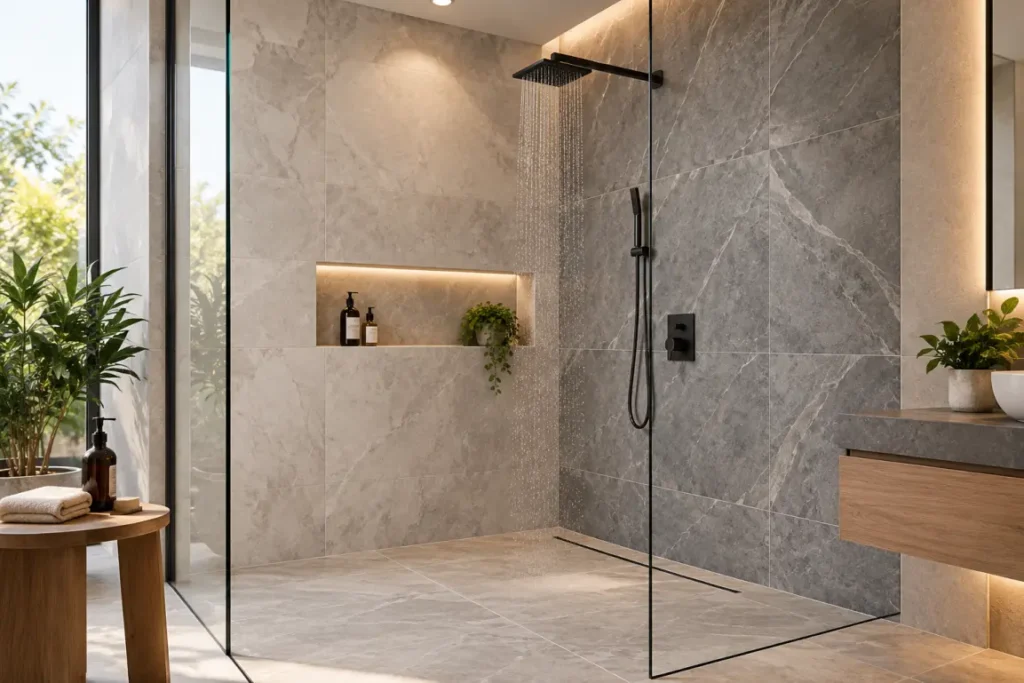
Choosing the right tile for your shower is about more than looks. Your shower tiles face water, soap, and daily use, so they need to suit the space. Porcelain tile is a popular choice because it absorbs very little water and comes in many colors, sizes, and designs.
At Rocagres Surfaces, you can explore a range of porcelain bathroom tiles for different bathroom styles. This guide explains how to choose tiles for shower walls and floors, compare finishes, and care for your tiles.
Why Choose Porcelain Tile for a Shower?
Porcelain tile is made from clay and other natural materials. These materials are pressed into shape and fired at high temperatures. This process creates a dense tile that absorbs very little water.
Here are three reasons why porcelain can work well in a shower.
1. Low Water Absorption
Porcelain tiles absorb very little water. Rocagres Surfaces lists water absorption of less than 0.5% for its porcelain bathroom tiles. This makes porcelain a useful choice for many wet areas.
However, the tile alone does not make a shower waterproof. Water can pass through grout joints and reach the surface behind the tiles if the shower is not installed correctly. A suitable waterproofing system is needed to protect the walls and floor.
2. Durability for Daily Use
Shower tiles face regular contact with water, soap, and cleaning products. Porcelain is a dense material that can handle daily use when the right product is chosen and installed correctly.
For shower floors, you also need to consider slip resistance. Choose a tile made for wet floors rather than selecting one based only on its appearance.
3. Easy Cleaning
Porcelain tiles are generally easy to clean. Regular wiping helps remove soap residue and water spots before they build up.
You can explore the Rocagres Surfaces porcelain tile collection to find different porcelain styles for your bathroom.
Grout joints need extra care because dirt and soap can collect in them. The type of grout you choose also affects how it should be cleaned and maintained.
Porcelain vs. Ceramic Tile in the Shower
Both porcelain and ceramic tiles can be useful in a bathroom, but they have different properties.
Ceramic tile: Ceramic tiles come in many colors and designs. Some are suitable for bathroom walls and other interior surfaces. Always check the product specifications before choosing ceramic tile for a shower floor.
Porcelain tile: Porcelain absorbs less water than many other ceramic tiles. It is available in different sizes and finishes, including marble-look, wood-look, and concrete-look designs. Choose a product that is suitable for the part of the shower where you plan to use it.
For either material, check the manufacturer’s instructions before buying. A tile that works well on a wall may not be suitable for a shower floor.
Best Porcelain Tiles for Shower Walls
Shower walls give you plenty of room to explore different colors, patterns, and finishes. You can choose a simple design for the whole shower or use a different tile on one wall to create a focal point.
Choose the Right Tile Size
Tile size affects the look of your shower and the number of grout joints you will need to clean.
300 × 600 mm tiles are a practical option for many bathroom walls. You can arrange rectangular tiles horizontally for a wider look or vertically to draw the eye upward.
Larger tiles, such as 600 × 1200 mm, can create a more open look with fewer grout lines. For spacious walk-in showers, larger formats such as 1200 × 1800 mm may also work, depending on the wall and installation requirements.
Rocagres Surfaces offers several formats through its tile size collection.
Very large slabs, such as 1200 × 2800 mm, can create a more continuous wall with fewer visible joints. These slabs need careful handling, cutting, and installation, so work with an experienced installer.
Choose a Finish for the Walls
The finish affects how your shower looks and how much light it reflects.
- Glossy tiles: These reflect light and can make a small shower feel brighter.
- Matt tiles: These have less shine and create a softer look.
- Textured tiles: These add depth and detail to a feature wall.
- Polished tiles: These create a smooth, reflective appearance and can work well on suitable walls. Explore Rocagres Surfaces polished PGVT tiles
If you prefer a softer look with less shine, explore the Rocagres Surfaces matt finish tile collection for more design options.
Choose a finish that suits the product’s intended use. A finish that looks good on a wall should not automatically be used on the shower floor.
Choose a Tile Layout
The way you arrange your tiles can change the look of your shower.
- Brick layout: Tiles are arranged in offset rows for a classic look.
- Stack bond: Tiles line up in straight rows and columns for a clean, modern style.
- Herringbone: Rectangular tiles are arranged in a zigzag pattern for added detail.
- Vertical layout: Rectangular tiles are placed upright to draw attention to the height of the wall.
Small tiles create more grout joints, which means more areas to clean. Choose a layout that suits your design and the size of your shower.
Best Porcelain Tiles for Shower Floors
The shower floor needs more care than the walls because people stand on it with wet, often soapy feet.
When choosing a floor tile, consider its surface, size, drainage, and suitability for barefoot use. Do not choose a tile based on its finish alone.
Look for a Suitable Matt or Textured Tile
Matt and textured tiles can be good options for shower floors, but not every matt or textured tile provides the same level of grip.
Rocagres Surfaces lists matt and textured bathroom tiles with a wet coefficient of friction (COF) of 0.6 or higher. Before buying, ask the company for the specific product’s test information and confirmation that it is suitable for your shower floor.
The Tile Council of North America explains how dynamic coefficient of friction (DCOF) is measured. This measurement helps compare flooring surfaces, but it does not guarantee that a floor will never be slippery. Water, soap, surface texture, drainage, and cleaning all affect slip risk.
Choose a tile that is specifically suitable for a wet shower floor and follow the manufacturer’s guidance.
Consider Tile Size and Grout Joints
Tile size also affects how the shower floor can be installed.
Smaller tiles are often useful for shower floors because they can follow the slope toward the drain more easily. They also create more grout joints, which may affect traction.
Large tiles can work in some shower designs, but the installer must check the slope, cuts, drainage, and tile suitability before choosing the format.
If you prefer a large-tile look, ask your installer which sizes and finishes are appropriate for your shower layout.
Mosaic Tiles for Shower Floors
Mosaic tiles are small tiles arranged on sheets. They are a popular choice for shower floors because they can follow the slope toward the drain more easily than many large tiles.
The smaller pieces also create more grout joints. These joints can affect traction, but they do not guarantee a slip-resistant floor. The tile surface, product specifications, and installation all matter.
Mosaic tiles have a few points to consider:
- More grout joints: You may need more time to clean the floor.
- Flexible layouts: Small pieces can fit around drains and corners.
- Many design options: You can choose hexagon, square, or other patterns.
- More installation work: Careful fitting and grouting are important for a neat result.
You can also use mosaic tiles as a decorative strip or feature on a shower wall. If you prefer a cleaner look with fewer grout joints, explore larger tiles that are suitable for your intended application.
Stylish Shower Tile Ideas
Porcelain tiles come in many designs, so you can create a shower that suits the rest of your bathroom.
Here are six ideas to consider.
1. Marble-Look Tiles for an Elegant Shower
Marble-look porcelain tiles bring the appearance of natural marble to a bathroom. Soft gray veins on a white background can create a bright, elegant look.
Explore Statuario and Calacatta marble-look tiles for design inspiration. Check the specific product details before choosing a tile for your shower wall or floor.
2. Wood-Look Tiles for a Warm Feel
Wood-look porcelain tiles bring the appearance of natural wood into a bathroom. Warm brown and beige tones can soften a modern space and work well with simple bathroom fixtures.
For shower floors, check the product’s wet-use suitability before choosing it. A wood-look design does not automatically mean that the tile is suitable for a wet floor.
3. Concrete-Look Tiles for a Modern Bathroom
Concrete-look tiles suit bathrooms with simple shapes, neutral colors, and modern fixtures. Gray tones can work well with white walls, black fittings, or wooden bathroom furniture.
You can use this look on a suitable shower wall or other bathroom surfaces to create a consistent design.
4. Subway Tiles for a Classic Look
Subway tiles are rectangular tiles that work well in both traditional and modern bathrooms. An offset brick pattern creates a familiar look, while straight rows give the wall a cleaner appearance.
White subway tiles can brighten the shower, while darker grout can make the pattern stand out.
5. Textured Tiles for a Feature Wall
A textured tile can add depth to one shower wall without making the whole bathroom look too busy.
Choose a design that complements the other tiles and bathroom fixtures. Before using a textured product in a wet area, check its cleaning requirements and intended application.
6. Matching Tile and Grout Colors
The grout color can change the overall look of your shower.
Grout that closely matches the tile creates a more continuous appearance. A contrasting color makes each tile stand out.
Think about how the grout will look with your wall tiles, floor tiles, and bathroom fixtures before making your final choice.
Tile Choices to Avoid in a Shower
Some tiles may look attractive but may not suit a shower’s wet conditions. Keep these points in mind:
- Do not use a tile on the shower floor unless the manufacturer confirms that it is suitable for that use.
- Do not assume that a polished, matt, or textured finish alone tells you how safe a wet floor will be.
- Avoid choosing a tile without checking its product specifications and intended application.
- Do not ignore the shower slope, drain layout, or waterproofing system when planning the installation.
If you are unsure which tile to choose, ask Rocagres Surfaces for product details and work with a qualified installer.
How to Choose the Right Shower Tiles: A Simple Checklist
Use this checklist before you buy your tiles.
- Choose the material: Porcelain is a useful option for many shower walls and floors because it absorbs very little water.
- Select the right product for each area: Check that the tile is suitable for walls or floors, depending on where you plan to use it.
- Choose the size: Consider the wall height, shower layout, drain location, and number of grout joints.
- Check the floor requirements: Ask for the product’s slip-resistance information and confirmation that it is suitable for wet, barefoot use.
- Plan the waterproofing: Make sure the installer uses an appropriate waterproofing system.
- Choose a lasting design: Pick colors and patterns that work with the rest of your bathroom.
- Check cleaning requirements: Ask how to care for the tile and grout you choose.
Taking these steps before purchasing can help you avoid problems during installation.
How to Install and Care for Porcelain Shower Tiles
Even a good tile needs the right installation and care. The waterproofing system, tile adhesive, grout, and drainage all play important roles.
Install the Shower Correctly
The surface must be prepared properly before the tiles are installed. A suitable waterproofing system protects the structure behind the tiles from moisture.
The shower floor must also slope toward the drain so that water can flow away instead of collecting in low spots.
Large tiles and complex layouts may require special tools and careful cutting. An experienced installer can help plan the tile layout, drain cuts, corners, and other details.
Always follow the tile manufacturer’s instructions and the requirements for the complete shower system.
Check Whether the Grout Needs Sealing
Not all grout needs the same care. Some grout types require a sealer, while others may not.
Ask your installer which grout is being used and follow its manufacturer’s instructions for curing, cleaning, and sealing. If a sealer is required, apply it at the recommended time and repeat it as directed.
Remember that grout sealer does not replace the waterproofing system behind the tiles.
Keep the Shower Tiles Clean
Regular cleaning helps prevent soap residue and water spots from building up.
- Wipe the walls with a soft cloth or squeegee after use.
- Use a suitable bathroom cleaner according to the tile manufacturer’s instructions.
- Clean grout joints regularly with an appropriate brush.
- Rinse away cleaning products when required and allow the area to dry.
- Use the bathroom exhaust fan to help reduce moisture.
- Avoid abrasive tools or strong cleaning products unless the manufacturer confirms they are suitable.
The right cleaning routine depends on the tile finish and grout type. Check the care instructions for your specific products before using a new cleaner.
Frequently Asked Questions
Is porcelain tile good for shower walls and floors?
Porcelain is a popular choice because it absorbs very little water and comes in many designs. Choose a product that is suitable for the intended area, especially the shower floor.
Is porcelain tile slippery in a shower?
It depends on the tile surface and the conditions. Water and soap can make surfaces slippery, so check the product’s wet-use classification and slip-resistance information before choosing a shower-floor tile.
Do I need to seal porcelain tile in a shower?
Porcelain tiles generally do not need sealing, but the requirements depend on the product. Grout may need a sealer, depending on its type. Follow the manufacturer’s instructions.
What size tile is best for shower walls?
Tiles such as 300 × 600 mm and 600 × 1200 mm are common options for bathroom walls. Larger formats can create fewer grout joints, but the right size depends on the wall, layout, and installation requirements.
Is porcelain better than ceramic tile for a shower?
Porcelain absorbs less water than many ceramic tiles, making it a useful option for wet areas. However, both materials vary by product, and the tile must be suitable for its intended use.
Can I use wood-look or marble-look tiles in a shower?
Yes, some porcelain tiles have wood-look or marble-look designs that work well in showers. Check the specific product’s intended application before using it on the floor.
What is the best way to clean porcelain shower tiles?
Use a suitable cleaner and a soft cloth or sponge. Follow the manufacturer’s cleaning instructions and pay attention to the grout joints, where soap residue and dirt can collect.
Conclusion
Choosing the right shower tile starts with understanding where you plan to use it. Consider the tile material, size, finish, slip resistance, and cleaning needs before making your decision.
Porcelain offers many design options for shower walls and floors, but the specific product must suit the intended application. Proper waterproofing and installation are just as important as the tile itself.
Explore the Rocagres Surfaces bathroom tile collection to discover different sizes, finishes, and designs. If you need help choosing a suitable product, contact the Rocagres Surfaces team to discuss your project.