
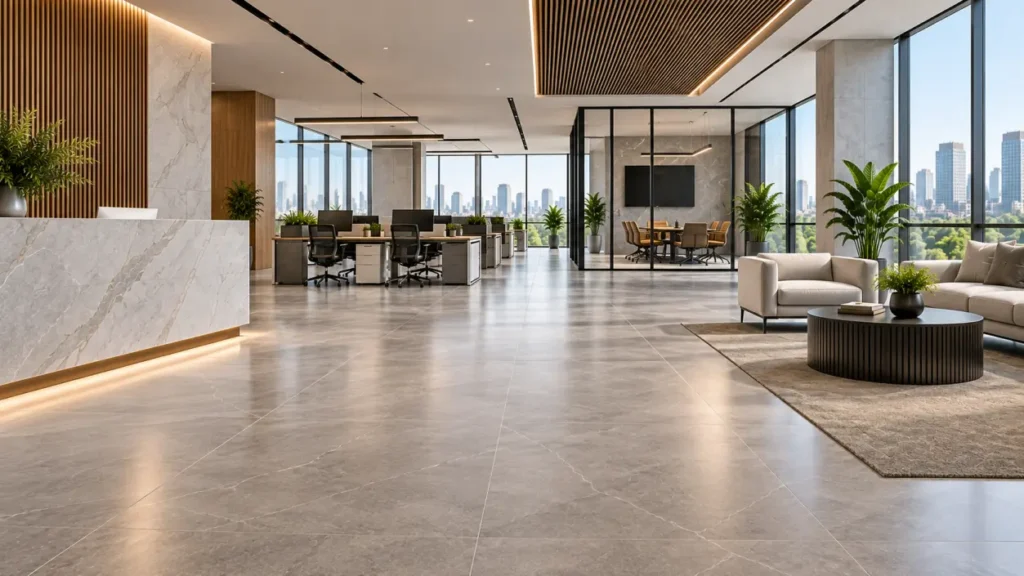
Quick Answer: Modern office tiles design is about clean lines, calm colors, and smart zoning. Use large-format porcelain tile in soft neutrals like gray, warm white, and charcoal for most of the floor. Add texture with concrete-look or wood-look tile. Save bold patterns, borders, and accent colors for small areas like the lobby and break room. Choose a matt finish for safety and easy cleaning, and pick a size such as 600x1200mm for fewer grout lines and a sleek look.
A modern office should look sharp, feel comfortable, and be easy to maintain. The floor plays a big part in all three. The right tile gives your workspace a polished look that lasts for years, and it holds up to daily foot traffic without fading or chipping. If you are planning a new office or a refresh, start by exploring the best office floor tiles to see what is possible.
This guide keeps things simple. We explain what makes a tile design modern, then walk through 18 stylish design ideas, zone by zone.
What Makes an Office Tile Design “Modern”?
Modern design is not about following every trend. It is about a few simple principles.
- Clean and simple. Modern floors avoid clutter. You will see calm surfaces, straight lines, and few grout lines.
- Neutral base, bold accents. Most of the floor stays quiet. One or two areas carry the personality.
- Natural looks. Concrete, stone, marble, and wood looks bring warmth into a workspace.
- Large formats. Big tiles make rooms feel open and bright.
- Function first. A stylish floor still has to be safe, durable, and easy to clean.
Keep these five ideas in mind, and every design choice below becomes easier.
Modern Office Tile Trends Worth Knowing
Large-format tiles: Bigger tiles mean fewer grout lines, and fewer grout lines mean a smoother, more upscale look. They also make cleaning faster.
Concrete and cement looks: The industrial-chic look is still popular. It feels contemporary, neutral, and pairs well with glass, metal, and wood furniture.
Warm wood-look tile: Offices are getting softer. Wood-look porcelain gives the feel of timber without the scratches, water damage, or upkeep.
Marble and stone looks: Soft veining in white, gray, or beige adds elegance, especially in reception areas.
Zoned floors: Instead of one tile everywhere, modern offices use different tiles to mark different spaces. It guides movement and improves the flow of the whole floor.
Biophilic style: Earthy tones, natural textures, and plants create a calmer, healthier mood, and tile is a great base for that look.
Choosing the Right Tile Before You Pick a Design
A beautiful floor is only useful if it performs. Check these four basics first.
Material: Porcelain is the best all-around choice for offices. It is dense, strong, and absorbs very little water, so it resists stains and spills. Ceramic works well on walls and in low-traffic rooms.
Finish: A matt finish is the smart pick for most office floors. It hides dust and scuffs and gives better grip than glossy tile. Glossy tile looks bright, so use it in small doses.
Size: Bigger tiles suit open areas, and smaller tiles suit borders and details. We cover this in the size guide below.
Slip resistance: In the USA, tile for level interior floors that may get wet should have a wet DCOF (dynamic coefficient of friction) of 0.42 or higher, based on the Tile Council of North America’s slip resistance standards. Ask your supplier for test results.
18 Modern Office Tile Design Ideas by Zone
Lobby and Reception
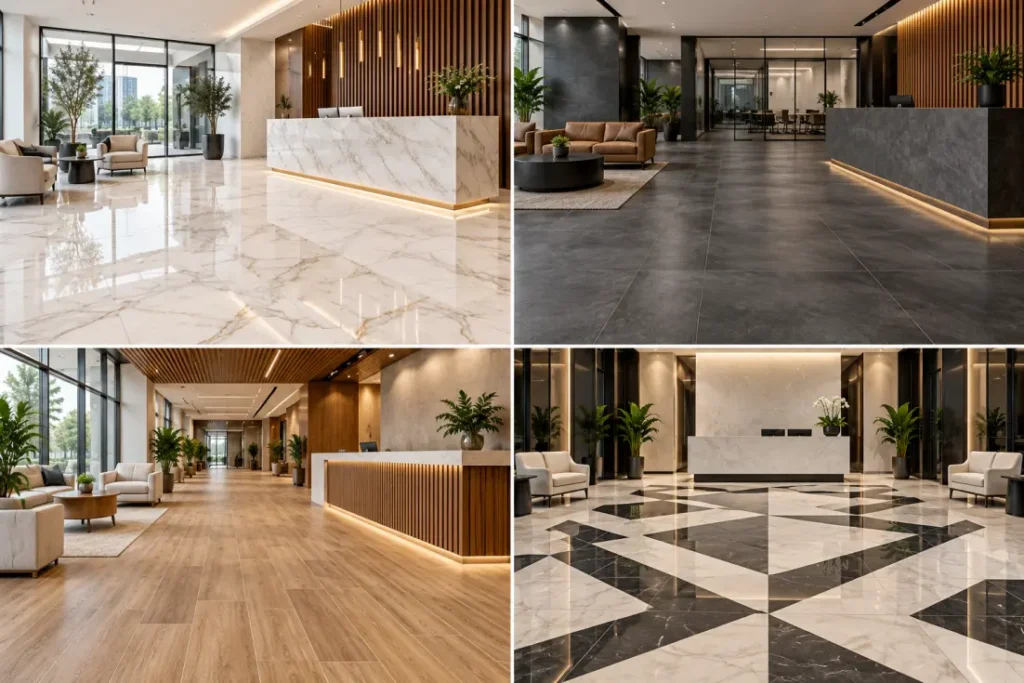
The lobby sets the tone for your company. This is where design ideas can be the boldest, since visitors see it first.
1. Large marble-look slabs.
A soft white or gray marble look in a big format feels luxurious and calm. With few grout lines, the space looks larger and cleaner.
2. Monochrome charcoal floor.
A deep charcoal or graphite tile gives a confident, upscale mood. It works well for law firms, finance offices, and consulting brands.
3. Brand color border.
Run a slim strip of your brand color along the reception desk or entrance. It is subtle, tidy, and easy to update later.
4. Terrazzo-look tile.
A speckled terrazzo pattern brings a fresh, creative feel. Tech companies and design studios love it.
Open Workstation Areas
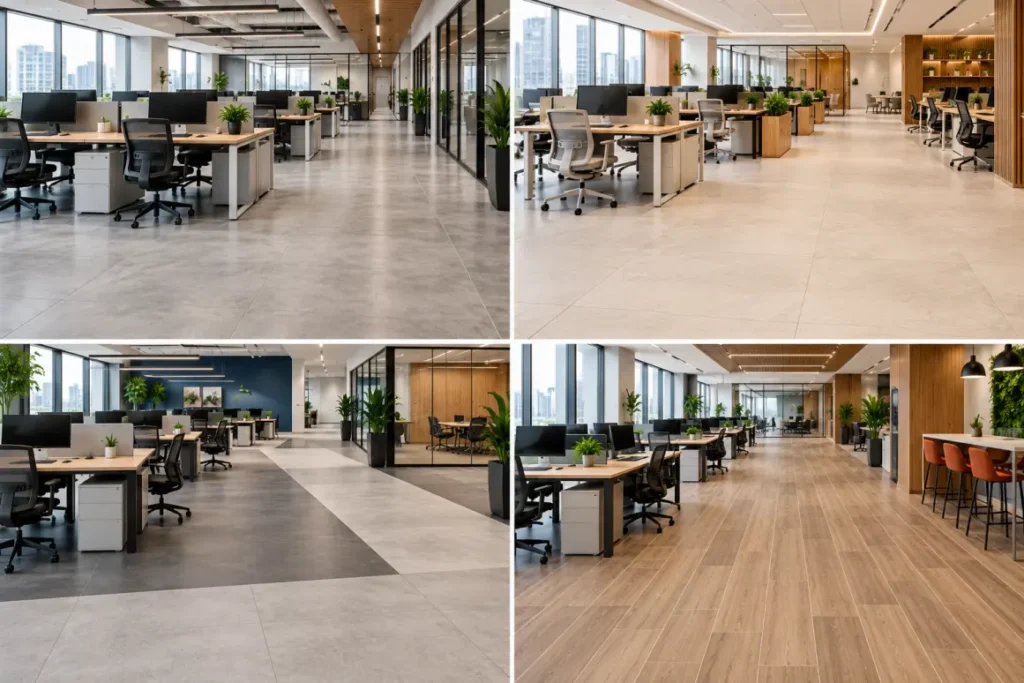
Workstations often cover more than half of the floor. A floor that is too busy will tire the eyes over an eight-hour day, so keep this area quiet.
5. Light gray concrete look.
This is the modern office classic. It is neutral, easy to match with furniture, and stays in style through many refreshes. Our cemento tiles give you this look with the strength of porcelain.
6. Warm off-white with soft texture.
This is a friendlier option than gray. It looks great with wood desks, plants, and natural light.
7. Color-block team zones.
Use a slightly lighter or darker neutral to mark team areas. You define space without adding walls.
8. Long plank tile.
Slim wood-look or concrete-look planks laid in one direction create movement. They draw the eye toward a focal point, such as a central breakout area.
Meeting Rooms and Boardrooms
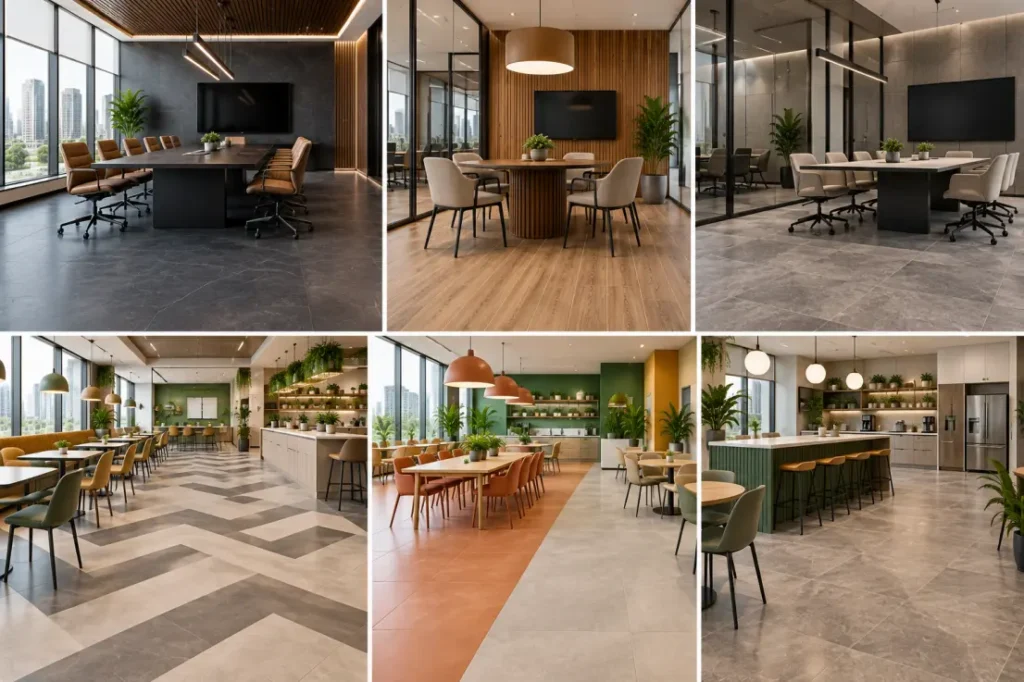
People sit still and focus here, so the floor should set the right mood.
9. Deep navy or charcoal matt.
A darker tone creates a sense of focus and importance, which suits a boardroom well.
10. Wood-look tile for huddle rooms.
Warm tones make casual meeting spaces feel relaxed. It signals a less formal, more open kind of conversation.
11. Textured matt surface.
Glass-walled meeting rooms can echo. A gently textured tile feels refined, and it avoids the harsh shine of a glossy floor.
Break Room and Cafeteria
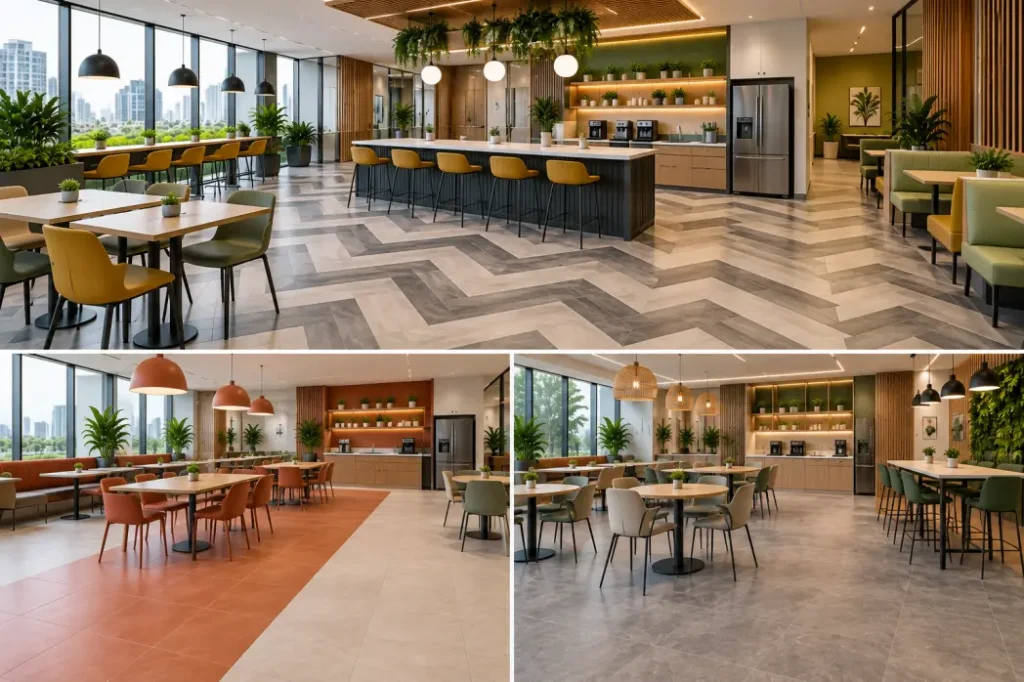
Spills happen here. Safety comes first, but that does not mean the design has to be boring.
12. Bold pattern in a matt finish.
A geometric, herringbone, or chevron layout gives the space its own character. matt keeps it safe and easy to mop.
13. One bright accent color.
A warm yellow, soft green, or terracotta tone in the break room clearly separates it from the calm work areas.
14. Stone-look tile with grip.
You get a natural, upscale look and dependable slip resistance. This combination suits busy pantry areas well.
Corridors and Private Cabins
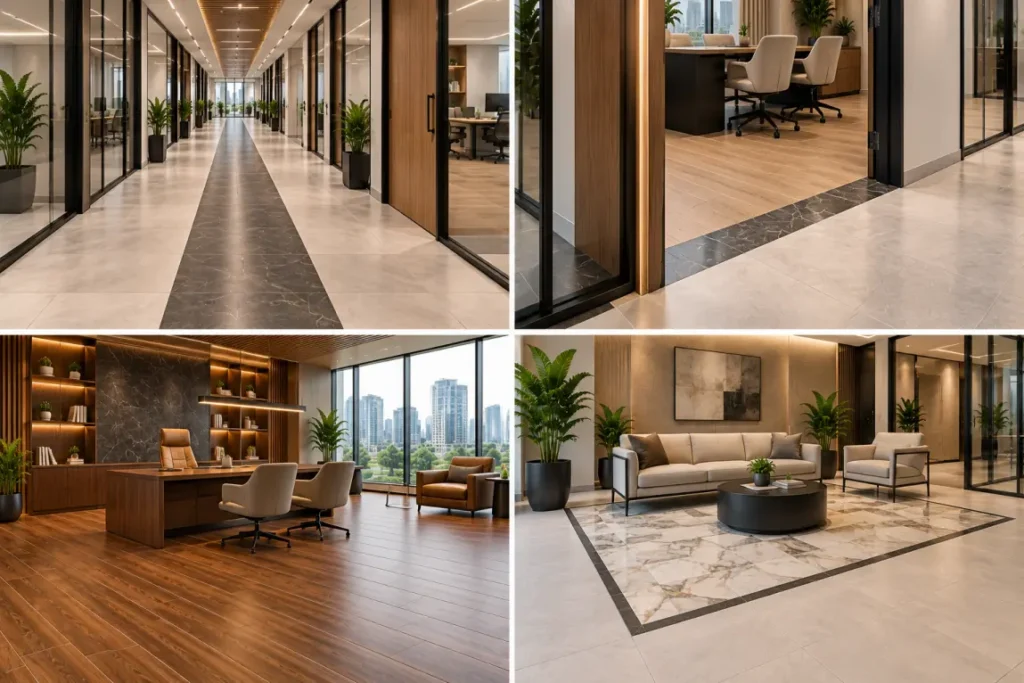
15. Directional strips in corridors.
A contrast line down the hallway guides people to key places, like the break room or the exit. It works as design and wayfinding at once.
16. Border tiles at doorways.
A narrow border tile at each room entrance marks the change from hallway to room without a step or threshold.
17. Rich wood look in executive cabins.
Walnut or teak tones bring warmth and a homey feel to leadership offices. They signal comfort and quality.
18. The tile rug effect.
Use a designer tile that looks like an area rug under the seating area, with plain tile around it. You get a layered, styled look with no real rug to clean, replace, or trip over.
Best Tile Sizes for Modern Offices
Size changes how a space feels. This quick guide helps you match size to zone.
| Tile Size | Best For | Why It Works |
| 1200x1800mm | Lobbies, large reception areas | Very few grout lines, a grand feel |
| 600x1200mm | Workstations, corridors, meeting rooms | Popular, balanced, easy to install |
| 200x1200mm | Cabins, accent and direction floors | Plank look with wood-tone warmth |
| 300x600mm | Restrooms, small utility areas | Compact and practical |
For most office zones, 600x1200mm tiles are a safe and stylish starting point. Check which sizes are available for the collection you like before you finalize your plan.
Matt, Glossy, or Something Else?
Finish affects both looks and safety, so it is worth a closer look.
matt is the top pick for modern offices. It has a soft, low-sheen surface that hides fingerprints and scuffs. It also gives better grip. Browse our matt tiles for high-traffic areas like corridors and workstations.
Glossy reflects light and makes small spaces feel brighter. It shows footprints and can be slippery when wet. Use it for accents, not for main walkways.
Textured or rustic finishes add depth and grip. They suit break rooms, entryways, and any zone where you want extra safety and a natural feel.
Rule of thumb: the busier the zone, the more matt or textured the tile should be.
Choosing Colors for a Stylish, Modern Look
Color shapes how a workspace feels. Keep these simple ideas in mind.
- Light neutrals (warm white, soft gray, beige) make a space feel open and bright.
- Dark neutrals (charcoal, graphite, navy) feel serious and premium. Use them in smaller rooms or as accents.
- Warm tones (wood, sand, terracotta) create a welcoming mood.
- Bright accents (yellow, green, blue) add energy in small doses.
A good formula is 70% neutral base, 20% supporting tone, and 10% bold accent. It keeps the space stylish without feeling loud.
Simple Tips for a Better Result
- Keep a cohesive look. Stay within one color family across the office, and vary tone and texture instead of everything at once.
- Think about lighting. Natural and artificial light change how tile looks. View samples in your actual space.
- Choose grout carefully. A grout color close to the tile gives a seamless look. A contrast grout creates a graphic effect.
- Order extra. Buy about 10% extra for cuts and waste, or about 15% for large-format tile and diagonal layouts.
- Plan for change. Furniture and branding change over time. A neutral base floor stays fresh through every refresh.
- Work with the pros. Involving your architect or designer early saves time and avoids costly changes. Our team supports architects and designers with material advice and project help.
Common Mistakes to Avoid
- Picking only for looks. A gorgeous tile that is slippery or scratches easily becomes a daily problem.
- Using polished tile everywhere. Glossy floors in lobbies, corridors, and break rooms can be slick.
- Choosing one busy pattern for the whole office. It feels tiring and dates quickly.
- Ignoring tile quality. Poor-quality tile can chip, fade, or wear unevenly. Check for consistent color, flat surfaces, and clean edges.
- Skipping samples. Always view a sample in your own light before ordering the full quantity.
- Forgetting maintenance. Dark, glossy tile shows dust, and very light tile shows dirt. Pick a tone that fits how your team really uses the space.
Frequently Asked Questions about Office Tiles
-
What are the best tiles for a modern office?
Large-format porcelain tile in a matt finish is the best choice for most modern offices. It is strong, easy to clean, and comes in stylish looks like concrete, marble, stone, and wood.
-
Which tile color is best for an office floor?
Light to mid-tone neutrals like gray, warm white, and beige are the safest choices. They look clean, hide dirt well, and work with almost any furniture. Add darker or bolder tones in smaller areas for style.
-
Can I mix different tile designs in one office?
Yes. Mixing tiles by zone is a modern approach. It marks different spaces, guides movement, and lets you spend more on the lobby and less on back-of-house areas.
-
How do I make a small office look bigger with tile?
Use light-colored tile in a large format, such as 600x1200mm, and keep grout lines thin. A single consistent tile across the space also helps it feel open.
-
How much extra tile should I order?
Order about 10% extra for cuts and breakage. For large-format tile or diagonal layouts, order about 15%.
Ready to Design Your Modern Office Floor?
A great office floor comes from choosing the right tile for each zone. With over 23 years of manufacturing experience, Rocagres Surfaces offers porcelain tile in the sizes, finishes, and looks that modern workspaces need. Our surfaces are made in India and stocked in Dallas, Texas, so US projects benefit from shorter lead times.
Not sure which tile suits your office?
Contact our team for a consultation. Share your project details, and we will recommend the right material, finish, and size for your space and budget.