
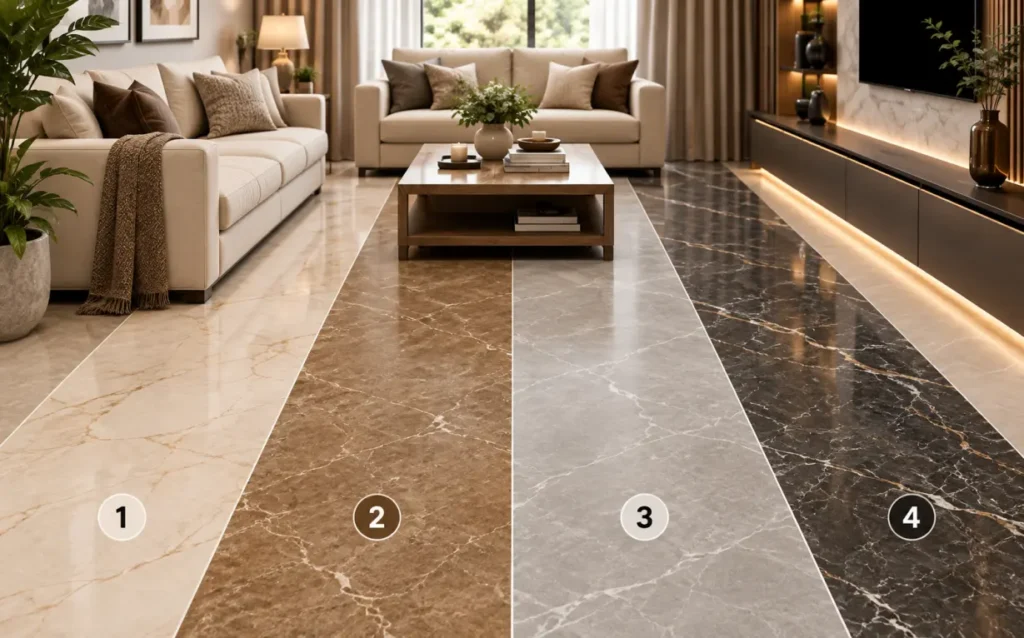
Your living room floor helps set the style for your whole home. It is one of the first things guests notice. Your family also walks on it every day. If you are planning a renovation or building a new home, tiles are a smart choice for your living room in 2026.
This guide shares the best living room tile ideas that work in real homes, not just in photos. You will learn how tile size, color, finish, and pattern can change the look of a room. You will also learn how to choose tiles based on your lighting, lifestyle, and durability needs.
We also share real tile collections from Rocagres Surfaces. This lets you see how these ideas look with real porcelain tiles.
Why Tile Still Wins for Living Room Floors in 2026
Carpet can trap dust and stains. Hardwood can scratch and may need refinishing. Tile offers an easier option. It resists moisture, scratches, and fading. It is also easy to clean with a damp mop.
Tile is a great choice for homes with kids or pets. It also works well in open-plan homes where the living room connects to the kitchen or dining area. Its durability and easy care make it a popular flooring choice.
Modern porcelain and vitrified tiles also offer many design options. You do not have to choose between easy care and the look of marble or hardwood. Digital printing can create realistic stone patterns and wood grain. You get the look of natural materials with a surface that is easy to clean and does not need regular sealing.
Choosing the Right Floor Tile Size for Your Living Room
Tile size shapes how a living room feels more than almost any other decision. Larger floor tiles mean fewer grout lines, and fewer grout lines create a cleaner, calmer look that makes a living area feel bigger.
| Tile Size | Best For | Why It Works |
|---|---|---|
| 300×600 mm | Smaller living rooms, transitional spaces | Easier to install on uneven subfloors; classic proportions |
| 600×1200 mm | Most modern living rooms | Balances visual impact with practical handling and installation cost |
| 1200×1800 mm | Open-plan living-dining areas | Creates a near-seamless, monolithic floor with minimal joints |
| 1200×2800 mm | Large format statement floors and feature walls | Maximum continuity; the fewest grout lines possible |
Rocagres Surfaces offers living room floor tiles in a range of sizes. For smaller rooms, 300×600 mm tiles can be a practical choice. In modern living rooms, 600×1200 mm tiles offer a balanced combination of size and visual impact. For larger open-plan spaces, 1200×1800 mm tiles can create a more spacious look with fewer grout lines.
If you choose large-format tiles, proper substrate preparation and installation are especially important. The National Tile Contractors Association (NTCA) provides guidance on large-format tile installation based on ANSI standards and TCNA Handbook methods.
Still not sure which tile size to choose? Our guide on how to choose the right tile size for every room explains the options room by room.
A simple rule can help. If your living room is under 200 square feet, try 600×1200 mm rectangular tiles in a running bond pattern. This can make the room look longer. For larger living rooms or open-plan living and dining areas, 1200×1800 mm tiles can create a spacious look with fewer visible lines.
Best Tile Colors for a Modern Living Room
White tile for a bright, open feel.
White tile helps reflect light and makes a room feel bigger. It works well in rooms with small windows or less natural light. White tiles also work with almost any furniture color. This makes them a good choice if you plan to change your decor later.
Beige tile for a warm feel.
Beige offers a warm look without making the room feel dark. It works well with wood furniture, linen sofas, and warm colors. Beige floor tiles are also a good choice for homes with a Mediterranean-style design.
Grey tile for a modern look.
Grey is a popular choice for modern living rooms. It gives the room a clean and neutral look. Light grey can make a room feel more open. Darker grey can add depth and work well with bold colors such as navy or mustard.
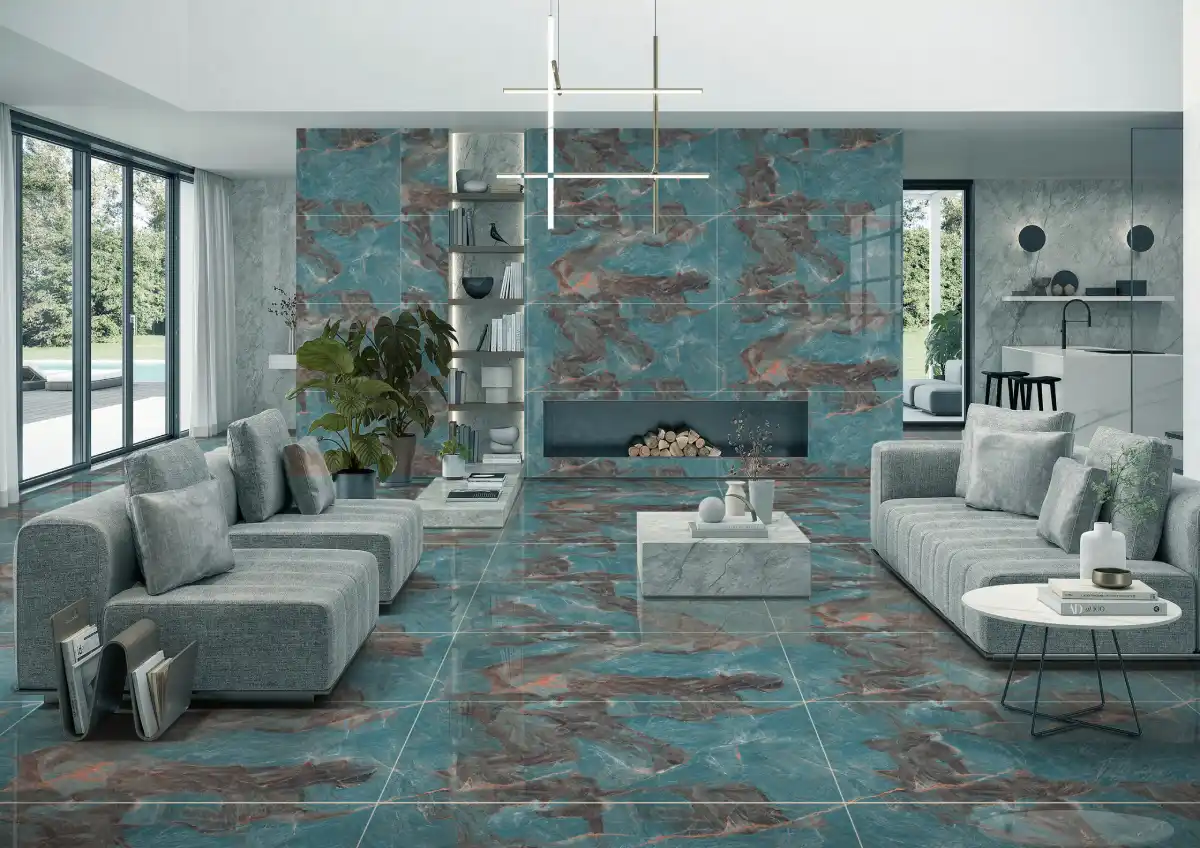
Marble-Look Tiles: Timeless Elegance for the Living Room
Marble-look porcelain tile gives your living room an elegant look without the upkeep of real marble. Porcelain is also easier to care for than natural stone. It resists stains from spills, coffee, wine, and pet accidents. It also does not need regular sealing.
Rocagres Surfaces’ marble look tile collection has white backgrounds and bold veining inspired by Italian marble. The Italian Marble collection offers softer veining for a warmer look. Both styles can work well in modern and traditional living rooms.
Large format marble-look tiles work well on living room floors. They need fewer grout lines, which creates a cleaner look. A narrow grout line that matches the tile can also help the marble pattern flow across the floor.
Wood-Look Tiles: Warmth Without the Maintenance
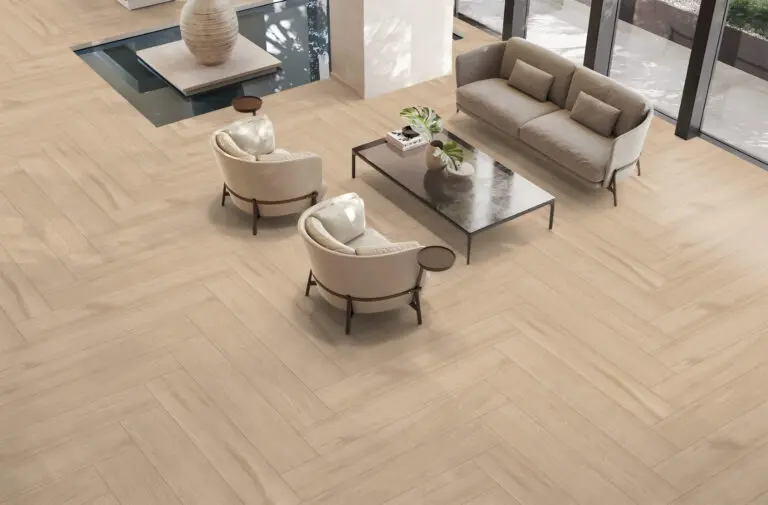
If you like the look of hardwood but want less maintenance, wood-look porcelain tile is a good option. It copies the look of real wood while offering better resistance to moisture and daily wear. This makes it a practical choice for living rooms that connect to kitchens or outdoor spaces.
Rocagres Surfaces’ Natural Wood Tiles collection includes plank designs such as Torino Beige and Torino Brown. These tiles add a warm and natural look to both modern and traditional homes.
You can also lay wood-look tiles in a herringbone or parquet pattern. These patterns can give the room a more detailed and custom look. Talk to your designer about the best layout for your space.
Stone-Look, Granite, and Rustic Tiles for Natural Interiors
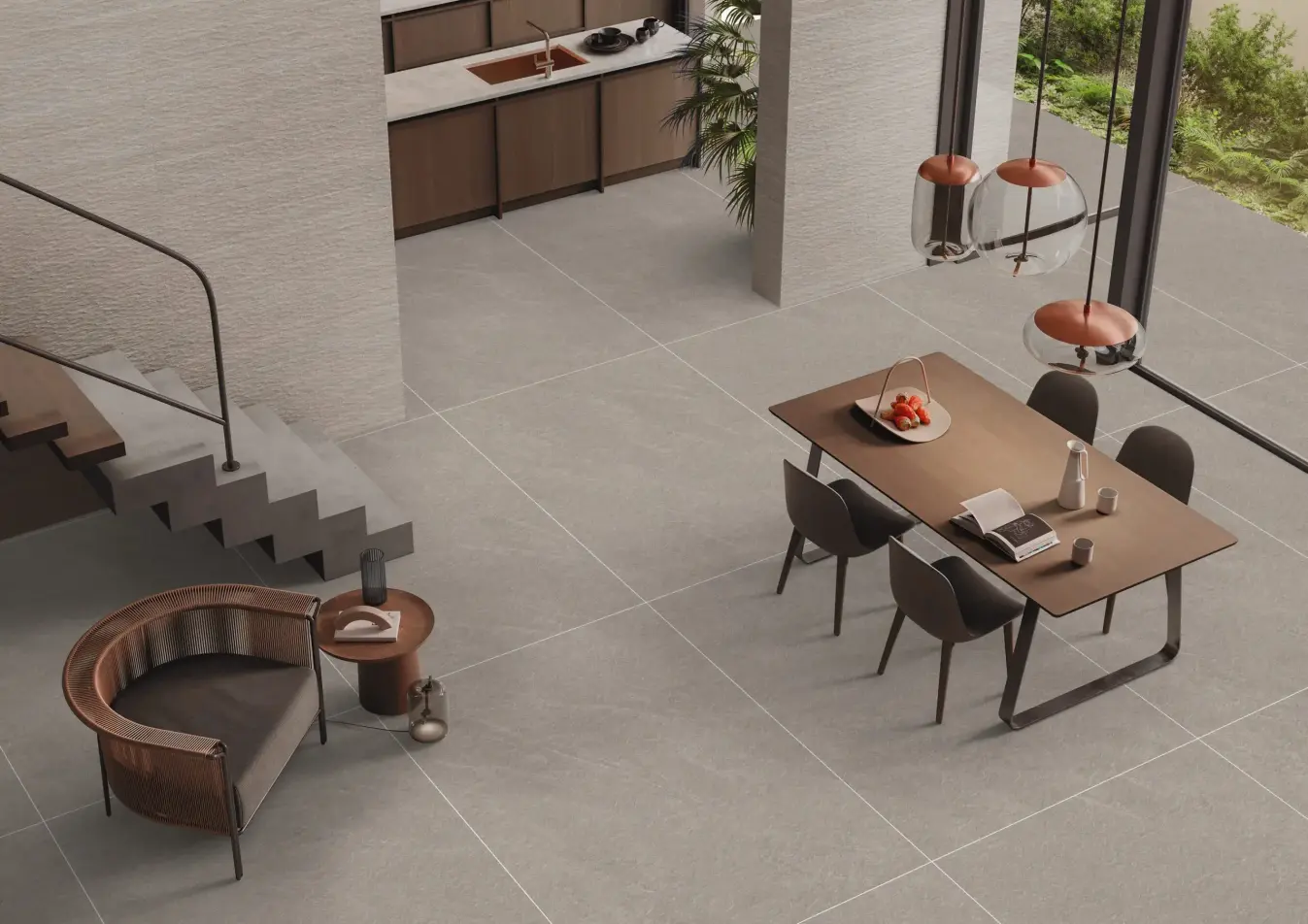
Not every living room needs a polished look. Stone-look and rustic tiles can give a room a warm and natural feel. They work well with farmhouse-style homes, cabin-style interiors, exposed wood, and stone fireplaces.
Granite-look tiles are another option. They offer the look of natural stone and can handle daily use with ease.
Rocagres Surfaces’ rustic tile finishes create the look of aged stone and terracotta. Their textured surface can also hide dust and small marks better than smooth, polished tiles.
Rustic tiles have more texture than polished tiles. Because of this, use a soft-bristle mop when cleaning them. This can help you clean the surface without leaving marks.
Tile Finish: Matte, Glossy, or Polished Which Suits a Living Room?
The finish of a tile changes both how it looks and how it performs underfoot.
| Finish | Look | Best Used In |
|---|---|---|
| Matt | Soft, low-sheen, understated | Living rooms with strong sunlight or large windows, where glare is a concern |
| Glossy | Reflective, bright, polished | Smaller or darker living rooms that need to feel more open |
| Polished / PGVT | Mirror-like, high-shine | Formal living rooms and open-plan entertaining spaces |
| Rustic | Textured, matt, tactile | Farmhouse, rustic, or biophilic-style interiors |
Matt finish tiles are the practical pick for most living rooms because they hide dust, smudges, and water spots between cleanings. Polished tiles bounce more light around the room, which helps in living rooms with limited natural light, though they need more frequent wiping to stay smudge-free. Neither option is universally “better” the right choice depends on how much natural light your room gets and how much daily upkeep you want to do. Our matt vs glossy tile comparison goes into more detail if you’re torn between the two.
Tile Layout Patterns That Elevate the Look
The pattern you choose has a real impact on how the room reads, independent of the tile itself.
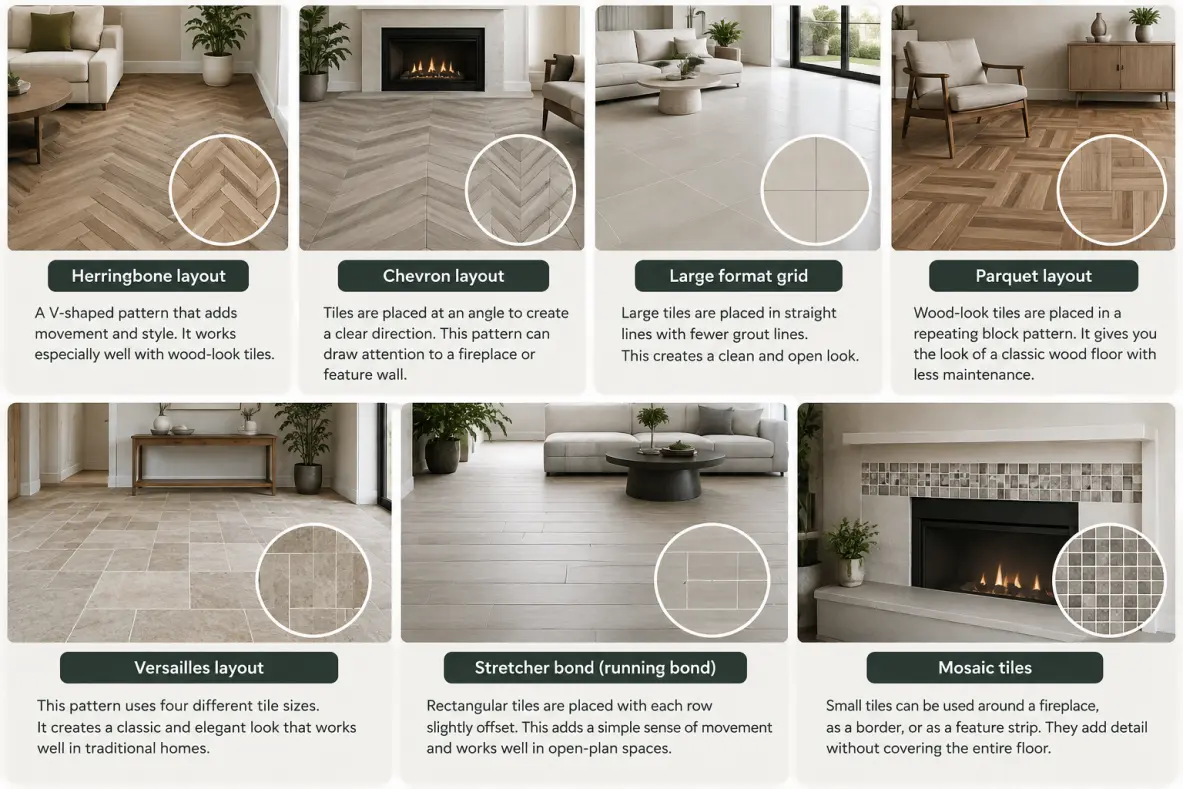
If you want a clean and simple living room, choose large format tiles with narrow grout lines that match the tile. If you want more detail, try a herringbone or chevron pattern. Wood-look and marble-look tiles work well with these layouts.
Designing a Living Room That Feels Calm and Minimal
Minimalist living rooms rely on clean lines, a restrained color palette, and as few visual interruptions as possible. Tile supports this modern style particularly well when you:
- Choose a large format tile (600×1200 mm or bigger) to reduce the number of grout lines.
- Stick to a single color family white, beige, or light grey, across the whole floor.
- Use a grout color that closely matches the tile, rather than a contrasting grout that draws attention to the joints.
- Select a matt or softly polished finish rather than a high-gloss surface, which can look busy under bright lighting.
This approach helps create a calm, cohesive backdrop that lets the furniture, artwork, and architecture of the room take centre stage.
Choosing Tiles Based on Room Size, Lighting, Furniture, and Lifestyle
There’s no single “best” living room tile, the right choice depends on your specific space.
Small living rooms benefit from lighter colors (white or beige) and larger tile formats, both of which cut down visual clutter and make the room feel more open. Avoid heavily patterned or dark tile in a small room, as it can make the space feel more closed in.
Low-light living rooms, especially those without large windows, do better with lighter tile colors and glossy or polished finishes that reflect light around the room. Rooms that already get plenty of natural light have more flexibility you can use a matt finish to control glare, or go darker with grey or stone-look tile without losing brightness.
Furniture and lifestyle matter too. Homes with pets or young children benefit from a scratch-resistant, matt or textured finish, since it hides everyday wear better than a high-polish surface and gives more grip underfoot. Felt pads on furniture legs and rubber cups under heavy sofas further protect any tile floor from scuff marks.
Open-plan homes should carry the same tile from the living room into adjoining hallways or dining areas. Running one tile through connected spaces creates a sense of continuity and makes the whole floor plan feel larger, rather than chopped into separate rooms.
Porcelain, Ceramic, and Vitrified Tiles: What’s the Difference?
These three terms come up constantly when shopping for tile design, and the difference matters for a living room floor.
| Type | Water Absorption | Best For |
|---|---|---|
| Ceramic | Higher | Walls and lower-traffic areas |
| Porcelain | Below 0.5% | High-traffic floors, including living rooms |
| Vitrified | Very low to near-zero | Heavy-use residential and commercial floors |
Porcelain tile is fired at higher temperatures than standard ceramic, which makes it denser, harder, and far more resistant to scratches and moisture exactly what a living room floor needs to handle daily foot traffic. Vitrified tiles go a step further, using a manufacturing process that fuses the material almost completely, which is why they’re often described as needing close to zero maintenance. Rocagres Surfaces’s porcelain tile collection covers both glazed designs, for realistic marble and wood visuals, and full-body options for added durability. If you’re also considering wall tile for a feature area near the living room, the same porcelain range works well for that too.
How Grout Lines Change the Look of a Room
Grout does more than fill the gap between tiles, it sets the visual rhythm of the entire floor.
- Narrow grout lines (1.5–2 mm) with a color-matched grout create a near-seamless look, which suits large format and marble-look tile.
- Wider grout lines are sometimes needed for rustic or textured tiles, and they can add to the handcrafted, organic character of the finish.
- Contrasting grout a darker grout with a light tile, for example, highlights the pattern and tile shape, which works well with geometric layouts like herringbone or chevron, but can make a small room feel busier.
For a clean, modern living room, aim for the narrowest grout joint your tile format allows, in a shade that closely matches the tile itself.
Maintenance and Durability: Making Your Choice Last
One of the biggest advantages of tile over carpet or hardwood is long-term upkeep. Porcelain and vitrified floor tiles don’t stain, fade, or need refinishing, and routine care is simple:
- Sweep or vacuum regularly to remove grit that can scratch the surface over time.
- Mop with a mild, pH-neutral cleaner avoid harsh acidic or abrasive products, especially on polished tiles.
- Use felt pads under furniture legs to prevent scuffing.
- For textured or rustic tiles, a soft-bristle mop lifts dirt from the surface grooves more effectively than a standard flat mop.
Porcelain and vitrified tiles also conduct heat well, which makes them a strong match for underfloor heating systems they warm up faster and spread heat more evenly than wood or carpet, and this helps enhance the look and comfort of the room together.
Bringing It All Together
The best living room tile idea for your home depends on the size of the room, how much natural light it gets, the furniture and lifestyle you’re designing around, and the overall style you’re going for. As a general starting point:
- Small or dim living rooms: large format, light-colored tile in a matt or glossy finish.
- Open-plan or large living rooms: 1200×1800 mm marble-look or stone-look tile with minimal grout lines.
- Warm, traditional interiors: wood-look tile in a parquet or herringbone layout.
- Busy households with kids or pets: matt or textured porcelain with a scratch-resistant surface.
Whichever direction you choose, working from real product samples, rather than photos alone makes a noticeable difference once the tile is installed under your own lighting. If you want to see how any of these floor tile designs would look in your space, you can explore the full Rocagres Surfaces living room tile collection or request a free sample before you commit.
Frequently Asked Questions
What is the best tile size for a living room floor?
Large format tiles such as 600×1200 mm and 1200×1800 mm work best for most living rooms because they reduce the number of grout lines, make the space feel bigger, and are easier to clean and maintain. Smaller rooms can still use 600×1200 mm for the same visual benefit in a more manageable size.
Which tile color makes a living room look bigger?
White and light beige tiles make a living room look bigger because they reflect light and create fewer visual breaks across the floor. Pairing a light color with a large format tile and minimal grout lines increases this effect further.
Is porcelain or ceramic tile better for a living room?
Porcelain tile is generally the better choice for a living room floor. It’s denser, more scratch-resistant, and absorbs less than 0.5% water, which makes it more durable for daily foot traffic than standard ceramic tile.
Do large tiles make a small living room look bigger?
Yes. Large-format tiles reduce the number of grout lines on the floor, which removes visual clutter and creates a more continuous surface. This makes a small living room appear more open and spacious.
What is the best tile finish for a living room?
Matt finish tiles are the most practical choice for living rooms because they hide dust, smudges, and water marks between cleanings. Glossy or polished finishes work well in darker rooms that need extra light reflection, but they show fingerprints and dust more easily.
How much grout spacing should I use for living room tiles?
For large-format and marble-look tiles, a narrow grout joint of around 1.5 to 2 mm in a color-matched grout creates the most seamless, modern look. Textured or rustic tiles may need a slightly wider joint depending on the manufacturer’s installation guidelines.
Are tile floors comfortable and warm enough for a living room?
Yes, especially when paired with underfloor heating. Porcelain and vitrified tiles conduct heat efficiently and spread warmth evenly across the room, often responding faster than wood or carpet flooring.