
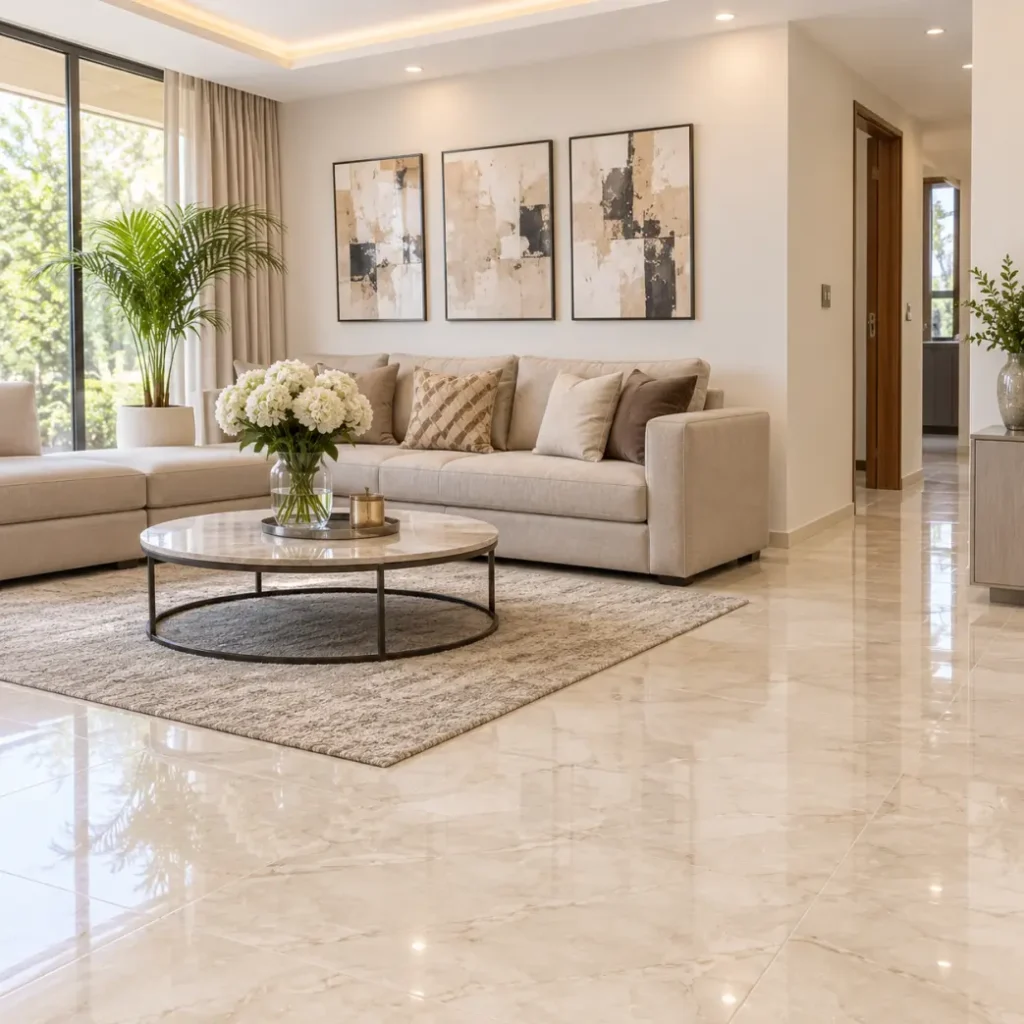
Choosing a tile for your floor is a big choice. You walk on it every day, spill things on it, and see it every time you enter a room. A good floor tile should look nice, feel safe underfoot, and stay strong for many years. But there are so many tile types on the market that it is easy to feel lost. Some tiles look like marble. Some look like wood. Some are made for wet bathrooms, and some are made for busy offices.
This guide explains the different types of tiles for floor use in very simple words. You will learn what each tile is, where it works best, and what to watch out for. We start with strong, easy-care durable porcelain floor tiles for homes and offices, because they fit almost every room. Tile is one of several different types of flooring, and it beats most of them for strength and easy cleaning. Then we look at color body tiles, large tiles, marble-look tiles, wood-look tiles, and more. Finally, we share easy tips to choose the right tile and keep it clean for a long time. By the end, you will know exactly which tile suits your space.
Different Types of Tiles for Floor at a Glance
Here is a quick list. Read it first, then jump to the tile you like.
| Tile type | Where it works best | Why people choose it |
| Porcelain tiles | Bathrooms, kitchens, hallways, outdoor areas | Strong and easy to clean |
| Color body tiles | Entryways, offices, shops | Chips are hard to see |
| Large format tiles | Living rooms, lobbies, open spaces | Fewer grout lines |
| Marble-look tiles | Living rooms, bathrooms, hotel lobbies | Luxury look, easier care |
| Wood-look tiles | Bedrooms, living rooms, kitchens | Warm look without real wood care |
| Cemento-look tiles | Modern homes, offices, cafés | Calm, plain concrete style |
Porcelain Floor Tiles
Porcelain is the most popular type of tile for floors today. It is made from fine clay and baked at very high heat. This makes the tile hard and dense, so it takes in very little water. Because of this, porcelain stands up well to spills, stains, scratches, and daily walking.
Another good thing about porcelain is the wide choice of looks. Printing technology can copy marble veins, stone texture, and wood grain on the tile. So you can have the style you love, and the tile is still easy to look after.
Use porcelain tiles in:
- Bathrooms and shower areas
- Kitchens
- Hallways and entryways
- Living rooms and bedrooms
- Offices and shops
- Patios and balconies, when you pick a tile made for outdoor use
Color Body Tiles
A color body tile has the same color all the way through, from the top to the bottom. Think of it like a chocolate bar that is chocolate inside too. If the tile gets a small chip, the damage is hard to notice because the inside looks like the top.
That is why color body tiles are a smart pick for places with heavy foot traffic. Entryways, office floors, shops, and school-style corridors all see many shoes each day. Color body tile is a strong choice when you want a floor that keeps its good looks under heavy use.
Large Format Tiles and Slabs
Large format tiles are big tiles, such as 600×1200 mm or 1200×1800 mm. Because each tile covers more floor, you need fewer grout lines. Fewer grout lines mean the floor looks smooth and clean. It also means less dirt gets stuck between tiles, so cleaning is easier.
Big tiles also make a room feel larger. This is why they are popular in living rooms, hotel lobbies, and open kitchens. Rocagres also offers sintered stone slabs for projects that need a very seamless look.
A small tip: big tiles are heavy and need a flat floor. Ask an experienced installer to lay them, so the tiles are installed evenly and last longer.
Marble-Look Tiles
Many people love the look of marble but worry about its upkeep. Real marble can stain and dull when it touches acids like lemon juice or vinegar. Marble-look porcelain gives you a similar veined pattern, but it is a much easier floor to live with.
You can pick soft white shades, bold gray veins, or warm cream tones. They look great in living rooms, bathrooms, and hotel lobbies. Rocagres offers Statuario, Calacatta, and Italian marble designs in porcelain.
Wood-Look Tiles
Wood-look tiles copy the grain and color of real boards. They come in long plank shapes, like 200×1200 mm, so the floor looks like timber. The big plus is that tile does not swell or bend when it gets wet, as real wood can.
If you want a warm, cozy feel, try natural wood look tiles for bedrooms and living rooms. They also work well in kitchens, where spills happen often.
Cemento and Plain Color Tiles
Some people like a calm, simple floor. Cemento-look tiles copy the soft gray style of concrete. Plain and pastel tiles give you one smooth color without a busy pattern. These decorative styles suit modern homes, offices, and cafés. A plain floor also makes your furniture and wall colors stand out.
Natural Stone Tile: Marble, Granite, and Slate
Natural stone tile is cut from real rock, so every piece is a little different. It looks beautiful, but it needs more care.
- Marble is soft and can lose its shine from acids.
- Granite is very hard, but it still needs sealing to stop stains.
- Slate has a rough, layered surface and can flake at the edges.
Stone floors usually need to be sealed and cleaned with gentle cleaners. If you want the stone look without extra work, porcelain tiles in marble or stone patterns are an easier choice. Rocagres Surfaces focuses on porcelain, color body tiles, and sintered stone surfaces.
Matt, Glossy, and Rustic Finishes
The finish is how the top of the tile looks and feels. It changes how safe, bright, and easy to clean your floor is.
- Matt finish: A soft, low-shine surface. It hides dust and gives better grip, so it is a smart pick for floors. Matt tiles are the first pick for most family homes.
- Glossy finish: A shiny surface that bounces light and makes a room look bright. It works well on walls and in dry rooms, but it can feel slippery when wet.
- Rustic finish: A textured, aged look that adds warmth and character.
Most floors look best with a matt or textured finish. Use glossy tile on walls or in small, dry spaces.
Best Tile Type for Each Room
The right tile depends on how you use the room. Here is a simple guide.
Bathroom
Bathroom floors get wet often, so grip matters most. Pick a dense tile with a matt or textured surface. The CDC’s NIOSH advises choosing floor material based on the work done in each area, and for a bathroom that means a surface with good grip. Many people use a matt tile on the floor and a glossy tile on the wall or shower. Browse anti-slip bathroom floor tiles to see how both finishes work together. Keep grout lines narrow to limit dirt and moisture.
Kitchen
Kitchen floors face spills, oil, and dropped pans. You need a tile that wipes clean fast. Porcelain is a strong match here, and a mid-size tile like 600×1200 mm keeps grout lines low. Explore stain-resistant kitchen floor tiles made for daily cooking and cleaning. If you add a backsplash, pick tiles in the same color family.
Living Room and Bedroom
These rooms need comfort and style. Large marble-look or wood-look tiles work well. Bigger tiles mean fewer grout lines, so the floor looks calm and open.
Outdoor Areas
Patios, balconies, and walkways face rain, sun, and heat. Pick a dense tile with a textured, slip-resistant surface made for outdoor use. Check out outdoor floor tiles for patios and walkways before you decide.
Offices and Busy Spaces
Shops, hotels, and offices have constant foot traffic. Choose a hard-wearing tile, such as porcelain or color body tile, that can handle shoes, chairs, and carts.
How to Choose the Right Floor Tile
Use these simple steps:
- Think about the room. Wet rooms need grip. Busy rooms need strong tile.
- Pick a finish. Matt for safety, glossy for a bright look.
- Choose a size. Small tiles suit tight spaces. Large tiles suit big rooms.
- Match color and pattern. Light colors make a room feel bigger. Dark colors feel rich but show dust more.
- Check the texture and shape. Smooth tiles are easy to wipe. Textured tiles grip better. Rectangular shapes make a room feel longer.
- Plan your budget. Add extra tiles for cuts and breakage.
Always read the product details for the exact tile you plan to buy, including its finish and where it can be used.
One more thing to know about tile flooring: the tile is only half the job. The grout between tiles and the way the floor is installed matter just as much. A good tile on a bumpy base can crack, and weak grout can let in dirt and water. Ask your installer how they will prepare the floor before work starts.
How to Clean and Maintain Your Tile Floor
Good care keeps your floor looking new. These steps work for most tile floors:
- Sweep or vacuum often. Small bits of dirt can scratch the surface.
- Mop with warm water and a mild cleaner. Use a pH-neutral cleaner, and avoid harsh acids.
- Dry the floor. A soft cloth stops water spots.
- Clean the grout lines. Gently scrub with a soft brush and a baking soda paste.
- Seal where needed. Natural stone and some grout types need sealing.
- Protect the floor. Use felt pads under furniture and doormats at the door.
Small habits help you maintain the floor with little effort. Wipe spills quickly, keep sand and grit off the surface, and check the grout lines once or twice a year for cracks or gaps.
Frequently Asked Questions
Which type of tile is best for a floor?
Porcelain is a strong all-around choice. It is dense, easy to clean, and works in most rooms. The best tile still depends on the room and your style.
Can I use the same tile on the floor and the wall?
Often yes, if the tile is made for floor use. Floors need more grip and strength than walls, so check the product details first.
What tile is best for a high foot traffic area?
Porcelain and color body tiles handle heavy foot traffic well.
Do all tile floors need sealing?
No. Most porcelain tile does not need sealing, but natural stone and some grout types do.
What size floor tiles should I choose for a small room?
Large-format tiles can make a small room look more open because they create fewer grout lines. However, the tile size should also match the room’s shape and layout. Choose a size that allows neat installation with fewer cuts and less tile wastage.
Conclusion
The best floor is the one that fits your room, your budget, and your daily life. If you are still comparing options, our team can help you pick the right material, finish, and size for your project. Contact our tile experts with your space details, and we will guide you to a tile that works for your home or project.