
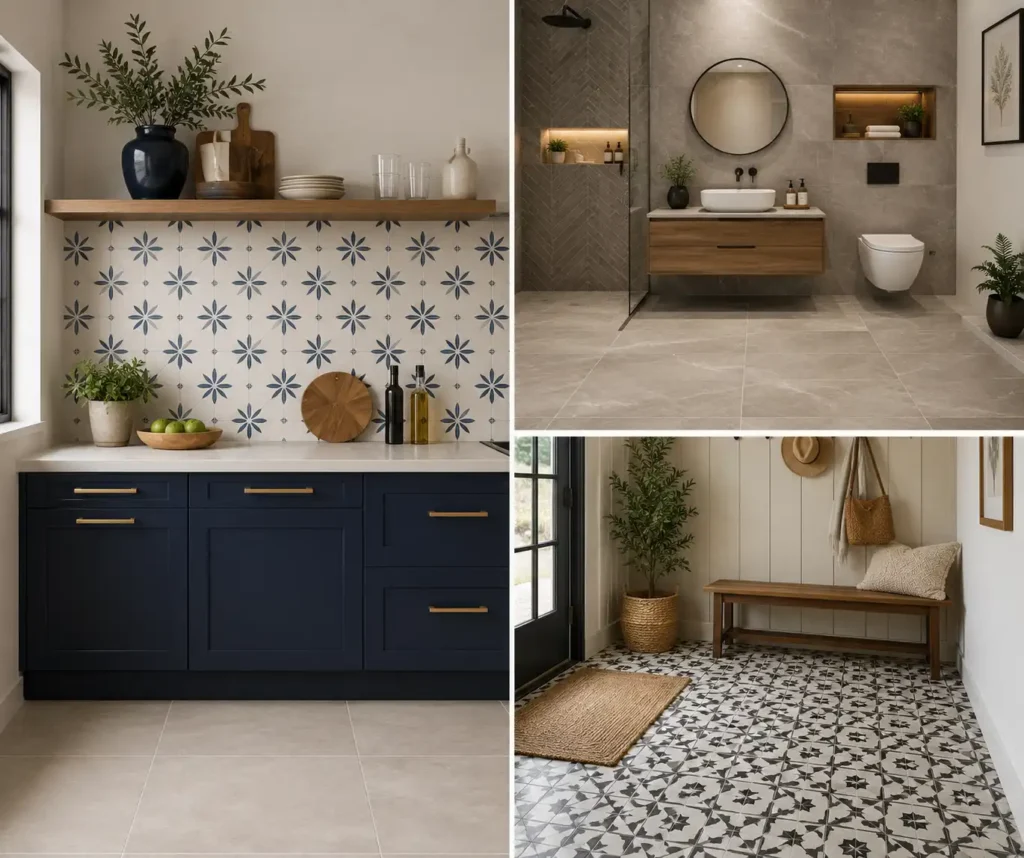
When planning a renovation, most people spend weeks debating the perfect porcelain or ceramic slabs, completely overlooking the importance of grout in enhancing the overall look. However, choosing the right grout color for tile installations can completely change the visual impact of your entire room. The correct choice acts as a design anchor, while a poor decision can make a premium surface look disjointed. If you are currently designing a space, it is wise to partner with premium tile distributors to find the best options for your backsplash tile to see how various shades interact under professional showroom lighting.
Choosing a grout isn’t just an aesthetic decision; it’s a technical one that influences structural perception. The right colored grout for tile can emphasize intricate tile layouts, mask everyday wear, or create a completely unified, expansive surface. In this comprehensive guide, we will break down the structural logic behind selecting the perfect grout color for your tile, ensuring your next project looks flawless and stands the test of time.
Why Grout Selection Influences Room Dynamics
The interplay between your tile and grout line options has a massive psychological and physical effect on how a space feels. It can manipulate visual scale, lighting, and perceived cleanliness. For instance, a monochromatic matching approach expands the space and creates a fluid environment ideal for smaller rooms. On the other hand, a high-contrast choice yields a bold grid with a graphic feel perfect for accent walls, while balanced neutrals offer a soft outline best suited for high-traffic zones.
When you choose to keep the lines visually identical to the slab, it can make a small room feel significantly larger. This occurs because the human eye travels across the floor or wall uninterrupted by a hard grid. If your goal is to make a compact bathroom feel bigger, matching white tile with white grout will create an expansive, airy environment, reinforcing the importance of choosing grout wisely.
Conversely, if you introduce a bold color, the eye stops at every single junction where the contrasting color meets the tile. color grout. Using grout that is lighter than the tile can create an interesting visual effect. While this adds incredible character to a kitchen, the right grout can further enhance its appeal.
A backsplash can make a tight floor look significantly busier if not executed with care. Before making a final commitment, it is highly recommended to visit a luxury tile showroom to view pre-cured grout samples alongside your selected slabs under various color temperatures.
The Three Strategic Approaches to Grout Coloring
When approaching tile design, you generally have three main pathways for choosing a grout color. Each technique establishes a distinct visual harmony or contrast within the space, particularly when considering the impact of thinner grout lines.
1. The Matching Grout Approach
Using the same grout color as your tile creates a monochromatic, fluid plane. This technique is outstanding if you want a contrasting color to highlight your tile shapes. seamless look where the individual tile boundaries fade away. For example, pairing a light tile with a matching soft cream color ensures the focus remains entirely on the texture and premium material itself, rather than on the grid pattern.
2. The Contrasting Grout Technique
If you want to showcase the geometric format and layout of your installation, consider using wider grout lines. Contrasting grout strategy is the way to go. This involves pairing light surfaces with a darker shade, or dark tiles with light lines. A classic example is installing classic white subway tiles with a deep, dark gray framework. This high-contrast pairing makes the architectural lines pop, giving the room a crisp, graphic, and inherently modern look.
3. The Neutral Grout Compromise
When you want something safe yet highly sophisticated, choosing a neutral grout is your best bet. Shades like soft grey, taupe, or tile grout colors can enhance the overall aesthetic of wall tile installations. Beige acts as an excellent buffer. A soft light gray or universal silver tone bridges the gap between high contrast and absolute unity. It lets the tile color take center stage without completely hiding the intentional craftsmanship of the installation lines.
Selecting Grout for Specific Tile Variations
Different tile styles demand specific color pairings to bring out their intrinsic beauty. Let’s look at how to handle common tile choices, including wall and backsplash tiles.
Subway Tile and Contemporary Formats
The iconic white subway tile is perhaps the most versatile canvas in interior design. If you choose a standard white grout, you achieve a pristine, traditional aesthetic often found in high-end clinic or cottage designs. However, swapping that out for a bold gray grout instantly transforms the installation into an industrial or farmhouse feature, especially when paired with subway tile and white grout. Embracing tiles with black grout creates an intense, architectural statement piece that works beautifully behind a modern cooktop.
Natural Stone and Marble Look Options
When dealing with luxurious marble tiles, the primary objective is usually to honor the natural veining patterns running through the stone, which can be accentuated by selecting the right grout. In these luxury scenarios, a perfect match can be achieved by carefully choosing grout that complements the tile. is critical. You generally want a soft white or a light neutral that matches the stone’s background color. Avoid harsh, contrasting lines here, as a dominant grid will slice right through the organic beauty of the marble’s natural flow. If you’re tackling a high-end commercial renovation, hiring experienced commercial tile contractors ensures the installation matches the premium quality of your stone.
Vibrant Hues and Accent Colors
For bold installations featuring rich blue grout or vibrant-colored grout against neutral slabs, the line itself becomes an intentional art form, showcasing the beauty of choosing grout wisely. This look is fantastic for modern commercial projects or creative residential spaces. If you are installing deep blue or green kitchen tiles, you can either match the hue perfectly to ground the color or use a clean white frame to outline the unique geometry of each individual piece.
Technical Material Varieties: Sanded, Unsanded, and Epoxy
Before finalizing your aesthetic colors for tile layouts, you must understand the technical categories of grout and tile. tile grout Mixtures of grout and tile can create unique visual effects in your design. The width of your tile grout colors can dramatically affect the overall look of the installation. The grout joint dictates the type of material you need to purchase.
Sanded Grout
As the name implies, sanded grout contains fine particles of sand suspended in the mixture. The sand acts as a structural binding agent that prevents the mixture from shrinking and cracking as it cures. This compound is the industry standard for any floor tile project where the lines are wider than 1/8 inch, especially for black tile. It provides a sturdy, textured finish that handles heavy foot traffic brilliantly, especially when paired with dark grout.
Unsanded Grout
When working with delicate surfaces or exceptionally tight lines (less than 1/8 inch), you must use unsanded grout. Because it lacks abrasive aggregates, it will not scratch polished finishes during application with a rubber grout float. This smooth mixture is ideal for vertical ceramic tile installations, glass mosaics, and highly polished stone faces where tight lines are required for a clean finish.
Epoxy Grout
For spaces that require maximum durability and absolute water resistance, epoxy grout is the premium choice. Unlike standard cementitious options, epoxy is made from two parts: a base resin and a hardener. This chemical composition makes it naturally stain-resistant and highly impervious to moisture, acids, and heavy scrubbing. It is the ultimate choice for a high-traffic kitchen floor or an enclosed wetroom shower base.
Top Professional Grout Brands to Consider
Achieving a brilliant finish requires utilizing stable, color-fast formulas from trusted industry manufacturers. Architectural teams and premium installers rely heavily on a few select brands to ensure that the chosen color matches the finished product perfectly.
Mapei is renowned globally for its Ultracolor Plus FA series, offering rapid-setting, highly consistent color options with drop-effect technology to repel surface water. Meanwhile, Laticrete is famous for its Spectralock system, setting the benchmark for high-grade epoxy applications with brilliant color consistency and resistance to sagging in vertical installations. Finally, Bostik is a favorite among designers seeking specialty aesthetics, offering excellent premixed options and urethane binders that deliver superb flexibility and color retention across challenging architectural expanses, ensuring the right grout complements the design.
Essential Maintenance Strategies for Longevity
Even the most beautiful tile and grout combination can lose its luster without proper long-term care. Standard cementitious mixtures are inherently porous, meaning they absorb liquids, oils, and grime over time. To preserve the pristine look of your tile installation, a regular maintenance cycle is mandatory.
First and foremost, applying a high-quality penetrative sealer after the installation has completely cured is non-negotiable for non-epoxy grouts. The sealer sinks into the pores, creating an invisible, protective barrier that keeps spills on the surface.
Routine sealing should ideally occur every 1 to 2 years to fully block moisture and prevent deep stains from taking hold. For targeted touch-ups down the line, a specialized grout pen can be used on faded or stained areas to completely restore the original color.
If you are dealing with an older layout where the lines have already darkened or stained unevenly, you don’t necessarily have to scrape it all out. Using grout colorant can significantly improve the appearance of existing grout. can be applied over existing lines to completely refresh the hue while sealing it simultaneously.
For minor localized discoloration on a bathroom floor and wall installation, a convenient, pigment-filled grout would enhance the overall finish. A grout pen can work wonders to mask stubborn blemishes instantly, making your routine right grout selection essential. diy home maintenance is incredibly straightforward.
Frequently Asked Questions
-
Is it better to go lighter or darker with tile grout?
It depends entirely on your practical and aesthetic goals. A lighter grout choice tends to soften the overall appearance and visually expand the room, but it requires much more aggressive cleaning to keep it pristine. Choosing darker grout colors hides dirt, footprints, and everyday wear much better, making them highly practical for high-traffic entryways and mudrooms, though they create a much stronger grid effect.
-
Does dark gray grout fade over time?
Pigmented grouts, especially intense shades like dark gray or pure black, can experience slight color fading when exposed to harsh, acidic chemical cleaners or direct, constant UV light. To minimize this, always use pH-neutral cleaners and ensure the installation is protected with an appropriate penetrating sealer.
-
Can I use a contrasting grout color on cheap tiles?
Using a high-contrast line draws immediate attention to the layout and edges of every single tile. If the tiles have slight manufacturing imperfections or the installer made minor alignment errors, high contrast will amplify those flaws. If you are unsure about the consistency of your materials, a matching or neutral shade is a much safer option to conceal minor variances.
-
What grout color works best with white subway tiles?
White subway tiles are highly versatile and can be paired with various grout colors to achieve the desired look. White grout creates a clean, seamless appearance; gray grout adds subtle definition; and black or dark gray grout creates a bold, modern contrast that highlights the tile pattern.
-
How often should tile grout be sealed and maintained?
Most cement-based grouts should be sealed after installation and resealed every 1–2 years to protect against stains, moisture, and discoloration. Regular cleaning with pH-neutral cleaners and proper maintenance helps preserve the grout’s appearance and extends the lifespan of the tile installation.
Final Thoughts on Grout Trends
Ultimately, selecting a grout for tile designs is just as important as selecting the surface material itself. Whether you prefer a bold, graphical statement with contrasting lines or a clean, modern aesthetic with a uniform, matching hue, the color you select binds your entire design concept together, especially when considering tile and grout colors.
Take your time, make sample boards, test them under your room’s actual lighting, and don’t hesitate to Contact high-end designers of Rocagres Surfaces to ensure your technical requirements align perfectly with your creative vision. With the right combination, your surfaces will remain stunning, durable, and inspiring for decades to come.
Disclaimer: This guide serves as an educational resource for design inspiration. Always cross-reference the manufacturer’s guidelines for both your specific tiles and grout compounds before beginning a physical installation.