
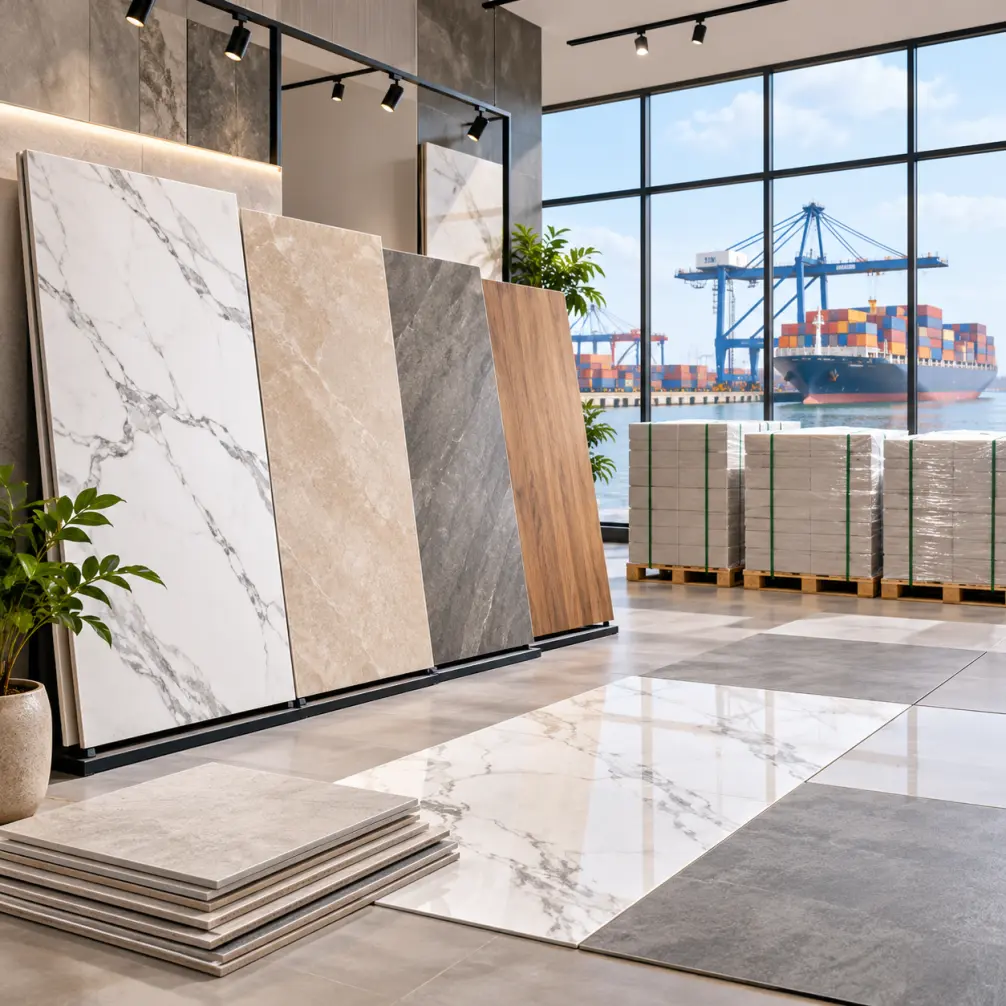
Walk into almost any tile showroom in America today, and you will likely see premium porcelain tiles made in India. That is not an accident. USA importers want tiles that last long, look great, and fit a fair budget. Indian factories can now deliver all three in large volumes. In this guide, we explain why USA importers source porcelain tiles from India, what they gain from it, and what a smart buyer should check before placing an order.
The tile industry has changed a lot in recent years. Homeowners want cleaner designs and bigger sizes. Builders want floors that handle heavy daily use. Importers want a supplier who ships on time and keeps quality the same from one container to the next. India has grown into a strong answer to all of these needs.
Why Demand for Porcelain Tiles Keeps Growing in the USA
Porcelain is one of the most popular tile materials in America. It is dense and strong. In the USA, a tile is called porcelain when its water absorption is 0.5% or less. That low number means the tile does not soak up water, which makes it a smart pick for bathrooms, kitchens, patios, and busy commercial floors.
Demand comes from many places. Homeowners are remodeling kitchens and bathrooms. Developers are building apartments and townhomes. Hotels, restaurants, and offices need floors that look good and survive heavy foot traffic. All of these buyers need a steady supply of tiles, and that puts pressure on importers to find partners who can keep up.
A local source cannot always cover the full demand, especially when buyers ask for wide choices in size, color, and finish. Indian tiles give importers a large selection without the need to deal with many small suppliers.
Why India Is a Trusted Hub for Tile Manufacturing
India is one of the biggest tile-producing countries in the world. Much of that work happens in Morbi, a city in Gujarat that is packed with tile factories, raw material suppliers, and export support. When many tile makers work in one area, buyers get more choice, faster production, and strong know-how in one place.
The raw materials matter too. Good porcelain starts with clean clay, feldspar, and silica. Indian manufacturers have easy access to these materials, which helps them keep production steady. Over the years, factories have also added modern presses, digital printers, and long roller kilns. Skilled craftsmanship still plays a big role, especially in surface design and quality checks.
At Rocagres Surfaces, every tile goes through six clear steps:
- Raw material selection, where clays, feldspars, and silica are tested for purity.
- Hydraulic pressing, which forms dense and even tile bodies.
- Digital design application, which prints marble veins, stone textures, and wood grains on the surface.
- Kiln firing above 1,220°C, which gives the tile near-zero porosity and long-term strength.
- Quality inspection, where each tile is checked against 12 quality parameters.
- Safe loading, where tiles are packed with foam-lined crates and anti-vibration protection.
Importers look for this kind of planned and tested process.
A Wide Range of Tiles for Every American Project
One big reason importers choose India is the sheer variety. A single Indian manufacturer can offer a wide range of tiles, so an importer does not need to split orders across many suppliers.
Look-and-feel choices include Statuario and Calacatta marble looks, Italian marble looks, onyx looks, natural wood looks, cemento looks, super white tiles, and designer tiles. Each pattern fits a different taste, from calm and simple to bold and rich. American buyers love these looks because they bring the beauty of natural stone and timber without the upkeep.
Finish matters just as much. Matt tiles work well for floors because they offer better slip resistance. Glossy tiles bounce light around and make rooms feel bigger. Carving and rustic finishes add texture and depth to feature walls and outdoor areas. A polished PGVT finish gives a mirror-like shine for premium spaces.
Size is another important factor for American buyers. Rocagres Surfaces offers different tile sizes to meet market requirements, including popular 600×1200 mm and 600×600 mm formats. Outdoor 20mm-thick porcelain tiles are also an important category for exterior spaces. In addition, Rocagres Surfaces offers large-format porcelain slabs of 1200×2800 mm for projects that require fewer grout lines and a clean, modern appearance.
Competitive Prices Without Giving Up Quality
Price is always part of the story. Indian manufacturers work at a large scale, and this helps them offer competitive prices to international buyers. But smart importers look beyond the price on the quote.
They think about the full cost. A cheap tile that arrives with broken boxes, uneven shades, or sizes that do not match will cost more in returns, delays, and unhappy customers. A tile with steady quality and good packing may cost a bit more per box but save money in the long run.
Here are the costs a careful importer usually compares:
- The factory price of the tile
- Packing and loading costs
- Ocean freight and port fees
- Import duties and customs fees
- Inland delivery to the warehouse
- Losses from damage or returns
Duty rates and shipping costs can change from time to time, so it is wise to confirm current numbers with your customs broker before you place a big order. Many buyers also compare the total landed cost from two or three suppliers instead of just the factory price.
Quality and Durability That Meet USA Expectations
American buyers ask tough questions about quality, and they should. Tiles that fail on a job site hurt the importer, the contractor, and the customer.
Good Indian manufacturers know this. When you talk to a supplier, ask about these points:
Water absorption. True porcelain has a water absorption of 0.5% or lower when tested with the ASTM C373 method, as explained in ASTM’s guide to ceramic tile standards. Low absorption also helps tiles handle changing weather outdoors.
Slip resistance. Many projects look at the DCOF rating, which measures how slippery a tile is when wet. Interior floors that may get wet often need a DCOF of 0.42 or higher. Ask for the rating of the exact tile you plan to buy.
Strength and durability. Dense porcelain handles heavy foot traffic, rolling loads, and daily cleaning. Durability is the reason porcelain is so common in offices, retail stores, and multifamily buildings.
Shade and size consistency. Tiles from the same batch should match in color and size so installers can lay them without surprises.
Rocagres works under an ISO 9001:2015 quality management system, and the team can share technical details such as DCOF ratings and water absorption for project buyers. Having these details on paper makes it easier for architects and contractors to approve a tile.
Dependable Shipping and Supply for Importers
A good tile is only useful if it arrives on time and in one piece. Tiles are heavy and can break easily, so the way they are packed and shipped is just as important as the way they are made.
A normal import from India follows a simple path. The buyer confirms the order, the factory produces and checks the tiles, the tiles are packed and loaded into a container, and the container travels by sea to a USA port. After that, customs clearance and delivery to the warehouse complete the trip. For distributor orders, Rocagres shares a typical timeline of about 25 to 30 days for the first container to be ready and around six to eight weeks to reach the doorstep. Actual timing can change with season, port traffic, and order size.
Importers also need the right paperwork. The usual documents include a commercial invoice, a packing list, a bill of lading, and a certificate of origin. Your customs broker will tell you if anything else is needed for your shipment.
One more point is easy to miss. Wood pallets and crates must meet USA import rules for wood packaging. Ask your supplier to confirm that their packaging follows these rules, because a shipment with the wrong packaging can face delays at the port.
How Distributors and Importers Grow Their Business with Indian Tiles
For a distributor, the right supplier does more than ship boxes. A good partner helps you sell. That means clear catalogs, technical specifications, and a product line that fits what your customers ask for.
Rocagres has a simple onboarding path for new partners. Under the tile distributor partnership program, a business shares its details, has a discovery call, reviews the product line, talks about territory and logistics, and then starts receiving inventory. The team reviews applications within about 48 hours. No minimum experience is needed, so even a growing showroom can start the conversation.
Some importers also want a product line that carries their own name. That is where OEM and private label tile manufacturing can help. Instead of selling the same tile as every other store, a distributor can work with the manufacturer on custom specifications and branded packaging. This helps a business stand out in a crowded tiles market and build long-term trust with its own customers.
Latest Market Trends Shaping Tile Imports from India
The American tile market keeps moving, and Indian manufacturers move with it. A few trends stand out right now.
Large format tiles. Big tiles and slabs are in demand for living rooms, hotel lobbies, offices, and feature walls. Buyers like the seamless look.
Matt and neutral finishes. Soft, low-sheen surfaces in gray, beige, ivory, and white are popular. They hide dust, work well with ma’ny design styles, and feel calm and modern.
Natural looks. Marble, stone, and wood designs keep selling because they bring warmth and beauty at a practical price.
Commercial-grade durability. Offices, hotels, restaurants, and apartment buildings need floors that stay in good shape for years. Porcelain fits this need well.
Quality over the lowest price. More importers now care about steady shade, strong packing, and reliable delivery instead of chasing only the lowest quote.
Indian manufacturers that follow these market trends and keep adding fresh designs are in a good position to serve American buyers.
What to Check Before Choosing an Indian Tile Exporter
Not every exporter is the same. Before you sign an order, take a little time to review the basics:
- Certifications and testing. Ask for quality certificates and test details for the tiles you want.
- Product range. Check that the supplier offers the sizes, finishes, and patterns your customers ask for.
- Batch consistency. Ask how the factory keeps the same shade and size across large orders.
- Packing and loading. Make sure the tiles are packed to protect them during a long sea trip.
- Paperwork and communication. A good exporter answers quickly, explains costs clearly, and prepares documents without delay.
- Backup stock. A supplier with stock inside the USA can help when you need a smaller or faster order.
If a supplier answers these points clearly, you can feel more confident about the partnership.
Why Rocagres Surfaces Is a Valuable Partner for USA Buyers
Rocagres, named from the Spanish words for stone and stoneware, brings more than 23 years of manufacturing experience. The company makes porcelain tiles and surfaces in Morbi, India, and also keeps a stocking facility in Dallas, Texas. That mix gives importers two choices: plan a larger container order from India, or use local stock for faster, smaller needs.
The portfolio covers marble looks, wood looks, cemento designs, and designer collections in sizes from 300×600 mm to 1200×2800 mm. Rocagres supports architects, contractors, distributors, and project developers across the country. If your project is in the Southwest, you can learn more about our role as a tile supplier in Texas and how local stock can shorten your wait.
Conclusion
USA importers source porcelain tiles from India because the country offers a strong mix of quality, variety, price, and export experience. From the manufacturing hub in Morbi to modern factories that use digital design and high-temperature kilns, India can supply the tile industry with the products it needs. The key is to choose a supplier who proves quality on paper, packs tiles with care, and delivers on time.
If you are an importer, distributor, builder, or developer who wants to explore Indian porcelain tiles, Rocagres Surfaces is ready to help. Share your project details, tell us what size, finish, and quantity you need, and our team will guide you from the first question to the final shipment. Contact the Rocagres team today and start building a steady tile supply for your business.
Frequently Asked Questions
Why do USA importers choose Indian porcelain tiles?
They get a wide selection, steady production, and competitive prices from a large manufacturing base. Many also value the strong export experience that Indian factories have built.
Are Indian porcelain tiles good for commercial projects?
Yes, when the tile meets the project’s needs. Porcelain is dense and durable, so it works well in offices, hotels, retail stores, and apartment buildings. Always check the technical details, such as water absorption and slip rating, for the exact tile.
What documents does an importer usually need?
Most shipments need a commercial invoice, a packing list, a bill of lading, and a certificate of origin. Your customs broker can confirm any extra paperwork.
Can importers order tiles under their own brand?
Yes. Rocagres offers OEM and private label manufacturing, including custom specifications and branded packaging, for distributors and developers.
Why do USA importers prefer sourcing porcelain tiles from India?
USA importers source porcelain tiles from India because of competitive pricing, a wide range of designs and sizes, large-scale manufacturing capacity, and established export experience.
What should USA importers check before choosing an Indian porcelain tile manufacturer?
Importers should check product quality, water absorption, slip resistance, shade and size consistency, certifications, packaging standards, and shipping arrangements before placing an order.