
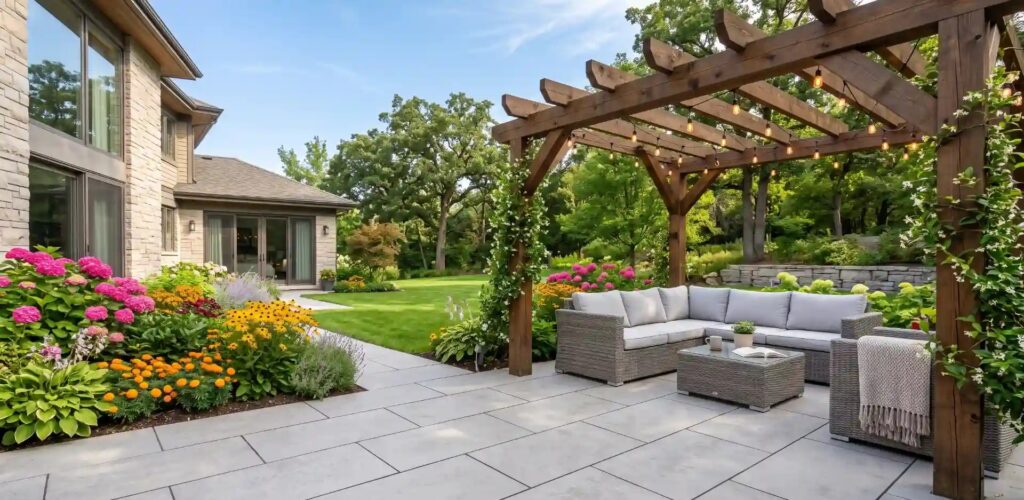
Architects and modern homeowners constantly search for high-quality flooring options to elevate an outdoor space. At Rocagres Surfaces, clients often ask us if they can take the elegance of an indoor floor to their outdoor patio. The answer is a definitive yes.
You can absolutely choose porcelain tiles for outdoor use. Exterior grade porcelain tiles, specifically 20mm thick premium outdoor porcelain tiles, offer one of the most durable choices for patios, walkways, and pool decks. Porcelain tile is known for resisting frost, preventing water absorption, and providing superior slip resistance. Choosing porcelain for an outdoor setting is a smart investment that makes it an ideal choice for any modern exterior.
Why Porcelain Works Outdoors: Durability and Weather Conditions
Manufacturers engineer porcelain tiles specifically to withstand extreme temperatures and harsh weather conditions. We create porcelain tiles through a production process that involves high-tonnage hydraulic pressing and kiln firing at temperatures exceeding 1,220°C. This creates a high-density, resilient porcelain slab.
This intense vitrification process (where extreme heat turns the clay into a glass-like, non-porous material) results in a waterproof surface. High-quality exterior porcelain absorbs less than 0.5% of water, while our premium 20mm Rocagres pavers often absorb less than 0.1%. This water-resistant quality prevents moisture from seeping into the tile body, which is essential to ensure protection against water penetration and structural damage.
Because water cannot penetrate the surface, the tile achieves complete frost resistance. When installed correctly over a stable foundation, it resists expanding, cracking, or shattering during severe winter freeze and thaw cycles. This makes high-quality porcelain a permanent, eco-friendly architectural solution for any climate.
Indoor vs. Outdoor Porcelain Tile: Key Differences You Must Know
Many people make the costly mistake of installing standard indoor tiles in outdoor areas. You must understand the technical specifications that separate standard ceramic tiles from an outdoor porcelain tile. Using the proper types of tiles ensures longevity and safety for your living spaces.
Standard indoor tiles usually measure between 8mm and 10mm in thickness. An outdoor space requires robust 20mm porcelain tiles to handle heavy traffic and structural loads safely. This extra thickness provides the necessary breaking strength for any outdoor flooring.
Safety remains the top priority for outdoor use. While you might use smooth premium bathroom wall and floor tiles inside, outdoor porcelain tiles feature a rustic texture or matte finish to provide better traction. This specific anti-slip texture and R11 slip rating enhance safety and offer slip-resistant properties to prevent accidents around high-moisture environments.
| Feature | Standard Ceramic or Indoor Porcelain | 20mm Outdoor Porcelain Pavers |
|---|---|---|
| Typical Thickness | 8mm to 10mm | 20mm to 30mm |
| Slip Rating | R9 to R10 Smooth | R11 to R12 Textured |
| Installation Substrate | Adhesive over concrete | Wet bed, dry gravel, or raised pedestals |
| Freeze Resistance | Moderate | 100% Frost Proof |
| Water Absorption | 0.5% or less | Less than 0.1% |
Major Benefits of Choosing Porcelain for Your Patio
Investing in premium porcelain surfaces provides substantial long-term value. A wide range of porcelain tiles deliver functional attributes that natural materials simply cannot match. Consider these primary benefits for your next project.
- All-Weather Durability: These resilient tiles resist thermal shock. They survive extreme summer heat and freezing winter temperatures without degrading.
- UV and Fade Vibrancy: Manufacturers lock the pigments inside the ceramic body. Direct sunlight will never fade your stylish outdoor patio.
- Stain-Resistant: The non-porous surface naturally repels moss, algae, barbecue grease, and accidental spills.
- Low Maintenance: Unlike natural stone, a porcelain tile never requires periodic chemical sealants. Simple cleaning keeps it looking pristine.
Material Comparison: Porcelain Pavers vs. Alternative Surfaces
Buyers often evaluate multiple materials before finalizing their exterior design. Comparing porcelain against traditional hardscaping options highlights its incredible versatility.
Outdoor Porcelain vs. Natural Stone
Natural stones feature high porosity. They absorb water, harbor stains easily, and require expensive annual sealing. Porcelain tiles come with the exact aesthetic of natural stone but eliminate all the tedious maintenance and cleaning requirements.
Outdoor Porcelain vs. Concrete Pavers
Concrete pavers fade quickly under UV exposure and suffer from efflorescence (those chalky white salt stains you often see on driveways). If you love the industrial aesthetic, using cement-look porcelain tiles provides the exact visual style while retaining the original colors indefinitely.
Outdoor Porcelain vs. Ceramic Exterior Tiles
Standard ceramic tiles lack the density of true porcelain. They absorb more water, making them highly vulnerable to cracking in cold weather. Porcelain undergoes specialized hydraulic pressing to guarantee extreme weather resilience.
Cost Expectations and Long-Term Value
When planning an exterior project, it is important to look beyond the initial purchase price. Premium 20mm porcelain pavers may have a higher upfront material cost compared to basic concrete or standard ceramic. However, they deliver a massive return on investment over a 10-year period.
Because Rocagres porcelain requires no costly annual sealants, never fades, and resists stains permanently, the lifetime cost of ownership is significantly lower than natural stone or wood decking.
Cutting and Handling: DIY vs. Professional Installation
Because 20mm outdoor porcelain is incredibly dense and heavy, it requires specific tools to cut and shape. Standard manual tile cutters will not work. To achieve clean cuts without chipping the tile, installers must use a high-quality wet saw equipped with a continuous rim diamond blade specifically designed for thick porcelain.
While experienced DIYers with the right equipment can handle the job, we highly recommend hiring a professional contractor for large patios or complex layouts.
Popular Inspiration and Outdoor Application Ideas
Modern manufacturing allows you to select from a variety of porcelain tiles in different sizes, colors, and textures to suit any commercial or residential project.
Seamless Indoor and Outdoor Living
Designers frequently run continuous tile patterns from living rooms directly out to open patios. You can create a seamless look that makes residential spaces feel significantly larger. Many contractors utilize large format 600x1200mm wall and floor tiles to bridge these transitions perfectly.
Warmth of Wood Planks for Decking
Homeowners love the visual warmth of wood decks but hate the associated maintenance. You can install wood-effect porcelain tiles in a 200x1200mm size to replicate natural wood grain perfectly. They never rot, splinter, or require repainting.
Seamless Large Format Slabs
High-end commercial spaces utilize large format slabs to create striking visual impacts. Using 1200x1800mm large format tiles reduces grout lines and delivers a clean, luxurious outdoor setting.
Proper Installation for High-Traffic Areas
Proper installation dictates the lifespan of your exterior flooring. You can install porcelain tiles using several distinct methods based on your specific project needs.
Dry Laying on Grass or Gravel
You can lay thick porcelain pavers directly onto grass or compacted gravel beds. This method allows for quick and permeable pathway installations.
Wet Screed Installation with Adhesive
Permanent vehicular driveways and heavy-footfall commercial patios require a solid foundation. Contractors installing premium tiles for commercial projects place the porcelain tiles over a concrete screed using a high-quality slurry primer and adhesive to ensure a permanent bond.
Raised Pedestal Systems
Balconies and roof terraces benefit greatly from self-leveling raised pedestal systems. This method creates a hidden cavity below the floor to conceal plumbing lines perfectly. Builders often use this system when installing multifamily residential tiles for apartments and condos.
Maintenance and Cleaning Best Practices
Maintaining your outdoor porcelain surfaces requires minimal effort. The non-porous nature of the material prevents dirt from embedding into the tile body.
You can perform regular cleaning with standard mild soap and warm water. For heavier seasonal debris, you can safely pressure-wash the surface without damaging it. Simply sweep away organic debris regularly to keep your outdoor areas looking pristine year-round.
Frequently Asked Questions
Can you use regular indoor porcelain tiles on an outdoor patio?
No. You should not use standard indoor tiles outside. They lack the necessary slip-resistant texture and the 20mm thickness required to handle exterior structural loads safely.
Does porcelain tile get slippery when wet outside?
Exterior matte porcelain tiles do not get slippery. They feature a specific slip-resistant finish designed to provide maximum grip even in heavy rain.
Will outdoor porcelain pavers crack during freezing winters?
When installed correctly, they are highly resistant to cracking. The vitrification process makes them virtually waterproof, meaning water cannot enter the tile to freeze and cause expansion cracks.
Do you need to seal outdoor porcelain tiles?
You never need to seal porcelain tiles. The surface is naturally impervious to stains and moisture directly from the factory.
Are porcelain tiles suitable for all climates?
Yes. A sustainable, exterior-grade porcelain tile is a fantastic choice for outdoor use in any climate due to its ability to withstand extreme temperatures.
Final Thoughts on Choosing Porcelain
Choosing the right flooring option for your exterior projects determines the long-term success of the space. Outdoor porcelain tiles offer an unmatched combination of structural strength, safety, and stylish beauty.
By utilizing durable tiles for restaurants, hotels, and showrooms, you eliminate maintenance headaches while achieving a premium architectural finish. This versatile material truly represents the best choice for high-performance outdoor design.
Ready to Transform Your Outdoor Space?
Stop settling for materials that fade, crack, or require constant maintenance. Explore the complete collection of 20mm outdoor porcelain pavers at Rocagres Surfaces to find the perfect match for your architectural vision.
Connect today with our surface specialists to request physical samples, discuss your project requirements, or secure wholesale pricing. Visit our Premium Outdoor Porcelain Tiles and Start to planning your project.