
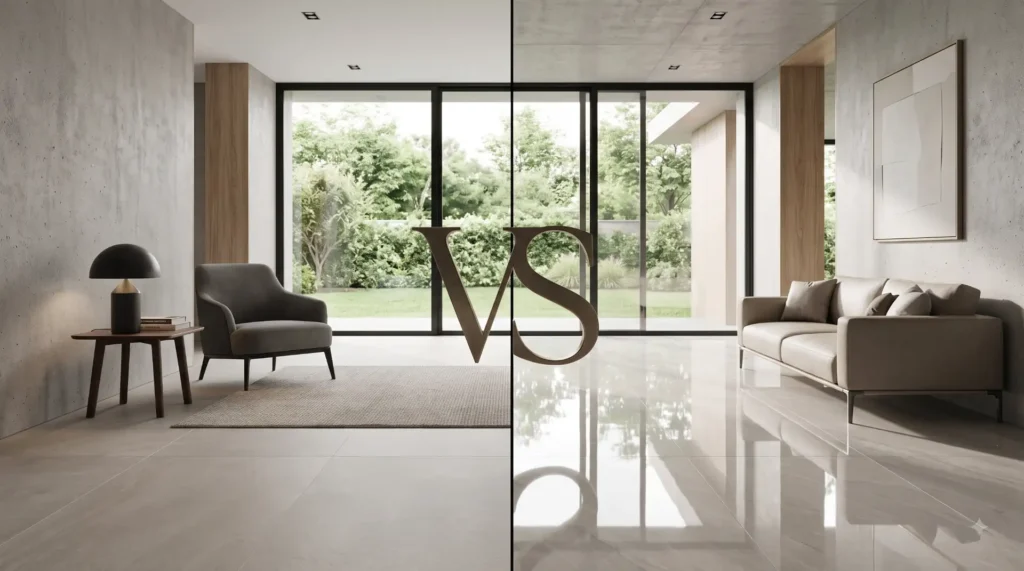
Choosing the right tile finish can change how an interior looks and feels. When comparing matt vs glossy tiles, you are choosing between two surface treatments that respond differently to light, marks, cleaning, and everyday use.
Neither finish suits every project. The best decision depends on the application, room size, natural light, maintenance expectations, surface characteristics, and the atmosphere you want to create.
A homeowner may prefer a softer finish for a living area and a more reflective finish for a kitchen wall. Designers can also combine different finishes across walls, floors, and feature areas to create visual balance.
Rocagres develops surfaces for commercial environments, backed by 23+ years of manufacturing experience. Its range covers kitchen, bathroom, bedroom, and living-area applications, along with wall tiles, floor tiles, parking tiles, wooden panels, and specialised architectural surfaces in varied formats, sizes, and designs.
What Is the Difference Between Glossy and Matt Tiles?
The main difference between the two finishes is how they reflect available light.
A low-sheen surface reflects less light and creates a softer visual effect. It can complement stone-inspired patterns, earthy colors, concrete effects, wood-inspired designs, and understated contemporary interiors.
A reflective surface returns more light to the room and creates a brighter, polished appearance. It can work well when lighting and surface reflection form part of the design.
When comparing glossy or matt, look beyond appearance. Cleaning, texture, visible marks, intended application, surface characteristics, and product specifications all affect the final choice.
The differences between glossy and matt finishes become clearer when you compare them by application. A finish that works well on a feature wall may not suit a floor exposed to different conditions.
A glossy vs matt comparison should therefore begin with the space, not simply the finish name.
Matt Finish Tiles: Appearance and Design
matt finish tiles have a low-sheen surface that limits direct reflection. They can create a calm foundation and let furniture, cabinetry, textiles, and decorative elements stand out.
A Natural Finish for Contemporary Interiors
A natural finish can complement stone-look designs, wood-inspired patterns, concrete effects, earthy colors, and understated contemporary interiors. Contemporary schemes can also explore cemento tiles for modern interiors for a material-led visual direction.
The lower reflection can also suit rustic spaces where you want a less polished appearance. In contemporary interiors, the same finish can create a refined look by letting color, texture, pattern, and material do more of the visual work.
matt tiles suit projects that need a quieter surface character, provided the selected product matches the intended application.
Cleaning and Care
A smooth surface can be easy to maintain, but maintenance depends on the actual product texture and the conditions of the room.
A lightly textured surface can hide small marks well. A deeper texture can trap dust or residue and may need more attention in busy spaces.
Some tiles need frequent cleaning simply because of where you install them, not because of a particular finish. Kitchens, entrances, utility spaces, and commercial environments can all demand regular care.
Follow the manufacturer’s cleaning instructions for the selected product.
Flooring and Safety
A low-sheen appearance alone does not establish the performance of a flooring product.
For bathrooms and other wet areas, check the intended application and relevant product information before installation. Weigh the surface characteristics, traffic, moisture, maintenance, installation, and other conditions that affect the floor.
The finish should support the application, but the product specification should guide the final decision.
Where This Finish Can Work
A softer surface can suit:
- Living areas
- Bedrooms
- Kitchens
- Suitable bathroom flooring
- Utility spaces
- Commercial interiors
- Feature walls
- Outdoor tiles
Matt floor tiles create a grounded look when you want the floor to complement rather than dominate the interior.
Glossy Finish Tiles: Light and Visual Impact
Glossy finish tiles have a more reflective surface that sends more available light back into the room.
They can add a polished quality to contemporary interiors and make surface reflection part of the overall visual composition.
How Gloss Tiles Reflect Light
Gloss tiles reflect natural and artificial lighting.
In a darker room, this reflection can add to a brighter visual effect. The result also depends on tile color, format, grout, windows, mirrors, surrounding materials, and the amount of available light.
A light-colored reflective surface creates a different result from a darker one, even when both use the same general finish.
Cleaning and Visible Marks
A smooth reflective surface can be easy to maintain, especially on walls and backsplashes.
However, fingerprints, watermarks, and some stains may show up more clearly because the surface catches and reflects light.
This creates an important distinction between a surface that wipes clean quickly and one that looks spotless for longer.
Glossy Flooring
Some projects use glossy floor tiles, but the application should guide the decision.
Before installing glossy flooring, review the intended use, traffic, moisture exposure, surface characteristics, and product specifications.
Don’t choose flooring solely because you prefer a polished appearance.
Where Gloss Works Well
This finish can suit:
- Bathroom walls
- Kitchen backsplashes
- Feature walls
- Interior walls
- Selected living areas
- Decorative surfaces
- Applications where additional reflection supports the design
Glossy wall tiles work well with mirrors, glass, metal fittings, and contemporary lighting.
Matt vs Glossy Tiles: Key Differences
| Feature | Matt Finish | Glossy Finish |
| Visual character | Soft and understated | Bright and polished |
| Light response | Lower reflection | Higher reflection |
| Fingerprint visibility | Often less noticeable | Often easier to notice |
| Watermark visibility | Can appear less obvious | Can stand out more |
| Cleaning | Depends on texture | Smooth surfaces wipe easily |
| Floor applications | Depends on the selected product | Needs careful product selection |
| Wall applications | Flexible | Useful where reflection is desired |
| Style | Natural, rustic, contemporary | Modern, sleek, polished |
| Small spaces | Creates a softer effect | Can increase visual brightness |
| Maintenance | Depends on texture and use | Depends on visible marks and use |
This tile finish comparison offers a general guide. Always confirm the actual product specifications before installation.
Matt vs Glossy Tiles for Bathrooms and Kitchens
The bathroom and kitchen often need different surface solutions because each room carries its own practical and visual requirements.
Bathroom
For tiles for the bathroom, weigh the floor and walls separately. Rocagres also offers bathroom tiles for modern homes for application-led design considerations.
The floor needs a product that matches the demands of the application. Check the manufacturer’s specifications before choosing a finish for a moisture-prone area.
For walls, a reflective treatment can make the bathroom feel brighter and pairs well with mirrors, glass, chrome fittings, and contemporary fixtures.
When deciding what’s right for your bathroom, weigh moisture, cleaning habits, available light, color, surface location, and product specifications.
Kitchen
Kitchens combine daily use, spills, cleaning, cabinetry, appliances, and lighting.
Kitchen backsplashes work well with a smooth reflective finish because routine spills often need quick wipe-downs. A kitchen wall can also benefit from a surface that interacts with available light.
For flooring, weigh traffic, cleaning, moisture, surface characteristics, and the wider interior palette. For coordinated applications, kitchen tiles for walls, floors, and backsplashes can help keep the room visually connected.
When planning kitchens and bathrooms, assess each surface according to its role rather than assuming one finish must cover everything. The 600x1200mm tiles for bathrooms, kitchens, and living areas category can support projects that need a larger, versatile format.
Glossy vs matt Tiles for the Living Room
The living area offers more flexibility, so living room tiles can use either finish depending on the design.
A softer finish can create a calm foundation that works with rugs, timber, natural colors, textiles, and neutral furniture.
For a polished interior, glossy tiles for living room applications can create stronger reflection and a brighter visual character.
For small living rooms, additional reflection can support a brighter appearance. In a large living space with plenty of daylight, a lower-reflective surface may create more visual balance. Larger formats such as 1200x1800mm tiles for open living spaces can also help shape the visual scale of an open-plan interior.
When selecting tiles for the living room, weigh room proportions, furniture, light levels, flooring layout, and overall interior style rather than choosing purely by trend. Long formats such as 200x1200mm tiles for bedrooms and living areas can also influence the visual rhythm of these spaces.
Matt vs Glossy Tiles for Bedrooms and Utility Areas
Bedrooms often suit a quieter visual approach.
A low-reflective surface can complement warm colors, wood, fabrics, and natural materials. A polished finish also works when the design aims for a refined contemporary appearance.
A laundry room has different needs because it can experience moisture, splashes, cleaning products, and regular use. For the floor, select a product suited to the intended application. On walls, a reflective surface can help introduce more light.
The room type should therefore shape the finish, while the product specification guides suitability.
Matt vs Glossy Tiles and Natural Light
Natural light changes how a surface appears throughout the day.
A reflective finish can return more available light to the room, while a lower-reflective surface creates a softer visual effect.
Room size also matters. A compact room with limited daylight may benefit visually from stronger reflection. A larger, brighter room may not need as much reflective power. For compact and mid-size layouts, 300x600mm tiles for compact and mid-size rooms can offer a practical format to consider.
Tile color, format, grout, windows, mirrors, and artificial lighting also shape the result.
Rocagres offers sizes from 300x600mm up to large-format 1200x2800mm slabs, so tile scale can also become part of the overall composition of a room.
Which Finish Is Easier to Maintain?
There is no universal answer.
Smooth surfaces are generally straightforward to maintain, but the visibility of everyday marks varies.
A reflective finish may wipe clean quickly while making fingerprints and water spots easier to see.
A low-sheen surface can make some marks less obvious, although texture can influence how dirt behaves.
For areas that need frequent cleaning, look at the actual conditions rather than relying on a general claim about one finish.
The better approach is to select a surface whose texture and care needs fit the way you use the room. Rocagres itself recommends a mild, pH-neutral cleaner for everyday care and advises avoiding harsh acid cleaners on tile surfaces.
Are Matt Tiles Generally Better Than Glossy Tiles for Flooring?
It would be misleading to say one finish beats glossy tiles for every floor.
Many buyers choose matt tiles when a project calls for a softer visual appearance, but the product still needs to suit the intended application.
A suitable polished product can also work in the right environment.
The decision should depend on traffic, moisture, surface properties, cleaning, installation, and technical information.
matt tiles offer a softer floor appearance, while selected glossy floor products can suit appropriate applications too. The finish should support the application rather than determine it on its own.
Do Glossy Tiles Make Small Spaces Look Bigger?
A reflective surface can make the space look brighter because it returns available light.
This can work well in compact bathrooms, kitchens, hallways, and small living rooms.
However, the effect doesn’t come from the surface alone. Tile size, color, layout, grout, mirrors, windows, and lighting all influence how spacious a room appears.
matt tiles often work in compact interiors too, when you want a softer appearance and don’t need additional reflection.
Finish and Tile Material: What Should You Check?
A finish describes how the surface looks and responds to light. It doesn’t tell you everything about the product.
Rocagres currently offers wall tiles, floor tiles, parking tiles, wooden panels, and specialised architectural surfaces, in different sizes, formats, and designs. The brand’s history also includes ceramic floor tiles and double-body porcelain technology, milestones that shaped its manufacturing capability over more than two decades, though it’s worth checking the current catalogue for what’s available today.
For a buying decision, compare finish, application, size, surface characteristics, and product specifications together. That combination gives you a clearer, more accurate basis for selecting the right tile than finishing alone.
Should You Use the Same Finish on Walls and Floors?
You don’t have to use one treatment throughout the space.
For walls and floors, weigh the different visual and practical roles of each surface.
For Floors
Consider:
- Intended use
- Traffic
- Moisture
- Surface characteristics
- Cleaning
- Product specifications
For Walls
Consider:
- Light reflection
- Color
- Interior style
- Cleaning
- Feature potential
- Relationship with nearby materials
This split gives you flexibility when designing a room. For projects that use different surfaces across both areas, 300x600mm tiles for walls and floors can also provide a practical format option.
You can pair a lower-reflective floor with a brighter wall surface to create contrast while keeping colors and patterns connected. For larger applications, large format 600x1200mm wall and floor tiles can support a consistent visual layout.
Can You Mix Matt and Glossy Tiles?
Yes. matt and glossy tiles can work together when each finish has a clear role.
You can pair a softer floor with a reflective wall, or set a glossy backsplash against a quieter base.
This adds visual hierarchy without forcing you to change the entire color scheme.
When choosing between glossy and matt surfaces in the same room, connect the finishes through color, pattern, format, or material.
The goal isn’t simply to create contrast. It’s to create a balanced interior.
How to Choose the Right Tile Finish
When choosing between glossy and matt, start with the actual application.
If you need tiles for the living room, weigh daylight, furniture, traffic, proportions, and the atmosphere you want.
For a bathroom floor, start with product suitability and technical information.
For a kitchen backsplash or wall, weigh cleaning, lighting, color, and visual style.
Want stronger reflection on a suitable wall? Choose glossy. Prefer a softer appearance for a suitable application? Choose matt tiles.
There’s no single answer for every project. The right tile depends on the complete requirements of the room.
Matt vs Glossy Tiles: Which One Should You Choose?
So, which finish should you choose?
A matt surface can suit interiors that need a natural, soft, rustic, or contemporary appearance. A glossy surface can suit projects that need stronger reflection or a polished wall and backsplash.
When choosing between glossy and matt, start with the application. The best decision considers:
- Room type
- Room size
- Natural light
- Walls and floors
- Surface texture
- Cleaning routine
- Wet-area requirements
- Product specifications
For some spaces, one finish fits better. In other interiors, both finishes work together.
Rocagres builds its surfaces around purposeful design and 23+ years of manufacturing experience, with varied sizes and formats supplied across residential and commercial projects in the US, UAE, and India. That track record makes finish selection part of a wider design decision rather than a choice based on shine alone.
Frequently Asked Questions
Is glossy or matt better for a home?
Neither finish works best for every room. Choose according to the application, available light, maintenance needs, design style, and product specifications.
What finish is suitable for a bathroom floor?
Select a product designed for the intended application and review its technical specifications. Don’t rely on appearance alone when choosing a bathroom floor surface.
Are glossy tiles good for a kitchen wall?
They can work well where you want a reflective, polished surface that supports routine cleaning. Weigh the lighting, color, and surrounding cabinetry before making the final selection.
Can glossy surfaces help small living rooms?
They can make small living rooms appear brighter by reflecting available light. The overall effect also depends on tile size, color, layout, mirrors, and lighting.
Can I combine both finishes?
Yes. Combining both finishes across different areas can create contrast and visual hierarchy while keeping the overall design cohesive.