
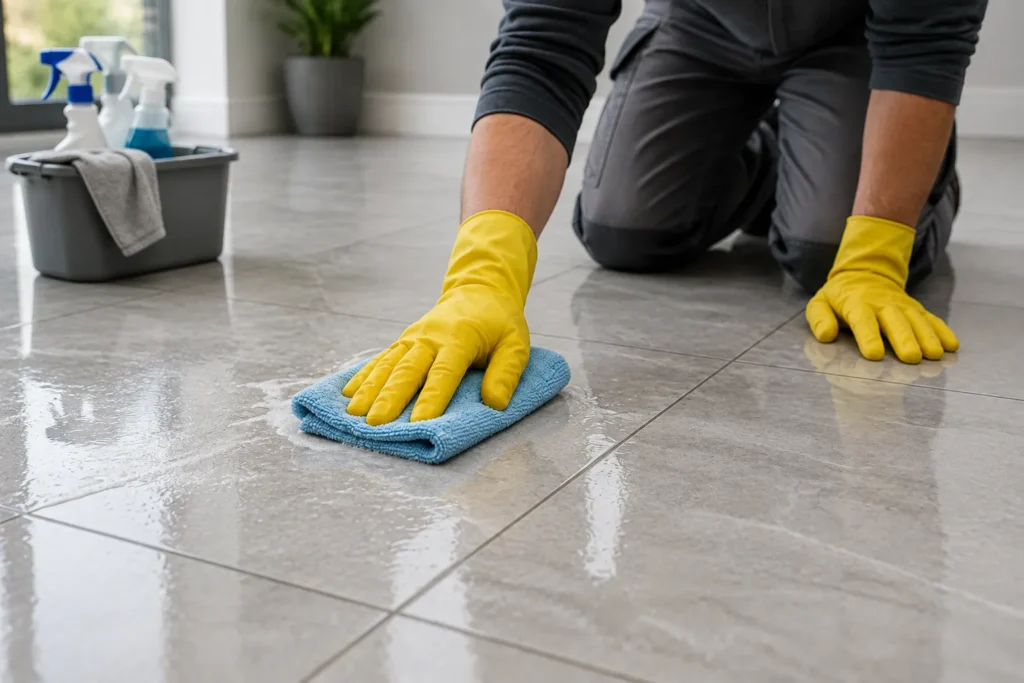
Keeping your floors and walls clean shouldn’t feel like a difficult task. Whether you have matt tiles in the kitchen, polished tiles in the hallway, or textured tiles in outdoor spaces, knowing how to clean porcelain tiles the right way helps keep them looking great for years. From compact layouts to large format porcelain tiles for luxury interiors, these tiles are strong, durable, and made to handle heavy daily use with ease. However, to keep them looking like new, you still need to follow a simple cleaning routine and avoid common cleaning mistakes.
In this guide, you’ll learn simple and effective ways to clean porcelain tiles, from everyday maintenance to deep cleaning tips, so you can keep your tiles looking clean and beautiful with minimal effort.
Understanding Different Porcelain Types and Tile Care
Before you start cleaning, it’s important to understand the type of porcelain tile you have. Not all porcelain tiles are made the same, and the best cleaning method depends on the tile’s finish. In general, porcelain tiles are available in three main types:
- Glazed Porcelain: These tiles have a protective top layer that makes them resistant to stains and very easy to clean.
- Unglazed Porcelain: These tiles have the same material all the way through and offer a natural look. Applying a sealer helps protect them from moisture and dirt.
- Textured Finishes: These tiles are made to provide better grip in wet areas, such as around a wall tile installation, moisture-resistant bathroom tiles in a shower, or an outdoor patio. Because of their textured surface, they may need a little extra cleaning to remove trapped dirt.
Understanding these differences helps you choose the right cleaning method without causing scratches, damage, or a dull finish. This is important whether you’re caring for small tiles or large format 600x1200mm wall and floor tiles.
Daily and Weekly Maintenance Routine
A regular cleaning routine is the best way to keep dirt and dust from building up on your tiles. The good news is that you don’t need strong chemicals or expensive tools for daily cleaning. Simple and regular care is enough to keep your porcelain tiles looking clean and in good condition.
- Sweep or Vacuum First: Remove loose dirt, dust, and pet hair with a soft broom or a vacuum that is safe for hard floors. This helps prevent small particles from scratching the tile surface.
- Mop with Warm Water: Clean the tiles using warm water and a mild, pH-neutral cleaner to remove everyday dirt, footprints, and light stains.
- Wipe and Dry: Dry the tiles with a clean microfiber cloth or a dry mop to avoid water spots, especially on glossy or polished tiles.
Following these simple steps will help keep your porcelain floor tiles clean, fresh, and looking like new for years.
Deep Cleaning Methods for Tough Stains
Even with regular cleaning, areas that get a lot of foot traffic may need a deeper clean over time. If sweeping and mopping no longer remove all the dirt, follow these simple steps for a more thorough clean.
Tackling Grease and Soap Scum
Stain-resistant kitchen tiles often collect cooking oil, grease, and food spills, while bathroom tiles can build up soap scum and dirt over time. Instead of using strong cleaning chemicals, mix a mild alkaline cleaner with clean water. Apply it to the surface, leave it for a few minutes, and then gently scrub the area with a soft sponge to remove the dirt.
Dealing with Stubborn Scuffs and Marks
If you see black scuff marks from shoes or furniture, avoid using steel wool or rough scrubbers because they can scratch porcelain tiles. Instead, use a non-scratch scrubber or a cleaner made for porcelain tiles. After cleaning, rinse the area well with clean water to remove any leftover cleaner and prevent residue from building up.
Tile and Grout Cleaning
The key to clean-looking tiles is keeping the grout lines clean. Even if your tiles are spotless, dirty or stained grout can make the whole floor look dull.
- Make a Simple Cleaning Paste: Mix baking soda with warm water to make a thick paste, or use a good-quality grout cleaner.
- Clean the Grout Lines: Apply the paste to the grout and gently scrub with a soft-bristled brush or a grout brush. Avoid using metal brushes because they can scratch the tiles.
- Protect the Grout: Using a cleaning solution specifically designed for grout can enhance its longevity. Whether you have cement grout, epoxy grout, or older grout, always follow the grout manufacturer’s cleaning instructions to avoid damage.
If your grout lines have mold or mildew from long-term dirt buildup, use an oxygen-based bleach cleaner to remove the stains. It cleans the grout effectively without damaging the surrounding porcelain or ceramic tiles.
Removing Specialized Residues and Post-Construction Film
After a new tile installation or home renovation, you may notice a white, dusty layer called grout haze. Regular mopping usually won’t remove it because normal cleaners cannot break down this mineral residue.
- Find the Cause: Check if the residue is grout haze, cement residue, or fine construction dust.
- Use the Right Cleaner: Apply a manufacturer-approved cleaner made to remove mineral buildup without damaging the tile surface.
- Rinse Well: Don’t let the cleaner dry on the tiles. Rinse the area with clean water right away and dry it with a clean cloth or mop.
Managing Outdoor and Patio Spaces
Outdoor tiles need different care than indoor tiles because they are exposed to rain, leaves, dirt, and dust every day. These things can quickly build up on outdoor floor tiles for patios and walkways, making regular cleaning important to keep them looking their best.
- Remove Leaves and Dirt Regularly: Sweep away leaves, twigs, and other debris to help prevent stains and keep the tiles clean.
- Rinse with Low Water Pressure: Use a garden hose with a spray nozzle instead of a high-pressure washer, as strong pressure can damage the grout over time.
- Stop Algae from Growing: In damp or shaded outdoor areas, use an eco-friendly algae cleaner from time to time to help prevent slippery green buildup.
Safe Removal of Hard Water and Mineral Deposits
Hard water stains often appear on bathroom shower tiles and near outdoor areas where water dries and leaves behind mineral deposits.
- Treat the Stain Directly: Apply a mild, non-abrasive cleaner made to remove hard water stains instead of using strong chemicals on the entire area.
- Scrub Gently: Use a soft nylon pad or sponge to gently clean the stain until the mineral deposits are removed.
- Rinse Well: Wash the area with clean water right away to remove any cleaner left on the tile surface.
Advanced Protection and Long-Term Surface Preservation
Keeping your porcelain tiles clean is not just about removing dirt. It’s also about protecting them from everyday wear and damage. Over time, moving heavy furniture, bringing in dirt from outside, and using the wrong cleaning products can affect the look and finish of your tiles.
Shielding High-Traffic Zones
In busy areas like entryways, hallways, and kitchens, placing doormats outside and inside the entrance helps keep dirt and sand from coming inside. Adding felt pads under chairs, tables, and beds also helps prevent scratches on bedroom tiles for warm spaces when furniture is moved. The same care is important for commercial floor tiles for offices, hotels, and showrooms, where heavy foot traffic can cause more wear over time.
Managing Moisture and Humidity
Bathrooms and laundry rooms often have high moisture levels. Using an exhaust fan or opening a window helps reduce humidity and prevents mold and mildew from growing in the grout. It’s also a good idea to check the tile sealer regularly, especially on unglazed tiles, to make sure water stays on the surface instead of soaking into the tile.
The Importance of pH-Balanced Habits
Many people use all-purpose household cleaners, but these can leave behind a sticky layer that attracts more dust and dirt over time. This can make your tiles look dull. Using a pH-neutral cleaner and rinsing the tiles well with clean water will help keep them clean, shiny, and looking their best for longer.
Seasonal Deep Assessment
At least twice a year, inspect your tiles carefully. Check the edges, transition strips, and look for small cracks or signs of wear. If needed, reapply sealer in high-traffic areas. Finding and fixing small problems early can help you avoid bigger and more expensive repairs later.
Professional Tips and What to Avoid
To keep your porcelain tiles looking their best and protect their finish, follow these simple tips:
- Avoid Strong Acid Cleaners: Don’t use harsh acidic cleaners on glazed or marble-look porcelain tiles unless they are recommended for a specific cleaning job, as they can damage the tile surface over time.
- Test Before Use: Always try a new cleaning product on a small, hidden area first to make sure it is safe for your tiles.
- Get Professional Cleaning When Needed: For large commercial spaces or heavily soiled areas, hiring a professional tile cleaning service can help restore your porcelain tiles safely and effectively.
Frequently Asked Questions
Do porcelain tiles need sealing?
Most glazed porcelain tiles do not need sealing because their surface does not absorb water. However, unglazed, matt, and some polished porcelain tiles may benefit from a sealer to help protect them from stains.
Can I use vinegar to clean porcelain tiles?
It is best to avoid using vinegar regularly. Over time, it can reduce the shine of your tiles and affect the protective surface. A pH-neutral tile cleaner is a safer choice for everyday cleaning.
How often should I deep clean porcelain tiles?
For most homes, deep cleaning every one to three months is enough. Sweeping daily and mopping weekly will help keep your tiles clean. Areas with heavy foot traffic, like kitchens and entrances, may need deep cleaning more often.
Are porcelain tiles easy to maintain?
Yes. Porcelain tiles are strong, stain-resistant, and easy to clean. With regular sweeping, weekly mopping, and occasional deep cleaning, they can stay looking like new for many years.
What is the best daily maintenance routine for porcelain tiles?
The best routine involves three simple steps: first, sweep or vacuum to remove loose dirt and prevent scratching. Second, mop with warm water and a mild, pH-neutral cleaner. Finally, wipe the floor dry with a microfiber cloth to prevent water spots, especially on glossy tiles.
Ready to Transform Your Space?
Whether you’re updating your kitchen, renovating a bathroom, or maintaining a commercial space, following the right tile care routine will help keep your porcelain tiles looking beautiful for years. If you’re planning your next project, contact us today to explore our wide range of high-quality porcelain tiles.