
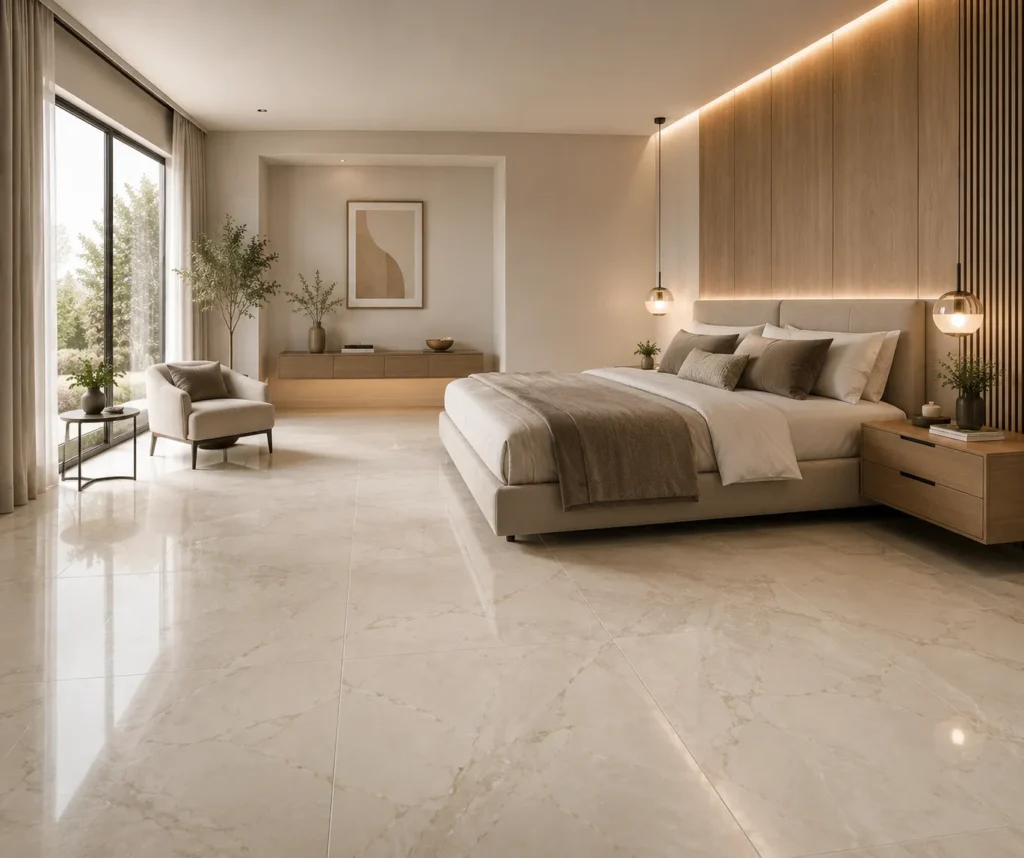
Choosing the right tile for your home or project is one of the most important decisions in any renovation. Porcelain tile is one of the most popular and versatile options on the market, but to choose well, you need to understand what it is, how it compares to other materials, and what characteristics matter most for your specific application. This guide covers all of it.
What Is Porcelain Tile & How Is It Different?
Porcelain tile is a type of tile made from refined clay, feldspar, and silica, pressed under high hydraulic pressure and fired in a kiln above 1,200°C. This high-heat process vitrifies the tile body. The tile is made with a vitrified structure that produces a surface that is dense, hard, and nearly zero in porosity. The result is a water absorption rate below 0.5%, the defining standard that separates genuine porcelain from other tile types.
What makes porcelain tile stand out is its smooth, dense surface, which handles moisture, staining, and everyday wear better than most alternatives. This is why it is specified for demanding applications ranging from bathroom floors to commercial projects.
When comparing the two materials, the key distinction is density and firing temperature. Ceramic tiles are made from a coarser clay body fired at lower temperatures.
The tile is less dense and absorbs more water than porcelain, making ceramic lighter, easier to cut, and less expensive. Ceramic is well-suited to bathroom walls, decorative interiors, and light-use surfaces. For areas that need to withstand heavy foot traffic, moisture, or exposure to external conditions, porcelain is the stronger option.
Browse premium porcelain tiles for floors and walls to explore Rocagres collections by finish, format, and application.
Different Types of Porcelain Tiles
Understanding the different types of porcelain tiles helps you match the right product to your application.
- Glazed porcelain features a surface glaze fused to the tile body during firing, enabling elegant decorative finishes such as marble looks, stone textures, and wood grain patterns. Glazed tiles are design-flexible, best suited to interior walls, feature floors, and light-to-medium-use surfaces.
- Unglazed porcelain has no surface coating. Texture and tone run through the entire tile body, making chips less visible and the surface naturally slip-resistant. Best for external areas, commercial surfaces, and any wet zone where grip is a priority.
- Color body / full-body tiles feature consistent material from surface to core, the most chip-resistant option in appearance, and are ideal for durable flooring in commercial or heavy-use environments.
- Mosaic porcelain tiles are small-format pieces on mesh sheets, used to add texture and visual detail in shower enclosures, feature walls, and backsplashes where large-format options would be impractical.
Where to Use Porcelain Tile: Applications by Space
1. Bathroom
The bathroom demands waterproof, hygienic, slip-safe surfaces. Porcelain’s low water absorption makes it the standard specification for bathroom floors and bathroom walls, including shower enclosures. Matte finishes provide grip underfoot; glossy surfaces help smaller spaces feel brighter. Always confirm the tile’s absorption specification before buying.
For moisture-resistant bathroom tiles that hold up in wet settings, look for a confirmed absorption rate below 0.5% and an appropriate slip-safety rating for floor use.
2. Kitchen
The kitchen requires tile that can withstand heat, withstand daily cleaning, and resist staining from oils and food pigments. Porcelain manages all three. It works on kitchen surfaces, walls, and floors, and in large-slab format for countertops. A matte or textured tile improves underfoot safety; glossy wall tiles are easy to clean and shine beautifully under task lighting.
Explore heat and stain-resistant kitchen tiles designed for active cooking environments.
3. Outdoor Areas
External tile specification requires extra care. Not every porcelain is rated for outdoor use. UV exposure, freeze-thaw temperature cycles, and load-bearing conditions demand a product engineered specifically for external environments. Always verify the outdoor-use rating, absorption rate, and slip-resistance classification before selecting.
Slip-rated outdoor porcelain tiles from Rocagres are UV-stable and built to withstand the elements year-round.
4. Living Room
Large-format porcelain is the most popular flooring choice in American living rooms. Fewer grout lines create a cleaner, more open look. Tiles that look like marble, travertine, or concrete are popular aesthetic choices, offering the visual of luxury stone without the ongoing upkeep or fragility of the real material.
Key Characteristics When Choosing Porcelain
- Durability: Porcelain is one of the toughest tile materials available. Its vitrified body is harder than most natural stones and built for normal everyday use. For commercial environments, a commercial-grade specification is essential.
- Water absorption: Waterproof performance depends on verified porosity data. Asking the manufacturer for confirmation that the absorption rate is below 0.5% confirms genuine porcelain performance, making it suitable for wet zones, laundry rooms, and external installations.
- Slip resistance: For any floor in a wet area, always check the slip-resistance rating. Matte finishes and textured surfaces are naturally safer than polished ones. Matt-finish tiles for high-traffic floors combine grip with refined aesthetics.
- Fire and heat: Because porcelain is fired at extreme kiln temperatures, it does not combust, warp, or emit toxic gases when exposed to fire. This makes it a reliable choice near open flames, in commercial kitchens, and wherever fire resistance is a specification requirement.
- Texture and finish: The right finish depends on the space. Glossy surfaces reflect light and are easier to wipe; matte and rustic finishes provide grip and hide everyday marks. Choosing porcelain by finish type is as important as choosing by color or size.
Glazed vs Unglazed Porcelain: Quick Comparison
| Factor | Glazed | Unglazed |
|---|---|---|
| Surface | Decorative, patterned | Natural, consistent through body |
| Chip visibility | May show core beneath | Minimal same material throughout |
| Grip | Lower unless textured | Naturally higher |
| Best for | Walls, feature floors, interiors | Outdoor, commercial, wet floors |
| Waterproof | Yes, glaze seals the surface | Yes, when body is fully vitrified |
| Sealing | Not required on tile surface | May require sealing for grout joints |
Design Options Available Today
A key advantage of modern porcelain is the variety of designs available. HD inkjet printing technology allows tile producers to replicate marble, travertine, slate, and wood grain with extraordinary accuracy. Tiles come in formats from compact mosaic sheets to architect-grade slabs over two meters long.
For spaces where the warmth of timber is desired but real wood is impractical, such as kitchens, wet areas, and high-moisture environments, a wood-look tile is the answer. The grain and character of hardwood, with the water-resistant and scratch-resistant properties of porcelain underneath. Explore wood-look tiles with the durability of porcelain for a high-quality alternative to real timber flooring.
The design variety in porcelain also includes elegant natural stone looks, such as marble, concrete, and slate effects that deliver the aesthetic without the cost of genuine quarried material.
Installation & Maintenance of Porcelain Tiles
Installing porcelain requires proper subfloor preparation. A flat, stable base is essential to prevent grout lines from cracking over time. Use a diamond-blade wet saw for cutting, and a porcelain-rated adhesive with full coverage for large formats. After installation, protect grout joints in wet zones and outdoor areas to prevent moisture from entering.
Day-to-day maintenance is one of porcelain’s strongest practical advantages. Regular sweeping and mopping with a pH-neutral cleaner keeps glazed surfaces looking fresh. Avoid acid or bleach-based cleaners, which dull the surface finish. For external surfaces, a periodic rinse is usually all that is needed. Porcelain withstands UV, frost, and chemical exposure, making it genuinely low-maintenance for decades.
Frequently Asked Questions on Buying Porcelain Tile
-
Is porcelain tile a good flooring choice for wet areas?
Yes. Its water absorption rate of under 0.5% makes it the industry-standard specification for bathrooms, kitchens, and any wet area. It does not stain, warp, or degrade in moisture-heavy environments the way natural materials can.
-
What is the difference between porcelain tile and natural stone?
Natural stone is porous, requires regular sealing, and is prone to etching and staining from spills. Porcelain tiles are made to replicate natural stone, delivering the same visual with no sealing requirement, far greater water resistance, and lower long-term upkeep. This makes porcelain the more practical specification for most home projects.
-
How do I select the right size for my project?
Larger formats reduce grout lines and make a space feel more open, ideal for living rooms and open-plan areas. For a smaller bathroom or shower area, compact formats and mosaic options create visual interest. A surface consultant can help you choose the right format based on project dimensions and layout.
-
Is porcelain tile suitable for both indoor and outdoor use?
Yes, but not all porcelain is rated for outdoor use. Always confirm the outdoor classification, absorption rate, and slip-resistance rating before specifying for any external area. Indoors, standard porcelain is suitable across virtually every application, including floors, walls, countertops, and more.
-
Does porcelain tile need to be sealed?
Glazed porcelain does not require sealing on the tile surface; the glaze itself forms a protective waterproof layer. Grout joints should be protected in wet areas after installation. Unglazed porcelain may benefit from treatment depending on the environment. Always check manufacturer guidance for the specific product.
Summary
Porcelain tile is a durable, design-versatile, and low-maintenance material that performs across more applications than almost any other surface type. Whether you are tiling a bathroom floor, a kitchen wall, an outdoor terrace, or a commercial space, porcelain delivers the durability, design variety, and longevity that make it the most specified tile in the market.
When choosing porcelain, match the characteristics to your application, confirm absorption rate for wet zones, check slip resistance for floors, and select the right finish for both function and aesthetics.
Speak to a surface consultant at Rocagres to explore the full collection and get tile recommendations tailored to your project, budget, and space.